


How to Make Money Online Without Technical Skills (Guide)
Updated 1st December, 2025
Corporate professionals who want to build online income face a specific challenge: how to transition safely without gambling their family's financial stability. You need to know when it's actually safe to quit, what skills to learn to make money online, and how to build the income stream without complex tech or endless hours. This guide covers the financial milestones to hit before leaving your job, the high-income skills you can monetize, how to package those skills using no-code tools, and three timeline paths based on your risk tolerance and available time.
The bridge strategy: When is it actually safe to quit your job?
Making the transition from corporate employment to full-time online entrepreneurship requires hitting specific financial targets. These numbers protect your family and reduce the psychological pressure that leads to burnout.
Revenue replacement: The 100% rule
Before leaving your corporate role, your online business should generate net profit equal to 100% of your current take-home pay for at least three to six consecutive months. Track this duration because it proves your business can survive seasonal fluctuations and temporary dips in sales.
Calculate your monthly net income after taxes, not your gross salary. If you take home $6,000 per month, your online business needs to consistently deliver $6,000 in profit after expenses for at least 90 days. Conservative professionals should extend this to six months to account for industry cycles.
Emergency fund: The 6-12 month buffer
Beyond revenue replacement, maintain an emergency fund covering 6-12 months of essential living expenses. This includes housing, utilities, food, transportation, and minimum debt payments. Total your monthly essentials and multiply by the number of months you want in reserve.
For example, if your household requires $4,500 per month for essentials, a conservative emergency fund is $54,000 (12 months). This buffer allows you to weather unexpected business slowdowns, personal emergencies, or the transition period when benefits kick in.
Benefits replacement cost calculation
Corporate benefits represent significant hidden value that needs replacement. Health insurance, retirement matching, and other perks often add 20-30% to your effective compensation. Research replacement costs before leaving.
Health insurance options:
- COBRA continuation: You can continue your employer's health plan for up to 18 months through COBRA, though you'll pay the full premium plus a 2% administrative fee. Budget for $500-$1,500+ per month depending on family size and coverage level.
- ACA marketplace plans: You can access subsidized plans through the Health Insurance Marketplace if your income falls within certain thresholds. Compare costs at Healthcare.gov during open enrollment or within 60 days of losing employer coverage.
- Spouse's plan: If your spouse has employer coverage, loss of your job qualifies as a special enrollment event to join their plan mid-year.
Retirement planning:
You'll lose your corporate 401(k) matching free money when you leave. Compensate by setting up a SEP IRA or Solo 401(k) for your business. These allow higher contribution limits than traditional IRAs. If you have an existing 401(k), you can roll it into an IRA to maintain tax-advantaged growth while controlling investment choices.
The safety checklist
Before submitting your resignation, confirm you've addressed these risk factors:
- Debt reduction: Pay off or reduce high-interest debt to lower your monthly obligations. Credit card balances at 20%+ APR drain cash flow that could sustain your business.
- Business operating fund: Set aside 3-6 months of business expenses separate from your personal emergency fund. This covers software subscriptions, marketing spend, and professional services without dipping into household money.
- Family agreement: Have an explicit conversation with your spouse or partner about the financial timeline, expected lifestyle changes, and decision points if income doesn't materialize as planned.
- Income diversification: Build at least two revenue streams within your business before leaving. If course sales slow, coaching calls or community subscriptions can fill the gap.
In-demand skills you already have (and how to monetize them online)
Corporate professionals underestimate the market value of skills they use daily. The key is reframing your expertise for an audience that will pay to learn it.
Transferable high-income skills from your corporate role
Project management to productivity systems:
If you've managed cross-functional teams, budgets, and deadlines, you can teach time management, project planning, and productivity frameworks. Package this as "Productivity for Overwhelmed Parents," "Project Management for Small Business Owners," or "From Chaos to Systems in 90 Days."
Build a branded mobile app to deliver video lessons, templates, and a community where clients share progress. Push notifications keep them engaged between lessons, improving completion rates compared to email-only reminders.
HR and recruiting expertise to career coaching:
Professionals in talent acquisition know how to screen resumes, conduct interviews, and assess candidates. Monetize this as resume review services, interview coaching, or LinkedIn optimization. Create a course on "Land Your Next Job in 60 Days" with resume templates, mock interview recordings, and job search trackers.
Finance and accounting to personal budgeting:
If you've built financial models or managed departmental budgets, teach personal finance, debt payoff strategies, or small business bookkeeping. Topics like "Zero-Based Budgeting for Families" or "Financial Confidence for Self-Employed Professionals" address real pain points people will pay to solve.
Operations and process improvement to business systems:
Experience streamlining workflows, implementing software, or improving efficiency translates directly into business coaching. Teach "Standard Operating Procedures for Solopreneurs" or "Automate Your Service Business." Operations knowledge is especially valuable to overwhelmed business owners who lack corporate training.
New skills with high earning potential and low barriers to entry
If you want to expand beyond your current expertise, focus on skills that combine low learning time with high demand.
Digital marketing fundamentals:
Digital marketing spans SEO, social media, email marketing, and paid advertising. The Google Digital Marketing & E-commerce Professional Certificate on Coursera offers comprehensive training in SEO, social media, email marketing, and paid advertising over six months at 10 hours per week. The course is self-paced, taught by Google experts, and provides hands-on experience with tools like Google Ads and Analytics.
Free alternatives include HubSpot Academy's Digital Marketing Certification and Google Digital Garage's fundamentals course.
Content writing and copywriting:
Strong writing drives sales, engagement, and conversions. Build practical copywriting skills quickly by rewriting successful advertisements by hand. This exercise helps you internalize persuasive language structure and flow. Practice daily by crafting multiple headlines, writing concise product descriptions, and creating compelling email subject lines. Use copywriting formulas like AIDA (Attention, Interest, Desire, Action) to structure high-converting copy.
Video editing and production:
Video content dominates platforms like YouTube, TikTok, and Instagram. DaVinci Resolve offers a robust free version with professional-grade features for editing, color correction, and audio post-production. For easier entry, CapCut provides an intuitive interface ideal for creating short-form content for social platforms. YouTube hosts thousands of free tutorials for both tools.
Community management and facilitation:
Running engaged online communities is a skill businesses desperately need. If you can moderate discussions, facilitate member connections, and create programming that keeps people active, you can charge for community management services or teach others to build their own communities.
Skill comparison: Learning time vs. earning potential
Earning potential reflects gross monthly revenue for intermediate practitioners with 6-12 months of experience serving 10-30 active clients or members. Individual results vary based on niche, pricing strategy, and time invested.
The tech-free path: How to package your skills without overwhelm
The biggest barrier to launching an online business is not your expertise, it's the fear of managing a complex tech stack. Corporate professionals accustomed to IT support and software that "just works" often freeze when faced with choosing a website builder, email platform, course host, payment processor, and community tool.
Avoid tool sprawl: The hidden cost of multiple platforms
Building your business on five separate tools creates ongoing problems:
- Integration headaches: Connecting your email platform to your course host to your payment processor requires API keys, Zapier workflows, and troubleshooting when something breaks.
- Rising costs: Paying $50/month for hosting, $99/month for email marketing, $149/month for a course platform, and $30/month for community software adds up to $328/month before you earn a dollar.
- Support chaos: When something goes wrong, you spend hours determining which platform is at fault and navigating separate support systems.
- Learning curves: Mastering five different interfaces while working full-time is demoralizing. You spend weekends watching tutorials instead of creating content.
The one-stop solution: Branded mobile apps for busy professionals
A no-code app builder solves the tool sprawl problem by consolidating courses, community, payments, and engagement tools in one place. Passion gives you a real branded mobile app on iOS, Android, and web without hiring developers or writing code.
Why mobile-first matters for retention:
Your audience lives on their phones. When your content exists only on a website, people must remember to log in, navigate to your URL, and actively seek out your lessons. Mobile apps sit on the home screen, and push notifications create consistent touchpoints that bring members back without manual email follow-ups.
"Passion makes building your own e-learning app fast, simple, and stress-free. With their no-code, drag-and-drop platform, I was able to design, build, and launch a fully functional app in just a few hours—no tech experience required." - Rob M., G2 review
Core features for corporate professionals:
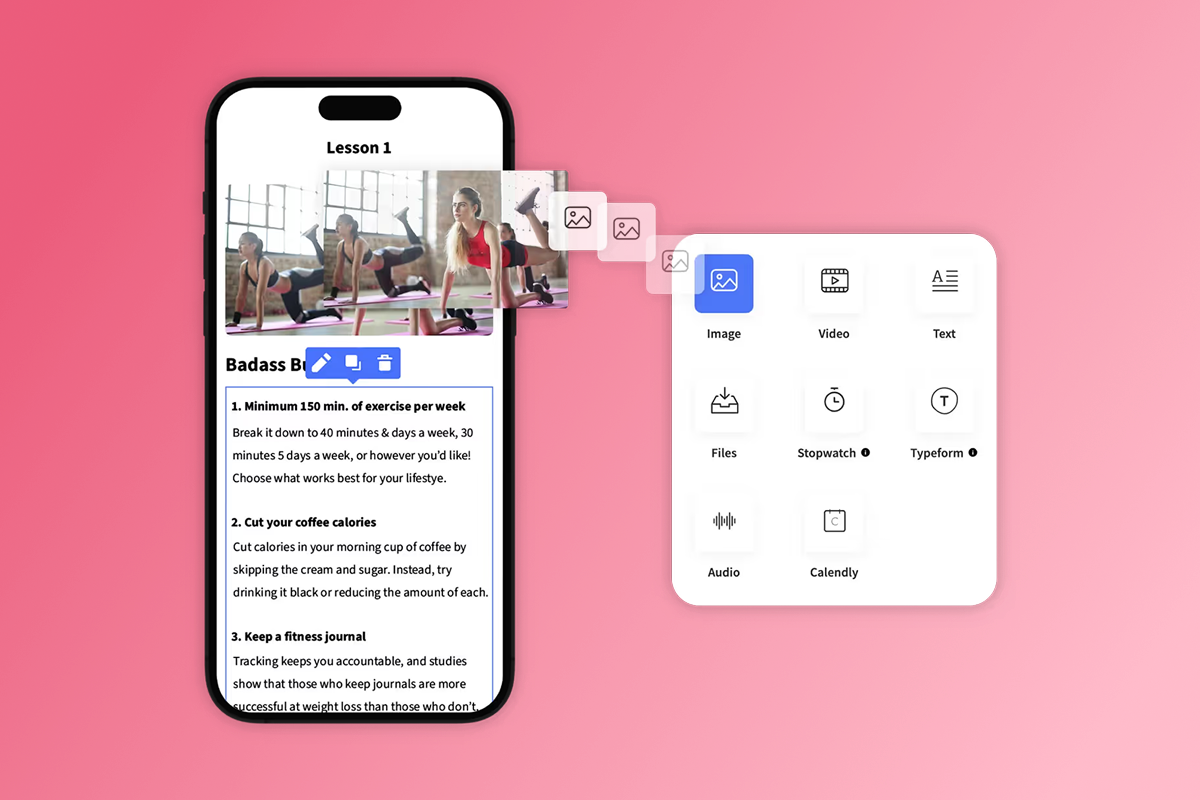
- Drag-and-drop content builder: Upload videos, PDFs, audio files, and text without touching code. Organize content into lessons, modules, and learning paths.
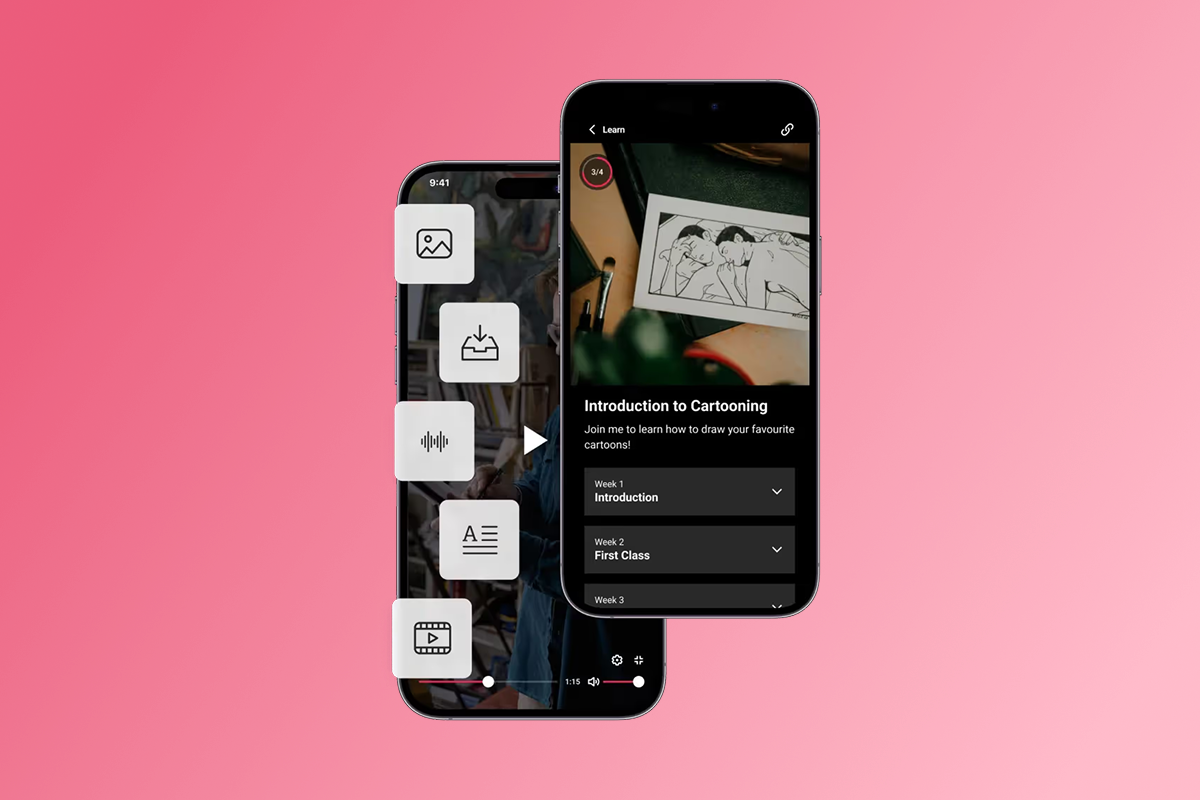
- Built-in community: Members can discuss lessons, share progress, and connect directly in the app. No separate Facebook group or Slack workspace needed.
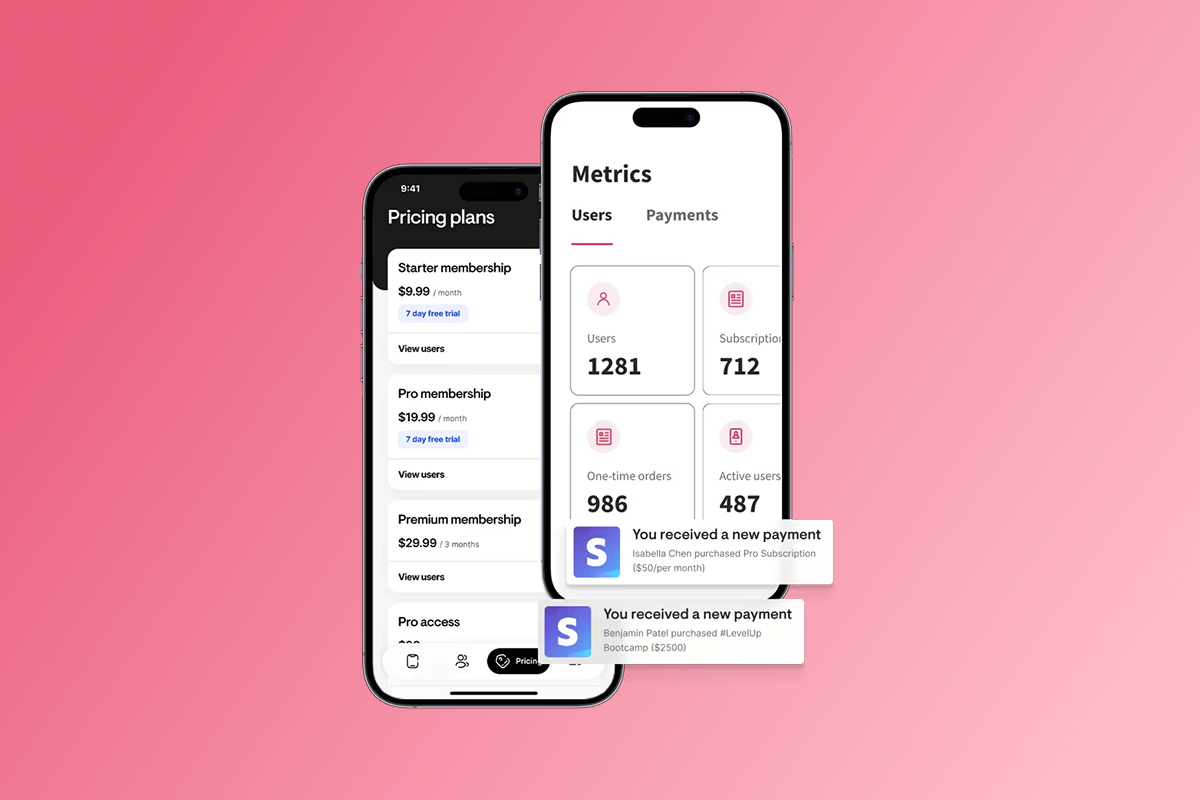
- Subscription management: Set up monthly, annual, or one-time pricing. PassionPayments charges a 3.9% platform fee for web checkouts, plus standard Stripe processing fees. In-app purchases through Apple and Google have 15-30% platform fees.
- Push notifications: Schedule reminders for new content, challenge checkpoints, and engagement prompts that bring members back to the app.
- Analytics dashboard: Track lesson completion, engagement, and member activity to identify where people drop off.
"The passion platform and people has been so supportive already. I feel like they are on my side to get this done and genuinely want me to succeed." - Kate Parsons, Trustpilot review
Pricing structure for planning your budget:
- Launch plan: $119/month or $99/month billed annually. Includes web app, iOS/Android app access, courses, community, and payments.
- Scale plan: $299/month or $239/month billed annually. Adds advanced features and higher member limits.
- Expand plan: $699/month or $599/month billed annually. For established creators needing enterprise features and app store submission support.
Budget for Apple Developer Program at $99/year and Google Play Developer at $25 one-time when publishing to app stores.
Step-by-step transition plan: Your 12-month bridge to freedom
This plan assumes a moderate timeline of 12-18 months. Adjust based on your risk tolerance, available time, and financial position.
Month 1-2: Validation and niche selection
Identify three skills from your corporate role that people actively seek help with. Look at questions colleagues ask you repeatedly, topics where you train new hires, or problems you've solved that saved your company money or time. Run each idea through validation: Does this solve a painful problem? Will people pay to fix it?
Find five people who match your target audience and offer free 30-minute consultation calls in exchange for honest feedback. Ask about their biggest challenges, what they've tried, what failed, and what they'd pay for a solution.
Based on interview insights, define your offer and price it based on the value of the outcome, not your time. Conservative pricing for your first offer is $297-$997 for a complete course or coaching package.
Month 3-4: Build your content and tech foundation
Record or write your first 6-8 lessons. Batch your work by dedicating specific days to recording, writing, and editing. Use simple equipment: smartphone camera, basic microphone ($50-$100), and natural lighting. Use the free editing software you researched earlier to handle basic editing needs.
Sign up for Passion using the Launch plan at $99/month billed annually. Upload your content using the drag-and-drop builder, organize it into modules, and customize your branding. Set up your pricing and payment processing for web checkout.
Month 5-6: Beta launch and first paying customers
Reach out to the five people you interviewed, plus 10-15 additional contacts from your network. Offer a "founding member" discount of 40-50% off in exchange for detailed feedback and a testimonial. Aim for 10-15 beta customers at $147-$497 each. This validates that people will pay for your solution and nets you $1,470-$7,455 in initial revenue to reinvest or build your emergency fund.

Run your beta cohort through the program and gather detailed feedback. Update your content based on what you learn before your full launch.
Month 7-9: Scale to part-time income ($2,000-$4,000/month)
With testimonials and a proven program, launch publicly. Create a simple sales page explaining the problem, your solution, and the outcome. Build your audience through consistent content marketing: publish 1-2 valuable articles per week on LinkedIn or your blog, create short video tips, and share insights in relevant communities.
Target 10-20 new paying members at full price ($297-$997), generating $2,970-$19,940 in revenue. Transition from one-time purchases to monthly or annual memberships with ongoing support, new content monthly, or live group coaching calls.
Month 10-12: Reach the 50-75% salary replacement milestone
Systematize your marketing and onboarding. Schedule social media posts in batches, create email sequences for new members, and use push notifications in your app to drive engagement without manual effort.
At the 12-month mark, calculate your average monthly profit. If you're consistently hitting $3,000-$5,000/month in net profit and your corporate salary is $6,000/month, you've reached 50-75% replacement. This is the decision point: conservative professionals should continue building for another 6-12 months to hit 100% replacement for at least three consecutive months.
Low-risk entry points and bridge strategies
Leaving your job immediately is not the only option. Several bridge strategies reduce risk while accelerating your online income growth.
The part-time work arrangement
Many employers will negotiate reduced hours rather than lose a valuable employee entirely. Propose dropping to 32 hours per week (4 days) or 20 hours per week (2-3 days) if your financial runway supports the income reduction.
Check your employment contract for intellectual property clauses first. If your online business serves a completely different market than your employer, framing the request around work-life balance is usually safe. If there's any overlap, consult an employment attorney before negotiating reduced hours.
The consulting retainer
If your employer depends heavily on your expertise, offer to transition to a consulting arrangement. A retainer of $3,000-$5,000/month for 10-15 hours of advisory work provides cash flow stability while freeing most of your time for your online business. This works especially well for technical specialists, strategic advisors, or roles where institutional knowledge is hard to replace.
Timeline comparison: Aggressive vs. moderate vs. conservative
Most corporate professionals succeed with the moderate 12-18 month path. If you have young children, significant debt, or specialized high income requiring $10,000+/month replacement, extend to the conservative plan. If you're single with low expenses and strong savings, the aggressive path accelerates your freedom.
Managing the psychological transition
Financial milestones matter, but the mental shift from employee to entrepreneur is equally challenging.
Reframe failure as data collection
Your first launch might generate only five customers instead of fifty. That's not failure, that's data. What did those five people respond to? What confused the forty-five who didn't buy? Successful entrepreneurs view setbacks as learning opportunities, not permanent defeats.
Address family concerns
Communicating your transition plans to family requires honesty about both the opportunity and the risks. Schedule a dedicated family meeting to present your research, financial projections, and risk mitigation strategies. Show your revenue numbers, explain your emergency fund, and outline decision points. If income drops below X for Y months, what's the plan?
Your next step: Start building your bridge today
You now have the financial framework, skill roadmap, and timeline options to build your bridge safely. The professionals who succeed share one trait: they start before they feel ready. Pick one skill to monetize this week, interview five potential customers, and commit to one timeline path.
Try Passion and experience how quickly a non-technical professional can build a branded mobile app. The corporate world will be there if you need it. The opportunity to own your time and build an asset that works for you won't wait. Start your bridge strategy today.
Frequently asked questions
How much can I realistically earn from an online course or coaching business?
Corporate professionals typically earn $2,000-$8,000/month within the first 12-18 months by focusing on one high-value offer. Established creators with audiences often reach $10,000-$25,000/month. Six-figure months and mid-five-figure MRR outcomes exist for creators in diverse niches, but treat these as aspirational rather than typical.
Do I need a large social media following before launching?
No. Your first 10-50 customers will likely be LinkedIn connections, former colleagues, friends of friends, or people you meet through strategic networking. Build your audience in parallel with building your offer rather than waiting for thousands of followers.
What if my employer finds out about my business?
Review your employment contract for intellectual property clauses and non-compete agreements. If your business directly competes with your employer or uses proprietary information, you risk legal issues. Consult an employment attorney before launching if you're uncertain about potential conflicts.
How much should I budget for marketing and software?
Expect $200-$500/month in the first 6-12 months for software subscriptions, app hosting, and basic marketing tools. Add $300-$1,000/month if you use paid advertising to accelerate growth.
Should I form an LLC before making my first sale?
You can operate as a sole proprietor initially and form an LLC after validating demand. LLC formation costs vary by state typically $100-$500 to file, plus annual fees. Many professionals wait until they're earning $1,000-$2,000/month consistently, then consult a local business attorney for guidance.
What happens to my benefits when I leave my job?
Health insurance can continue through COBRA for up to 18 months at full premium cost, or you can purchase a plan through the ACA marketplace. For retirement accounts, roll your 401(k) into an IRA to maintain tax-advantaged growth. Set up a SEP IRA or Solo 401(k) for your business contributions.
Key terminology
High-income skills: Specialized abilities that command premium compensation in the marketplace, such as copywriting, digital marketing, video production, or strategic consulting. These skills solve expensive problems or drive significant revenue for clients.
Recurring revenue (MRR): Monthly Recurring Revenue from subscription-based customers. A business with 50 members paying $49/month has $2,450 MRR. This metric indicates predictable income and business stability.
Churn: The rate at which customers cancel subscriptions or stop engaging. A 5% monthly churn means you lose 5 out of every 100 customers each month and must acquire new ones to maintain revenue.
Passive income: Revenue that requires minimal ongoing effort relative to the initial creation work. Digital courses and memberships are often called "passive income," but successful creators continuously update content, engage communities, and refine marketing to maintain revenue.
No-code development: Building functional software, apps, or websites using visual interfaces and drag-and-drop tools rather than writing programming code. Platforms like Passion enable non-technical creators to build sophisticated digital products.
Bridge strategy: A phased approach to leaving corporate employment that involves building online income while employed, hitting specific financial milestones, and transitioning gradually rather than quitting immediately.

Build the business
behind what you know.
Turn your expertise into a branded app with courses, community, and the You AI Coach. Launch plan from $99/month.