


Scale Paid Communities: 100 to 1000 Members Without Burnout
Updated February 26, 2026
TL;DR: Growing from 100 to 1,000 members requires removing operational drag. Tool sprawl forces manual admin work that prevents scale. Facebook limits organic reach to 1–5% while Discord takes a 10% platform fee on Server Subscriptions plus separate payment processing costs, though fees differ for other monetization features like Premium Apps. A branded app consolidates content, community, and payments. Push notifications deliver 20% open rates versus email's industry average. The eight tactics below show you how to automate growth, retain members, and reduce burnout using tiered pricing, community leaders, and retention-first systems.
Many creators with paid communities hit growth plateaus when fragmented tools create administrative bottlenecks. When you juggle Discord, Facebook groups, separate course platforms, and payment links, you create tool sprawl that bogs you down in admin work instead of scaling revenue. The solution is consolidating your infrastructure into a branded app that automates onboarding, sends push notifications, and owns your audience data.
Why paid communities stall at 100 members (The "Tool Sprawl" trap)
Tool sprawl happens when you accumulate multiple platforms that serve overlapping functions but don't integrate well and create complexity. You run payments through Stripe, host content in a separate LMS, manage discussions in Discord or a Facebook group, and answer access questions across email and DMs. Each tool creates data silos requiring manual work to sync information.
As a result, this operational drag prevents scaling because you spend more time fixing access issues and chasing failed payments than creating content. When your setup requires you to manually onboard each new member, reset passwords, and post reminders in three places, you hit a ceiling where adding more members just adds more admin work.
Discord and Facebook groups make this worse because they rent you the land but never let you own it. Facebook's organic reach dropped to just 1-5% of your members, so your announcements disappear into the feed. Discord works for gaming communities but struggles with focused learning. You cannot fully brand it, you lose 10% of revenue to the platform plus processing fees ranging from 6-30% depending on purchase type, and Facebook limits monetization options severely with no native subscription option for groups.
The path out of this trap is consolidating your content, community, and payments into a single branded mobile and web app that you own. This removes the complexity and gives you direct access to your members via push notifications instead of hoping they check email or scroll past your post.
8 tactics to scale your community without burnout
1. Automate onboarding and engagement with a branded app
Manual onboarding kills scale. When you email welcome messages, manually grant access, and post individual reminders, you create a bottleneck that caps growth at the number of hours in your day. Automation removes this ceiling by handling repetitive tasks while you focus on content and coaching.
Passion.io integrates with Zapier to automate welcome emails, tag members based on activity, and sync purchases from external checkouts. You can trigger actions when a user subscribes, completes a course milestone, or makes a purchase. These automations can send notifications to your team via Slack or add database entries tracking progress. Advanced drip content and marketing workflows let you set up onboarding sequences that run on autopilot.
In practice, you can schedule community posts to maintain activity without logging in daily. You can even set up a chatbot to respond to community comments for common questions, reducing your support load while keeping members engaged.
"Passion.io is legit. They are professional, helpful, and incredible. I could NOT have launched my app without their help." - Kirsten Larsen on Trustpilot
2. Launch a member-led referral program
Referral programs turn your best members into acquisition channels. When someone loves your community enough to recommend it, their endorsement carries more weight than any ad you could run. The key is making it easy to refer and rewarding both the referrer and the new member.
Design your incentive structure with dual rewards. Give the referrer a free month or percentage discount for each successful signup, and give the new member a discount on their first month to lower the barrier to entry. Track referrals with unique codes or links so you can attribute signups accurately and deliver rewards automatically.
In practice, communicate the program clearly in your community feed, email signatures, and member dashboards. Make the referral link easy to find and copy. Passion.io offers a referral program that demonstrates transparent terms and straightforward tracking. The lower the friction to share, the more referrals you will generate.
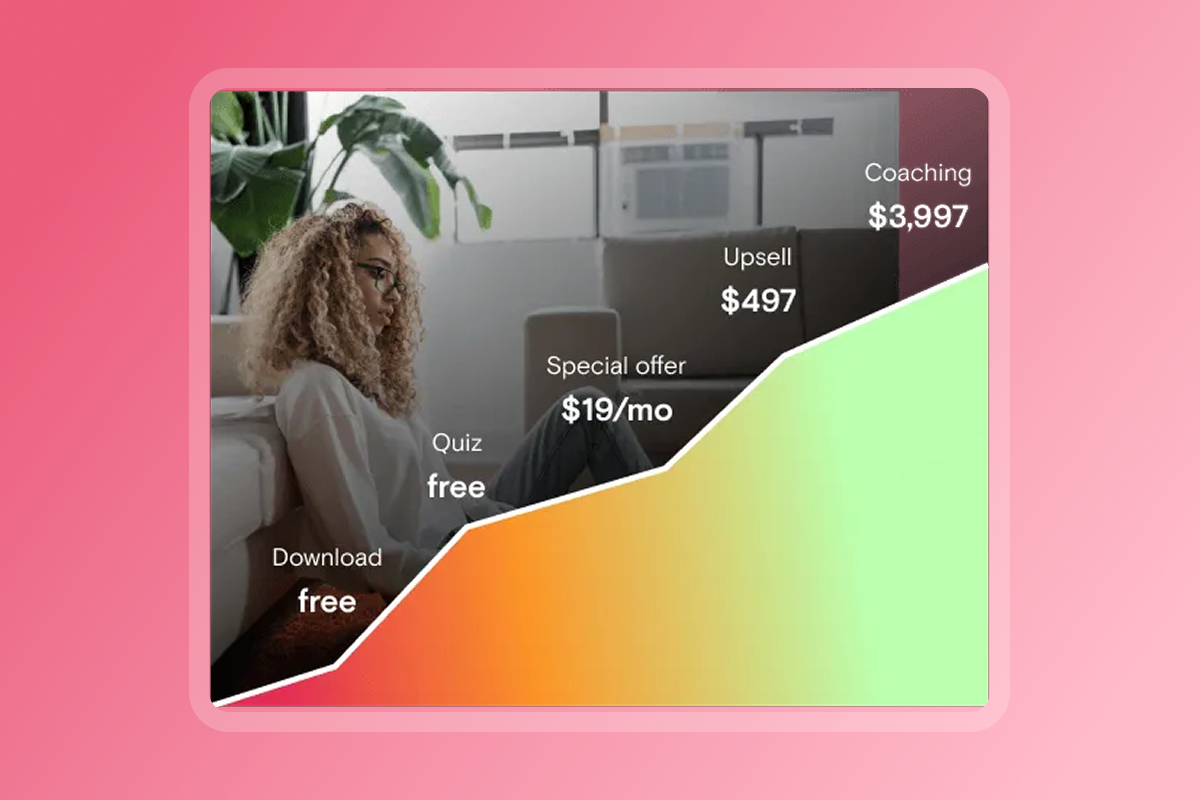
3. Implement tiered pricing (Web vs. IAP)
Tiered pricing lets you serve members at different budget levels while improving your margins. The strategic choice is not just what tiers to offer but where you process payments. For web checkout, PassionPayments charges 3.9% plus Stripe fees totaling about 6.8% per transaction, while Apple and Google charge 15-30% for in-app purchases depending on your annual revenue and subscription tenure.
Run high-ticket offers and annual plans through web checkout to keep more revenue. Monthly and annual subscriptions benefit from Apple's reduced 15% commission after year one, so recurring revenue models become more profitable over time. For lower-priced monthly subscriptions or impulse purchases, offer IAP for mobile convenience where ease of checkout drives conversions.
Build a pricing ladder with multiple tiers to serve different commitment levels. Route higher-ticket items through web checkout for margin and lower-priced offerings through IAP for convenience. This hybrid approach balances conversion rate with profit per sale.
| Offer Type | Example Price | Checkout Method | Creator Take* |
|---|---|---|---|
| Monthly subscription | $29 | IAP (15% Apple fee) | ~$24.65 |
| Annual subscription | $397 | Web (6.8% total fees) | ~$370 |
| Premium bundle | $997 | Web (6.8% total fees) | ~$929 |
*Calculations: IAP assumes 15% Apple Small Business Program fee; Web assumes 3.9% PassionPayments + ~2.9% Stripe = 6.8% total.
4. Appoint community leaders to reduce moderation load
As your community grows past 100 members, you cannot personally respond to every post or moderate every thread. Community leaders distribute that work while giving engaged members status and responsibility. Identify your most active contributors and ask them to help welcome new members, answer common questions, and model the behavior you want to see.
As a result, give leaders visible recognition through badges, roles, or exclusive channels. Passion.io supports reactions and engagement features that let you highlight top contributors. When members see that active participation earns them status, they engage more to achieve that recognition.
Set clear expectations with your leaders. Define what moderation means and what remains your responsibility. Compensate them with free access, early product releases, or revenue share if they invest serious time. Building an engaged community requires consistent activity and visible leadership that encourages participation over lurking.
5. Leverage content repurposing for SEO
Your community generates valuable content every day through member questions, discussions, and wins. Repurpose the best threads into public blog posts, videos, or social media content that drives discovery. When a member asks a great question and you answer it thoroughly, turn that Q&A into a blog post optimized for search, then link back to your community as the place for ongoing support.
Create a content calendar that pulls one community discussion per week to repurpose. Screenshot member wins with permission for case study posts. Turn popular challenges into YouTube videos. Each piece of public content becomes a top-of-funnel asset, and you should link all repurposed content back to your app's platform demo to convert interested readers into members.
6. Build strategic partnerships for co-marketing
Partnerships let you reach new audiences without paying for ads. Find creators in complementary niches who serve the same audience you want to reach. A fitness coach might partner with a nutrition expert, or a business coach might team up with a copywriting instructor.
Structure bundle deals where both of you promote a combined offering to your respective lists. The goal is to give both audiences more value while introducing your work to people who have never heard of you. Passion.io health and fitness professionals often collaborate on 30-day challenges that combine workout programming with meal planning to maximize value for both communities.
7. Prioritize retention-first growth (Push vs. Email)
Retention is the engine of growth. If you add 100 new members per month but lose 100 to churn, you stay stuck at your current size. The most effective retention tool is push notifications, which reach members on their phones instead of their overcrowded inboxes.
Push notifications achieve 20% open rates on average while email marketing benchmarks show industry averages around 34%, though actual open rates vary widely by industry and list quality. More critically, 77% of people say they have engaged with a push notification in the last month.
The practical impact shows up in app usage. Sixty percent of users report using an app more frequently when they receive push notifications, and consumers who opt in engage with mobile apps 26% more often each month than users who do not receive messages. This is why mobile-first course platforms drive better completion rates than web-only tools.
In practice, schedule push notifications strategically. Welcome new members with a notification on day one and day three. Send weekly challenge reminders to members in active programs. Nudge inactive members who have not logged in for 14 days. Each notification should provide value rather than just asking for attention.
"This has been an incredible experience because of the guidance and direction from the videos and written content, as well as the live support from the community (via Facebook). Passion.io is great with providing solutions and giving great customer service!" - Nitara Osbourne on Trustpilot
8. Encourage community-generated content
Member contributions keep your community feed active without requiring you to create everything. When members share their wins, post progress updates, or answer each other's questions, they generate content that engages other members and reduces your workload.
Create frameworks that make it easy for members to contribute. Weekly check-in threads, monthly challenge submissions, or quarterly case study spotlights give members a template to follow. Recognize top contributors with community reactions and engagement features that reward participation. When people see that sharing gets them visibility and recognition, they share more.
For advanced communities, invite expert members to create their own courses or challenges inside your app. This turns your community into a marketplace of ideas where members teach each other under your brand.
Discord vs. Branded Apps: Which scales better?
The platform you choose determines whether you can scale past 100 members without burning out. Discord and branded apps serve different purposes, and understanding the trade-offs helps you pick the right infrastructure for growth.
| Feature | Discord | Passion.io Branded App |
|---|---|---|
| Branding | Minimal (server icon/banner only) | Fully branded iOS, Android, and web app with your logo, colors, and business name |
| Push Notifications | Available but limited control | Direct phone notifications with scheduling and targeting |
| Transaction Fees | 10% platform + 6–30% processing | ~6.8% total for web; 15–30% for IAP |
| Data Ownership | Platform-owned | Creator-owned |
| Distraction Level | High (other servers, gaming focus) | Low (dedicated branded experience) |
Beyond the feature differences in the table above, Discord works well for free communities where casual conversation and gaming culture fit your brand. But for paid memberships, Discord takes a 10% platform fee on subscription revenue, with separate payment processing fees of 6% on desktop and 15–30% on mobile depending on purchase type.
Facebook groups face different problems. Posts reach only 1-5% of members, so your announcements disappear into newsfeeds. There is no native subscription option for groups, forcing you to use external payment links and manually grant access. You get minimal branding control, and Facebook can change the rules or limit your reach whenever it wants.
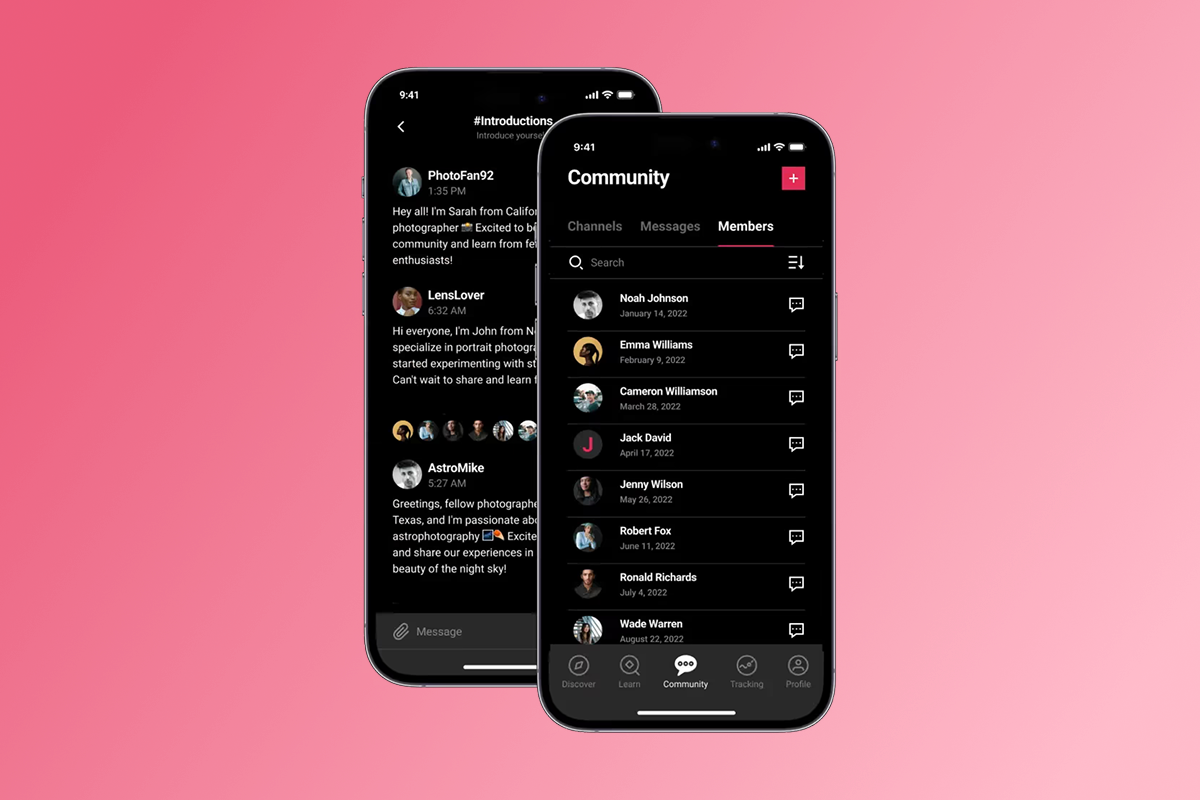
A branded app consolidates everything into one owned platform. You control the branding, data, and monetization. Interactive course features like quizzes, progress tracking, and drip content live in the same app as your community discussions. Members get a focused, professional experience instead of competing with other content for attention.
The retention difference shows up in engagement metrics. A branded app sends notifications directly to your members' phones with your branding and message. This drives 26% more app engagement than apps without push. Want to see it in action? Try it with a 30-day money back guarantee!
How to launch your own app (DIY vs. White-Glove)
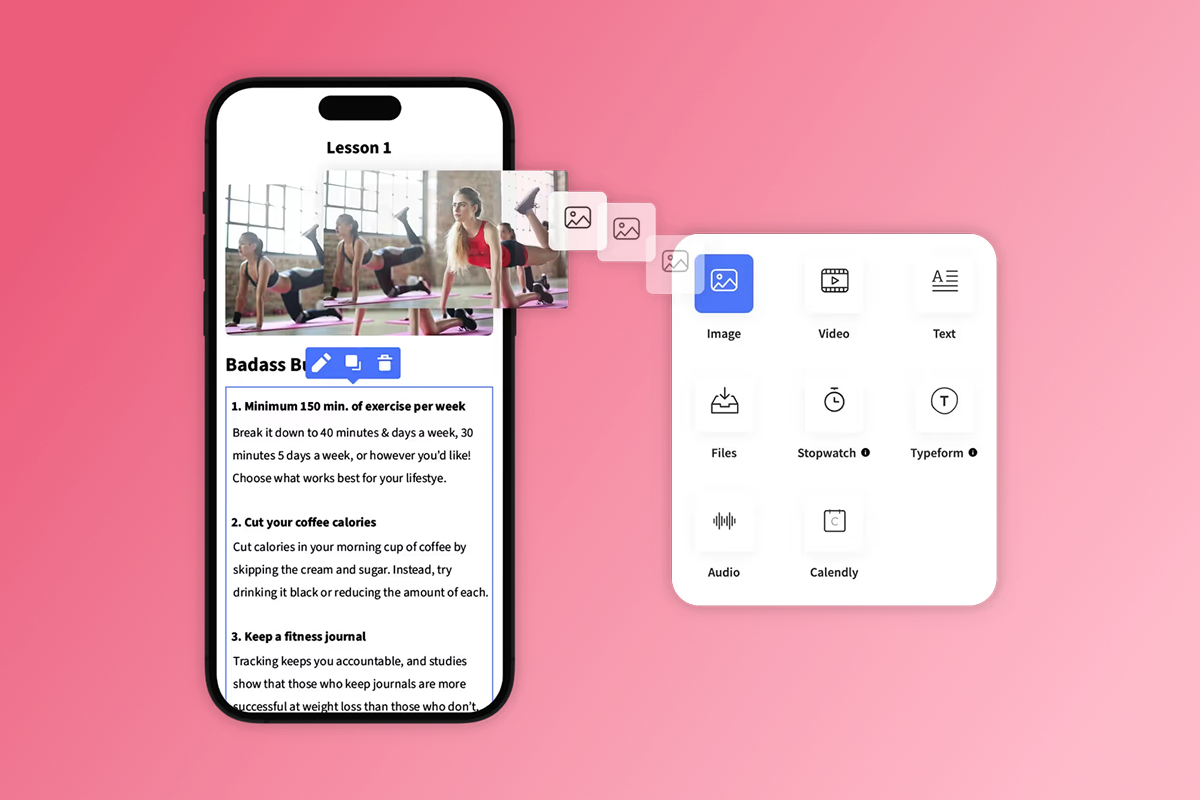
Building a custom app used to require hiring developers, spending $30,000+, and waiting months for launch. No-code platforms changed this by giving you drag-and-drop tools to build and launch apps in weeks instead of months. The choice now is between doing it yourself or paying for a white-glove service that handles the technical details.
White-glove service means a done-for-you approach where the platform handles app store submission, content migration, and success management. Passion.io offers different plan levels based on how much support you need. DIY plans on Launch and Scale give you the builder tools to publish your web app and submit to app stores yourself, while Expand includes App Store Listing support and Plus offers full white-glove "we submit your app" service.
Budget for the total cost of ownership including your monthly plan, Apple Developer Program ($99/year), Google Play ($25 one-time), and transaction fees (6.8% for web or 15-30% for IAP). Factor in your time cost too because DIY requires learning the platform while white-glove frees you to focus on content and marketing.
"Dan is a really authentic and genuine human being who through his organisation has given me the opportunity to create my own app for dementia caregivers in easy to learn steps while being supported at every turn... I am blown away by how responsive the support team are, who hold you hand while also offering great marketing and skills advice as we go along." - Jane Mullins on Trustpilot
Plan for a 4-8 week timeline to launch your web app and begin app store submissions. Web apps go live faster because you control the hosting. iOS and Android submissions require Apple and Google review, which can add 1-2 weeks for clarifications or fixes. Expand and Plus plans include submission support to guide you through these reviews.
With these terms and tactics in place, the path from 100 to 1,000 members requires infrastructure that automates growth instead of multiplying your admin work. Consolidating into a branded app removes tool sprawl, improves retention through push notifications, and gives you ownership of your audience data. Start with the tactics above to build systems that scale without burning you out, and choose the platform infrastructure that supports your growth timeline and budget.
Book a platform demo to see how a branded app automates community scaling, or explore the Creator MBA to learn monetization strategies that turn members into recurring revenue.
FAQ: Scaling paid communities
What are the best Discord alternatives for creators looking to monetize?
Branded mobile apps like Passion.io consolidate content, community, and payments with lower fees (6.8% total for web vs. Discord's 10% + processing costs), better engagement through push notifications, and full data ownership.
Can I build a custom branded app without hiring developers?
Yes, no-code platforms let you drag-and-drop your content into iOS, Android, and web apps without writing code, launching in 4-8 weeks instead of months.
How do platforms handle payment processing fees?
PassionPayments charges 3.9% plus Stripe fees for web checkout totaling about 6.8%. Apple and Google charge 15-30% for in-app purchases depending on revenue tier and subscription tenure.
How long does app store approval take?
Plan 1-2 weeks for iOS and Android reviews. Expand and Plus plans offer submission support to handle clarifications and resubmissions.
What metrics should I track for community health?
Monitor monthly active users (MAU), lesson completion rates, member churn percentage, and average engagement per member to identify growth opportunities and retention issues.
Key terminology for community builders
Tool Sprawl: The accumulation of multiple platforms that serve overlapping functions but don't integrate well, creating complexity and manual work. Each tool creates data silos requiring manual translation between systems.
Operational Drag: The manual, time-consuming administrative tasks that prevent scaling. Manual onboarding, access management, and cross-platform updates create bottlenecks that cap growth.
White-Glove Service: Done-for-you support where the platform handles technical execution like app store submissions and content migration. You provide content and direction while the service team executes.
Audience Ownership: Controlling your member data and direct access through push notifications instead of relying on social platforms that limit reach. Branded apps give you ownership versus renting land on Discord or Facebook.
PassionPayments: Passion.io's web checkout gateway that charges a 3.9% platform fee plus Stripe's standard processing, totaling approximately 6.8% per transaction.