


Should Creators Choose Patreon or a Branded App to Escape Tool Sprawl and Low Engagement?
Updated 23rd November, 2025
You're answering Instagram DMs at 9:40 PM. Two clients can't find your Zoom link. A member's credit card failed on Patreon. Your Facebook group has 200 unread posts. You close your laptop thinking, "This can't be what scaling looks like."
Tool sprawl and platform dependency don't have to define your business.
Many creators start on platforms like Patreon for ease of use but quickly encounter limitations in audience ownership, engagement, and revenue control. This guide shows you how to transition from fragmented tools to a unified, mobile-first branded app that puts you in charge of your audience and revenue.
Understanding your needs: Choosing the right Patreon alternative
The right platform should support your business fundamentals and eliminate operational friction. Here's what matters most:
Ownership and control:
- Audience data: Full ownership of customer data, email lists, and user analytics without platform restrictions
- Platform risk: Protection from algorithm changes, policy shifts, and account restrictions
- Brand customization: Complete control over your logo, colors, design, and user experience
Engagement capabilities:
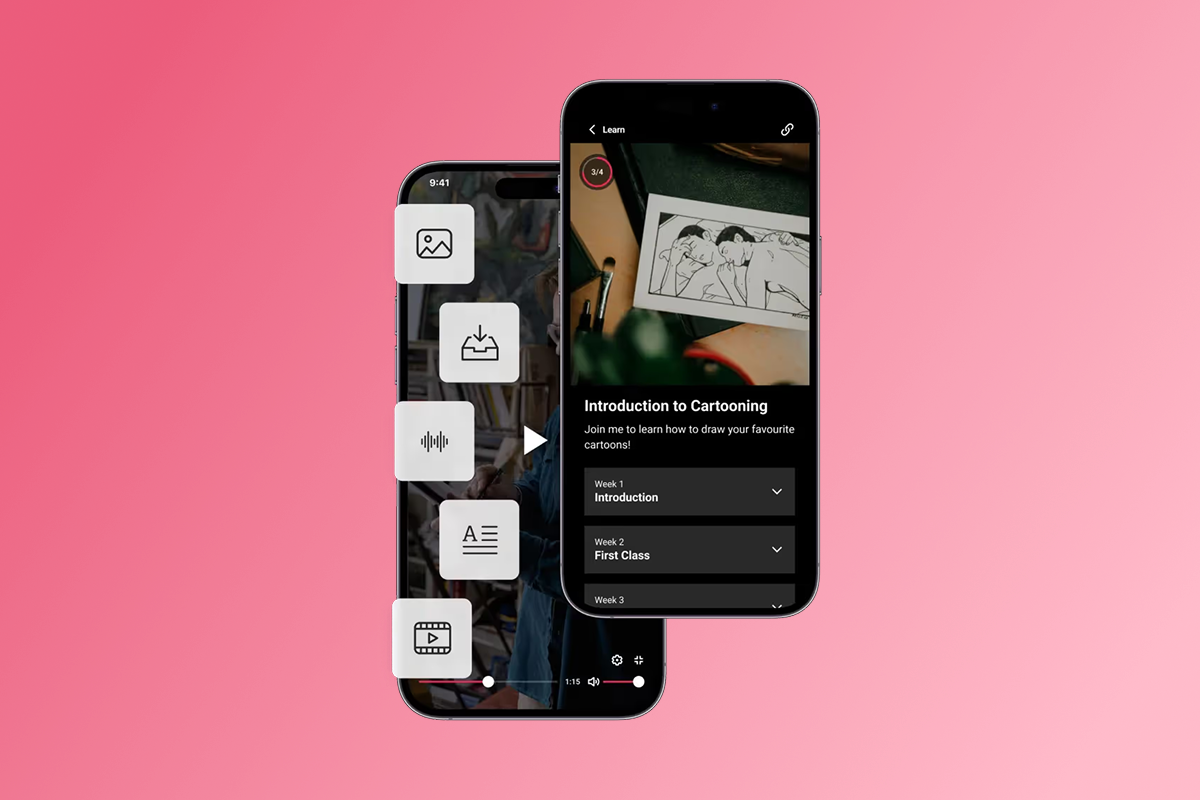
- Mobile-first features: Native push notifications, offline content access, and dedicated mobile app experience
- Community tools: Built-in forums, group chats, direct messaging, and activity feeds
- Interactive elements: Challenges, polls, Q&A sessions, and live events
Monetization flexibility:
- Revenue models: Subscriptions, one-time purchases, freemium access, and tiered memberships
- Fee transparency: Clear disclosure of platform fees, payment processing costs, and revenue splits
- Payment options: Control over checkout flows and payment gateway choices
Mobile-first platforms that prioritize in-app communities see significantly higher retention rates, according to research from Social Plus. Creators who control their audience data and brand experience also report greater stability and reduced platform risk.
Monetization strategy alignment:
For predictable monthly recurring revenue (MRR), subscriptions are your foundation. Patreon's subscription-focused model charges 8-12% of your earnings depending on your plan, plus payment processing fees (approximately 2.9% + $0.30 per transaction). One-time sales and bundles work for high-ticket courses. Branded apps let you route these sales through web checkout to minimize fees, choosing the path that maximizes margin based on your business model.
Creators using branded apps can structure pricing to maximize margin, with documented examples showing they choose between web checkout (lower fees) and in-app purchases (mobile convenience) based on transaction size and user behavior.
Patreon's limitations for growing creators
Patreon serves over 250,000 creators, making it a popular starting point. But as your business grows, platform limitations create friction that slows scaling and eats into margins.
Platform dependency and engagement challenges
Building your community on someone else's platform means you don't own the relationship with your audience. Patreon controls your creator page, hosts your content, and acts as the data controller for user information. If Patreon changes its policies, fee structure, or discovery algorithms, you adapt or leave.
Patreon offers convenience and low friction to start, but that ease comes at a cost. This trade-off represents the core tension many creators face: platform convenience now versus business control later. Social platforms amplify this risk. If your primary growth channel is Instagram or TikTok, and you're funneling traffic to Patreon, you stack two layers of platform dependency. Algorithm changes can throttle reach instantly, and you have no direct way to reach your audience when platforms shift.
Patreon provides basic community features like chats, polls, and comments. But most creators layer on Discord for real-time chat, Zoom for live sessions, a separate LMS for structured courses, and Facebook groups for async discussion.
This fragmentation hurts engagement:
- No native push notifications: Patreon relies on email and in-platform notifications. Email open rates average 15-25%, and in-app notifications require users to open Patreon first.
- Context switching kills momentum: Every platform change loses people. Users bounce between apps and tabs, reducing session duration and completion rates.
- Scattered support burden: Your community across four platforms means support questions across four platforms.
Apps with integrated communities see up to 40% higher retention rates because everything users need lives in one place, data on mobile community building shows.
Unpredictable revenue and platform fees
Patreon's fee structure eats into your margins, especially as you scale. The platform takes a percentage of your earnings plus payment processing fees, plus potential currency conversion fees (2.5% for international payments).
On a $29 monthly membership, you pay approximately $2.60-$3.80 in fees per member per month depending on your Patreon tier. At 100 members, that's $260-$380/month or $3,120-$4,560/year going to Patreon before you pay for your other tools.
Many Patreon creators report unpredictable revenue. You launch with a spike of new members, then see churn over the following months as engagement wanes. Without robust engagement tools like push notifications, challenges, and in-app community, completion rates drop and renewals suffer.
Branded apps: The superior alternative for ownership and engagement
A branded mobile and web app turns the Patreon model inside out. Instead of renting space on someone else's platform, you own the entire experience.
Direct audience ownership and data control
Your members download your app with your name and logo from the App Store and Google Play. Every interaction happens in an environment you design and own.
Unlike Patreon, where the platform controls user data, you own user data, behavior analytics, and engagement metrics. This lets you understand your audience deeply, segment users, and tailor offerings to their actual needs. You see which lessons get completed, which community discussions drive engagement, and where members drop off.
You're not subject to another platform's policy changes, fee increases, or algorithmic shifts. If you want to change your pricing, add a new feature, or restructure your content, you make that decision without waiting for platform approval or worrying about terms of service violations.
Building on Patreon is like renting an apartment. It's easy to move in, but you can't paint the walls, you pay monthly to someone else, and the landlord can raise rent or change rules. A branded app is your owned home. You invest upfront, but you build equity, control the experience, and reap the long-term value.
Research on custom branded mobile apps shows that full ownership creates sustainable competitive advantages. Your audience becomes truly yours, insulated from external platform risks.
Mobile-first engagement with push notifications
Push notifications are the single most powerful engagement tool for mobile apps, unavailable on web-first platforms like Patreon.
When a member downloads a new lesson, you can send a push notification to their phone's home screen within minutes. Reminder notifications for live sessions, weekly challenges, or milestone achievements bring users back into the app. Creators implementing a twice-weekly push cadence combined with structured challenges report +15-30% completion rates within 90 days.
Push notifications see open rates of 50-90% for well-targeted messages, far exceeding email's 15-25%. Because the message appears on the user's lock screen, it cuts through the noise of social media and email inboxes.
Passion lets you schedule behavioral triggers based on user behavior through their push notification features. If a member hasn't logged in for seven days, send a gentle nudge. If someone completes a course section, celebrate their progress and tease the next lesson. These behavioral triggers create habit loops that turn passive subscribers into active participants.
"What I love about Passion is that it's not just a platform to create your own app – it also provides invaluable training on how to build and sell your course." - G2 review
This training includes push notification strategies, helping creators move from email-dependent engagement to proactive mobile nudges. Video tutorials on Passion's YouTube channel demonstrate how to set up automated push sequences.
Building a thriving in-app community
Community is where retention happens. But scattered communities across Discord, Facebook groups, and Patreon comments dilute engagement and fragment conversations.
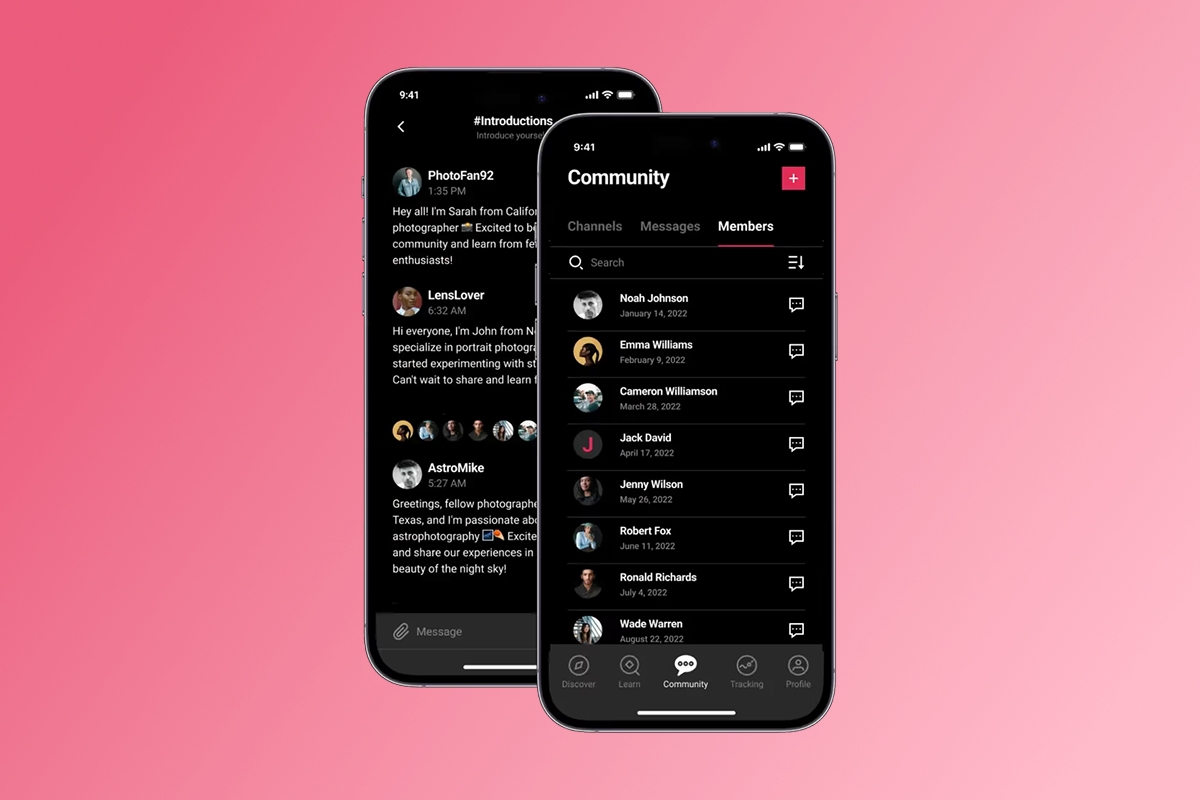
A branded app consolidates your community into forums, discussion boards, and group chats, all within your app. Members see activity feeds showing posts, comments, and likes from other users, creating social proof and a sense of belonging. Research on in-app communities shows that dedicated spaces increase interaction depth and quality.
Unlike Facebook groups where ads, unrelated notifications, and algorithm-driven feeds compete for attention, your in-app community is a distraction-free zone. Members open your app knowing exactly what to expect: content and conversations relevant to your niche. This focused environment boosts engagement compared to scattered social platforms.
Run 30-day challenges with leaderboards, badges, and milestone rewards. Gamification taps into intrinsic motivation, turning routine interactions into rewarding experiences. Studies on gamification in communities show that points, badges, and challenges significantly increase sustained participation.
"Passion.io helped me turn my vision into a fully branded app that inspires equestrian women daily. It's easy to use, incredibly supportive, and built for creators who actually care about changing lives." - TrustPilot review
Flexible monetization and predictable recurring revenue
Branded apps offer more monetization flexibility than Patreon's subscription-focused model, letting you tailor revenue streams to your audience and content type.
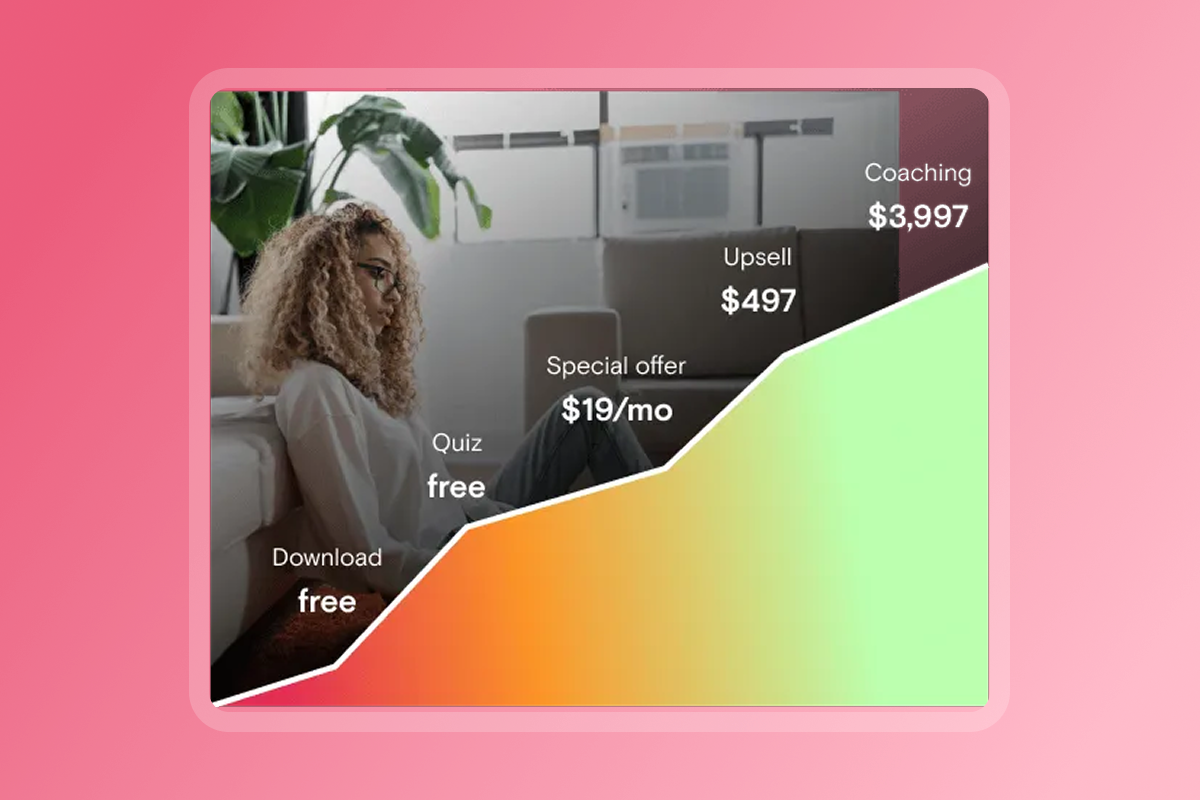
Offer weekly, monthly, and annual subscriptions with different access levels. Annual subscriptions reduce churn and improve cash flow. Passion's monetization features support multiple tiers, freemium access, and trial periods.
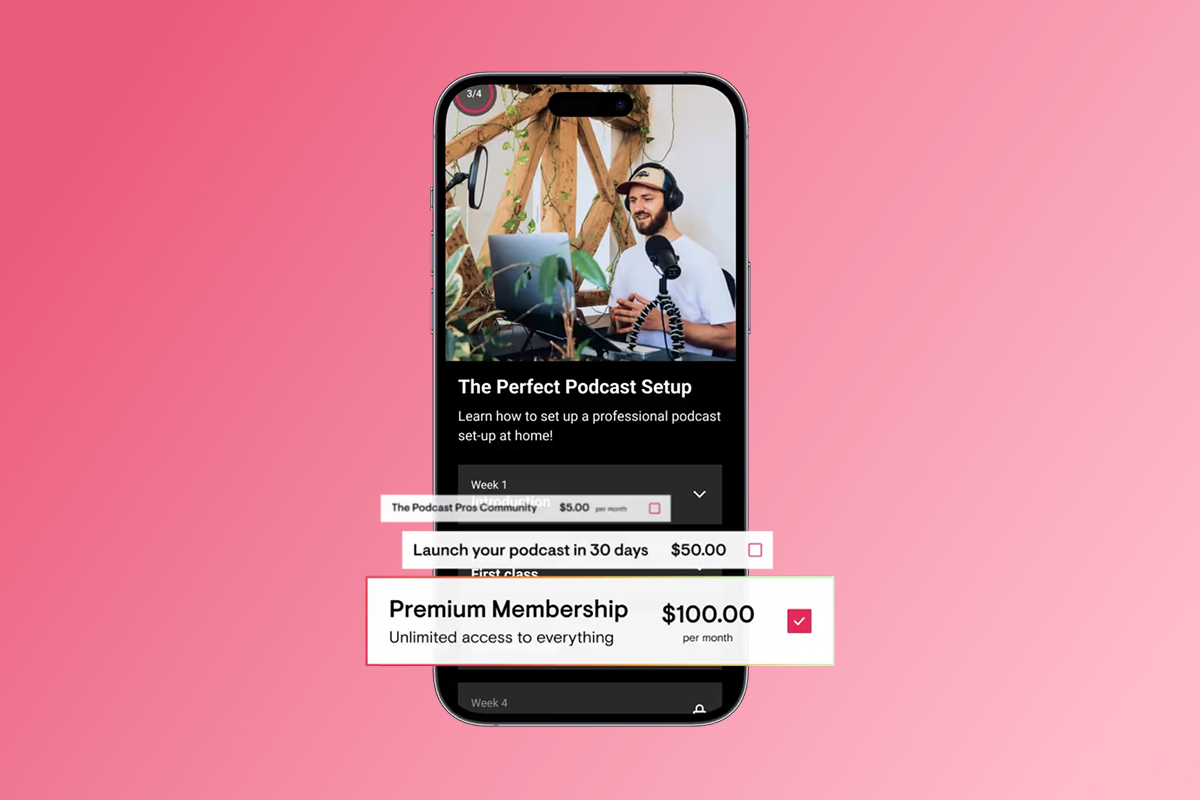
Sell high-ticket courses, workshops, or digital downloads as one-time purchases alongside subscriptions. Route these transactions through web checkout to minimize fees. Passion's PassionPayments web checkout charges a 3.9% platform fee (plus Stripe), significantly lower than Patreon's 8-12% for similar transactions.
Offer in-app purchases (IAP) for users who prefer to buy within the app using Apple Pay or Google Pay. While Apple and Google take 15-30% on these transactions, the convenience can increase conversion rates for impulse purchases and mobile-first users. For larger bundles or annual plans, direct users to web checkout to preserve margin.
Transparent fee structure:
- Apple Developer Program: $99/year
- Google Play: $25 one-time
- PassionPayments web checkout: 3.9% + Stripe's standard fees
- IAP: 15-30% to Apple/Google (no additional Passion fee)
- External checkouts: 0% platform fee from Passion
By consolidating engagement tools (push, community, challenges) with monetization in one app, you reduce churn and stabilize MRR. Creators across fitness, wellness, arts, and coaching niches report +10-20% MRR growth within 90-180 days after launching their apps, driven by higher completion rates and sustained engagement.
Key Patreon alternatives compared
Patreon isn't the only option, and a branded app isn't the only alternative. Here's how the landscape breaks down.
Passion: Your branded app solution
Passion is a no-code platform that lets you build, launch, and monetize a branded mobile app (iOS, Android, Web) for courses, coaching, and communities without hiring developers.
Core features:
- No-code app builder: Drag-and-drop interface with templates for rapid launch. Upload videos, PDFs, audio, and text. Set up lessons, drip schedules, quizzes, and progress tracking. Video tutorials demonstrate the builder in action.
- Mobile-first engagement: Native push notifications, offline content access, in-app community with forums and group chats, and gamification (points, badges, leaderboards).
- Flexible monetization: Subscriptions, one-time purchases, freemium, bundles. Choose between PassionPayments web checkout (3.9% fee + Stripe) or IAP (15-30% to Apple/Google).
- Integrated training: Expert Unleashed Challenge and Passion Academy provide step-by-step guidance on building, launching, and selling your app.
Proof points: Passion reports 15,000+ apps launched and 2M+ paying app users (third-party 2025 review, directional). The CEO stated in a September 2025 interview that the company is a profitable 8-figure business. Documented examples show creators hitting six-figure months across niches like fitness, wellness, arts, and business coaching.
Pricing:
- Launch: $119/month (monthly) or $99/month (annual)
- Scale: $299/month (monthly) or $239/month (annual)
- Expand: $699/month (monthly) or $599/month (annual), includes App Store submission support
- Plus: Custom done-for-you build, $10k-$20k depending on scope
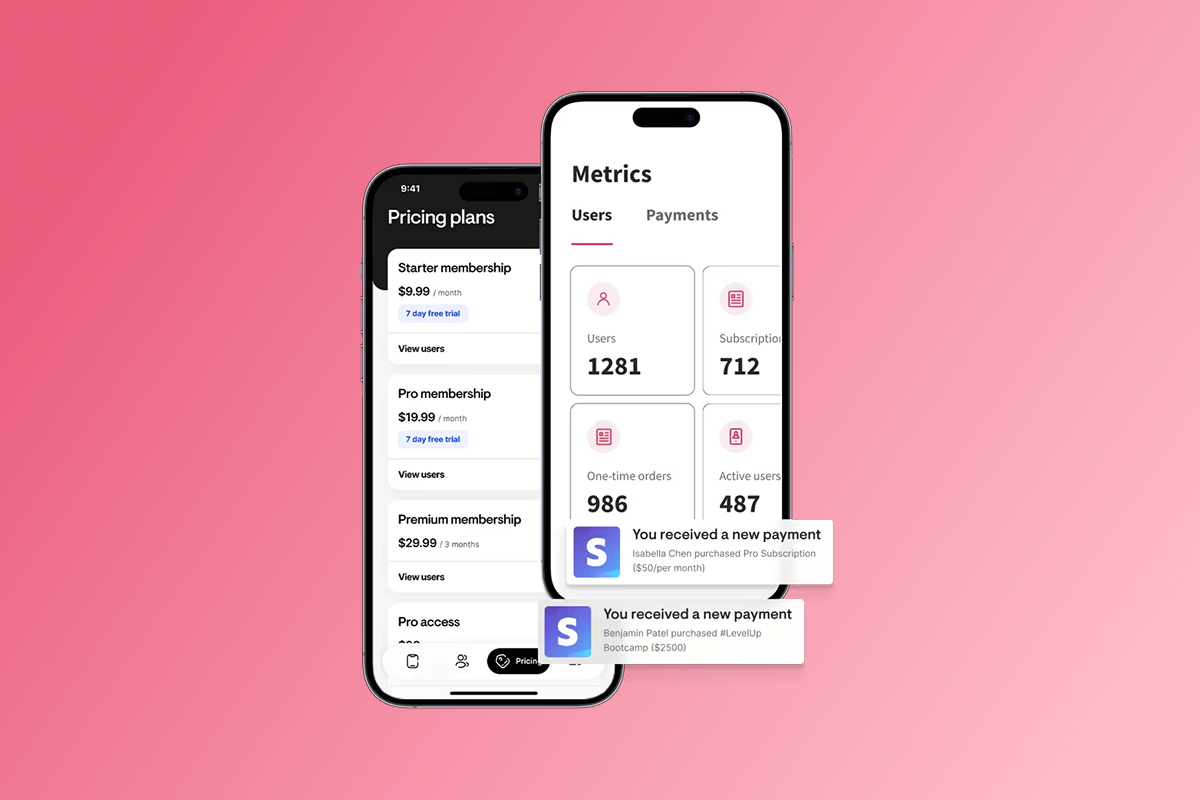
When to choose Passion: If you want a real branded app with push notifications, in-app community, and transparent monetization options, and you're ready to invest in owned infrastructure rather than renting space on someone else's platform.
Other notable alternatives
Platform basics and fees:
Technical capabilities:
Free alternatives like Discord and Facebook Groups offer community tools but lack monetization flexibility, branding control, and data ownership. Research on free vs. paid community platforms shows that free options work for early audience building but hit scaling limits quickly.
How to launch your branded app in 90 days
Launching a branded app follows a clear path. Here's how to go from signup to stable recurring revenue in 90 days.
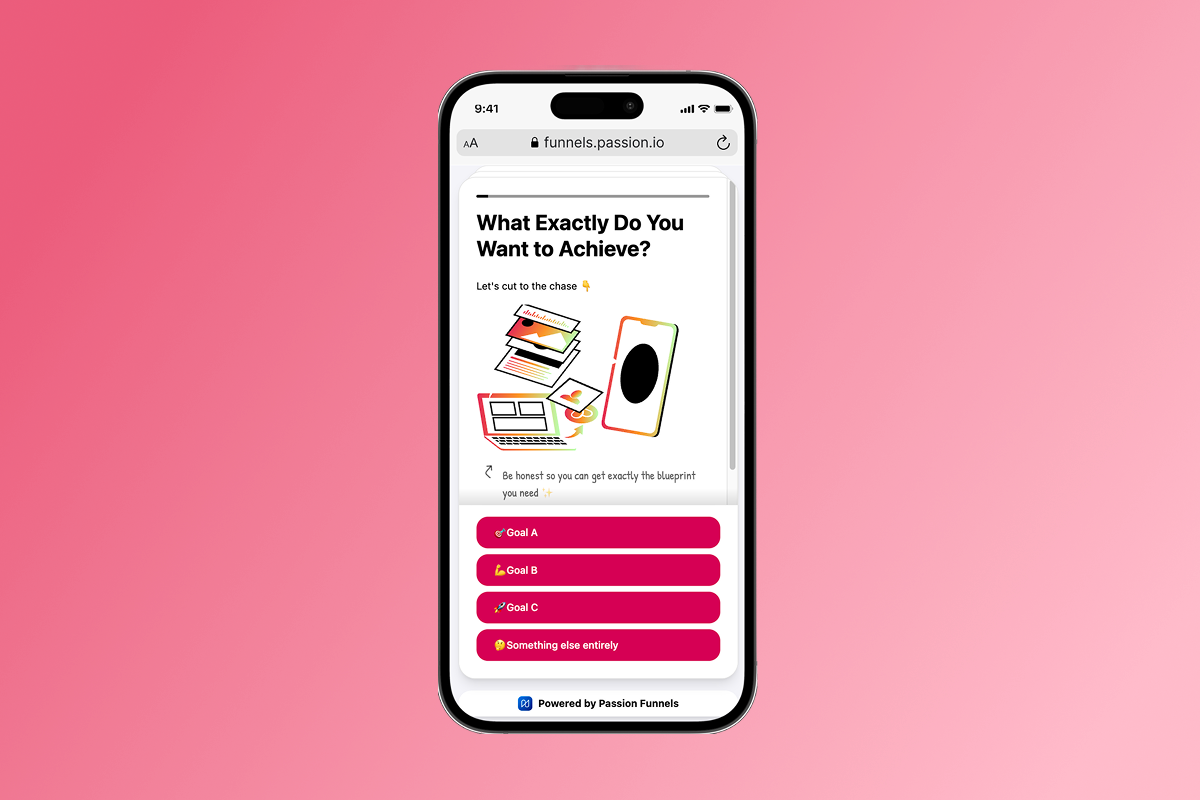
- Days 1-30: Build and submit your app - Upload 10-15 core lessons, set branding (logo, colors, app icon), configure monthly/annual pricing tiers, and set up PassionPayments for web checkout. Submit to App Stores (Apple $99/yr, Google $25 one-time). Plan 1-2 week buffer for review. App Store approval requires careful preparation. Publish your web app immediately while mobile apps go through review. Use Passion.io's templates to speed setup.
- Days 31-60: Drive engagement - Launch your first 7-day or 30-day challenge to activate your community. Challenges create urgency and build habit loops through structure and accountability. Set twice-weekly push cadence (one for new content drops, one for community highlights). Activate in-app community features: seed discussion threads, introduce members, encourage user-generated content. Community moderation strategies emphasize active creator participation early on. Track DAU/MAU and completion rates. Target +15-30% completion vs. previous platform.
- Days 61-90: Optimize and scale - Review engagement metrics: lesson completion rates, community post frequency, and conversion funnels. Send targeted push notifications to engaged free users offering limited-time discounts or bonus content for upgrades. Add FAQ sections, onboarding tooltips, and tutorial videos directly in the app to reduce support load. Plan sunset date for old platforms (Patreon, Facebook groups), offer incentives for early app adopters, and migrate your audience fully. Target +15% MRR growth and <2% monthly churn.
"Since signing up three days ago, I have had a VIP experience. From the fast response to an earlier question I had about billing to the wonderful welcome call I had with Amanda S. (one of the App Success Advisors) who answered all of my questions with kindness and enthusiasm, I feel well taken care of." - TrustPilot review
Try Passion risk-free
Ready to own your audience and revenue? Try Passion and experience the power of a branded app.
Want to see how other creators launch apps in 4-8 weeks? Explore real examples across fitness, wellness, arts, and coaching niches, or book a demo to speak with an app advisor.
Download the 30-day app launch checklist to start planning your transition today.
Frequently asked questions
What are the best Patreon alternatives for artists and writers?
For artists and writers wanting audience ownership and mobile engagement, Passion offers the most comprehensive branded app solution. Substack works for newsletter-based monetization, Ko-fi offers simple tools, and Ghost provides self-hosted control, but none match Passion's mobile-first features.
Is there a free Patreon alternative?
Discord and Facebook Groups are free for community building, and Ko-fi offers a free plan with 5% fees on memberships. However, free platforms lack data ownership, branding control, and robust monetization tools. Free platforms work for early-stage audience building but hit scaling limits quickly when you need predictable revenue and branded mobile apps.
How long does it take to launch a branded app?
With Passion's no-code builder, you can publish a web app in 1-2 weeks and submit to App Stores by week 3-4. Apple and Google reviews take 3-7 days typically, though you should plan a 1-2 week buffer.
What are Patreon's fees compared to a branded app?
Patreon charges 8-12% of earnings plus payment processing (2.9% + $0.30). On a branded app with Passion, web checkout costs 3.9% platform fee (+ Stripe), while in-app purchases cost 15-30% to Apple/Google. You choose the path based on your margin goals.
Can I migrate my Patreon audience to a branded app?
Yes. Announce your app launch to your Patreon members, offer early access incentives, and gradually transition content exclusively to the app. Many creators run both platforms in parallel for 30-60 days before fully migrating.
Key terms glossary
Branded app: A mobile application (iOS, Android, Web) customized with your logo, colors, and design, distributed under your name in app stores, giving you full ownership of the user experience and data.
PassionPayments: Passion's web checkout payment gateway, charging a 3.9% platform fee (plus Stripe's standard processing fees) for subscriptions and one-time purchases processed on the web.
In-app purchases (IAP): Transactions completed within a mobile app using Apple Pay or Google Pay, subject to Apple/Google's 15-30% fee, offering mobile convenience but higher platform costs.
Push notifications: Messages sent directly to a user's phone home screen from your branded app, with open rates of 50-90%, used to drive engagement and build habit loops.
Monthly recurring revenue (MRR): Predictable subscription income collected each month, a key metric for creator businesses seeking stability and growth beyond launch spikes.
Tool sprawl: The operational burden of managing multiple disconnected platforms (Patreon, Discord, Zoom, Facebook groups, separate LMS), leading to fragmented user experience, higher support load, and lower engagement.
Rented land: A metaphor describing platform dependency, where creators build their audience on third-party platforms (Patreon, Instagram, Facebook) subject to algorithm changes, policy shifts, and account restrictions outside their control.

Build the business
behind what you know.
Turn your expertise into a branded app with courses, community, and the You AI Coach. Launch plan from $99/month.