


White Label App Builder: 10 Vendor Evaluation Questions
Updated February 12, 2026
TL;DR: Before you commit to a vendor and migrate your entire audience, ask these 10 questions. Verify you own user data and can export it in CSV format at zero cost. Confirm total fees including Apple's 15–30% in-app purchase cuts and whether web checkout options exist to protect margins. Demand written SLAs for App Store submission support and uptime guarantees (99.9% is industry standard). Confirm the platform builds true native apps, not web wrappers. Get case studies from creators at your revenue level. Platforms like Passion.io offer transparent pricing ($99–$599/month), PassionPayments web checkout at 3.9% plus Stripe fees, and Plus tier white-glove service with named success managers for established creators.
Executive Summary: The Cost of Choosing the Wrong Partner
The creator economy reached $203.6 billion and is projected to hit $1.18 trillion by 2032. As you scale to six-figure MRR, your infrastructure decisions determine whether you own your audience and recurring revenue or simply rent from another platform.
The financial impact compounds over 12-36 months. A platform charging 30% in-app purchase fees instead of offering web checkout alternatives costs you tens of thousands annually. Choose a vendor that locks you into proprietary data formats and you're rebuilding on rented land again, just with a shinier interface.
Your due diligence protects three critical assets: audience ownership (your user data and payment relationships), margin protection (understanding every fee layer), and operational ease (support SLAs that scale with you). The questions below force vendors to show receipts instead of promises.
Ownership and Portability: Who Actually Owns the Business?
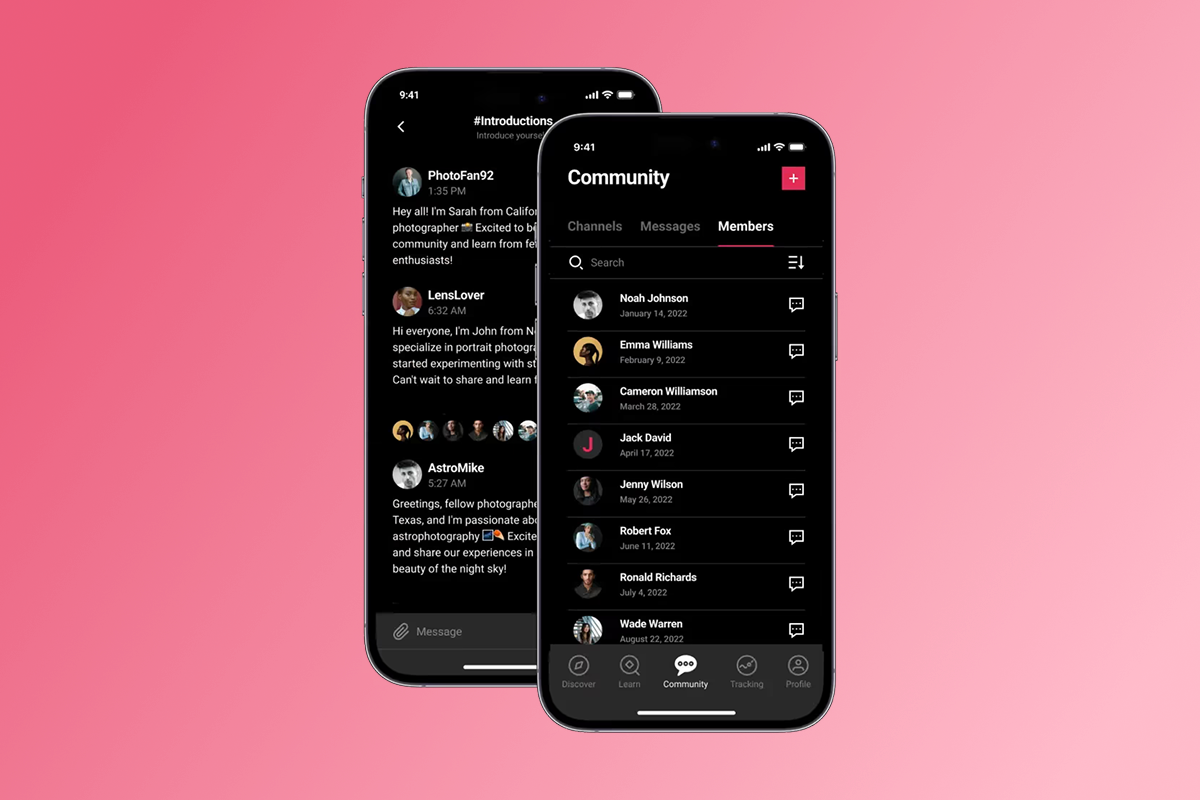
Platform ownership matters more than feature lists. If you can't export your user data or move subscribers to a new system, you don't own your business. You're leasing it.
1. Do I Own the User Data and Intellectual Property?
Ask the vendor directly: "If I cancel today, do I retain full rights to my user list, payment history, content library, and community posts?" Require explicit confirmation in the contract that you own all user data, content, and subscriber relationships.
Check whether data is stored in formats you can access (databases, APIs) or locked in proprietary systems. The platform should be infrastructure, not a gatekeeper.
Passion.io's approach gives you full data ownership with self-serve export tools. You control your audience list, subscription records, and content while the platform handles the technical plumbing (hosting, app updates, payment processing).
"I've been a Passion.io customer for a few years now. I'm very satisfied with the overall service." - Ray Bing The Runner on Trustpilot
Verify this extends to payment relationships. Can you switch from Stripe to another processor without losing transaction history? Do you have API access to pull data programmatically for your own analytics or CRM integrations?
2. What Is the Specific Process for Exporting Data if I Leave?
Ask for technical specifics: "What file format? How many clicks? Are there fees? Can I automate exports?" The gold standard is CSV export with self-serve access at zero cost.
Passion.io provides CSV download functionality with user filtering by pricing plan before export. You get clean segmented lists without support tickets.
Watch for three red flags: export requests requiring 5-10 day support tickets, batch limits forcing manual stitching, or exit fees that hold data hostage.
For API-savvy teams, ask about programmatic access. Passion.io offers Zapier integration that syncs user data to external tools automatically, reducing export dependency. Creators building interactive courses can push completion data to their CRM in real-time rather than waiting for monthly exports.
Financial Transparency: Uncovering Hidden Fees
Fee complexity kills margins. Between platform subscriptions, payment processing, Apple/Google cuts, and developer accounts, a $29 subscription can net you $18 or $24, depending on routing.
3. What Are the Total Costs Including IAP, Platform, and Developer Fees?
Build a complete 36-month cost model before you sign. Four fee layers matter:
1. Platform subscription: Most white-label builders charge $99-$599/month for SaaS access. Passion.io's Launch plan starts at $99/month billed annually, Scale at $239/month annually, and Expand at $599/month annually. Plus tier for white-glove service is custom priced.
2. Payment processing: This splits into two paths with radically different economics. Web checkout via PassionPayments charges 3.9% platform fee plus Stripe's standard 2.9% + $0.30, totaling roughly 6.8% + $0.30 per transaction. In-app purchases (IAP) route through Apple/Google and cost 15-30% depending on revenue volume.
3. Developer accounts: Apple charges $99 annually. Google charges $25 one-time. Budget $124 in year one, $99 annually thereafter.
4. App Store commissions: Apple takes 30% standard or 15% under the Small Business Program for creators earning under $1M in the prior 12 months. Google charges 15% on the first $1M in annual earnings, then 30% above that. Subscriptions stay at 15% across all tiers on Google.
Run the math on a $29/month subscription sold via web vs. IAP:
| Sale Channel | Gross | Platform Fee | Payment Processing | Net Revenue | Net Margin (%) |
|---|---|---|---|---|---|
| Web (PassionPayments) | $29.00 | $1.13 (3.9%) | $1.14 (Stripe) | $26.73 | 92.2% |
| IAP (Small Business <$1M) | $29.00 | $0 | $4.35 (15%) | $24.65 | 85.0% |
| IAP (Standard) | $29.00 | $0 | $8.70 (30%) | $20.30 | 70.0% |
On Scale and higher plans, Passion.io charges 0% platform fees on external checkouts processed outside PassionPayments via Stripe, PayPal, Shopify, or ClickFunnels.
"We chose this plan because we wanted to design the app ourselves, but even that process has been so simple and easy to use with the template provided." - Angie on Trustpilot
4. Does the Platform Support Web Checkout to Bypass Apple Taxes?
This is your margin protection question. Vendors who force 100% of transactions through IAP optimize for their own revenue at your expense.
Ask: "Can I sell subscriptions via web checkout on my own domain, then grant app access after purchase?" The answer determines whether you pay 7% in fees or 30%.
Verify the technical integration. Can the platform detect web purchases and automatically unlock app content? Passion.io's hybrid model lets you offer both paths. Use PassionPayments for web subscriptions (3.9% + Stripe), IAP for one-tap mobile convenience, and external processors for zero platform fees on Scale+ plans. The platform detects web purchases via Zapier integration and unlocks app content within minutes.
For creators selling $997 programs or $2,500 mastermind tiers, routing through web checkout is non-negotiable. A 30% Apple tax on high-ticket offers costs more than a year of platform subscription fees.
Technical Scope and Support: Defining "Done-For-You"
"White-glove" and "done-for-you" are marketing terms until you define the task list. App Store submission alone involves 50+ configuration steps and typically faces rejections on metadata, screenshots, or guideline compliance.
5. Do You Handle the Initial App Store Submission and Rejections?
Ask for the written scope: "Do you submit to Apple and Google on my behalf, or do you send me instructions?" Then ask: "Who handles the rejection response?"
Apple's review process completes within 24-36 hours in most cases, with up to 90% of submissions reviewed within 24 hours. Most apps face at least one clarification request that requires resubmission.
Passion.io's Expand and Plus plans include hands-on submission support where the team handles the bureaucracy. Launch and Scale tiers provide guides and documentation for self-submission.
App Store approval complexity is real, which is why support tier matters. One creator on a self-service tier shared their experience:
"Passion does a great job with supporting their clients to succeed, even after purchasing their product. I only give them a 4 out of 5 because the actual process of getting your app approved by the Google Play Store in particular is a lot more challenging than Passion makes it sound. - Jesse Wiens Chu
For enterprise creators, Plus tier's white-glove approach removes this friction. The team manages your developer accounts, submits builds, responds to Apple's guideline questions, and resubmits after changes. You stay focused on content and community.
Budget 4-8 weeks from contract signing to live apps on iOS, Android, and web. Web apps typically launch within 2-3 weeks, with store submissions starting by week 3-4.
6. What Is the SLA for Critical Bugs and Downtime?
Platform stability isn't negotiable when your business runs through the app. Ask: "What is your uptime guarantee, and what's my remedy if you miss it?"
Industry standard is 99.9% uptime, which allows 43 minutes of downtime per month. Enterprise SaaS platforms often guarantee 99.95% or higher, with tiered credits for breaches.
Ask about incident response times by severity. Industry standards for enterprise tiers typically include: Critical (P1) with response within 1 hour and resolution target 4-24 hours. High (P2) with response within 2-4 hours and resolution within 24-48 hours. For Plus tier clients, Passion.io provides named success managers with direct contact channels instead of ticket queues.
When you're managing 500+ active subscribers and a Saturday morning checkout breaks, you need a person who knows your business, not a chatbot.
"Our support team has been so helpful and personable from day one. We really appreciate our CSM, who has been so quick to respond to any questions we may have, making this experience so informative and smooth. I cannot recommend Passion enough for their professional, highly experienced and enthusiastic staff, especially for building an app from the ground up." - Angie on Trustpilot
7. Is This a Native App or a Web Wrapper?
This question reveals whether you're getting real mobile functionality or a website dressed up as an app. The technical distinction matters for engagement and member retention.
Native apps are built specifically for iOS (Swift/Objective-C) or Android (Java/Kotlin). They access device hardware directly for camera, location services, offline storage, and push notifications. Performance is efficient because they speak the operating system's native language. Users spend 88% of mobile time in apps.
Web wrappers take a mobile website and package it in a thin app shell. They lack true offline functionality, struggle with push notifications, drain battery faster, and can't access many device features. Performance lags because you're running a browser inside an app container.
Progressive Web Apps (PWAs) offer a middle ground with limited offline access and basic push notifications but can't match native performance or device integration.
Passion.io builds true native apps for iOS and Android plus web versions. You get push notifications that appear on lock screens, offline lesson downloads for users on planes or in areas with weak connectivity, and smooth video playback that doesn't drain battery.
The engagement difference is measurable. Creators using push notifications and in-app community features report 15-30% completion rate increases within 90 days compared to email-only communication.
Long-Term Viability and Security
Platform stability over 36+ months matters as much as launch features. You need proof the vendor will exist, protect user data properly, and keep your app compatible with evolving mobile operating systems.
8. What Are Your Security Protocols and Incident Response Times?
Ask three specific questions: "What encryption do you use for data at rest and in transit?" "Do you support two-factor authentication?" "What's your incident response process and timeline?"
Baseline requirements include SSL/TLS encryption in transit, AES-256 at rest, 2FA support, and GDPR/CCPA compliance.
For enterprise buyers evaluating vendors, SOC 2 Type II or ISO 27001 certifications provide third-party verification of security controls. Not all creator-focused platforms carry these certifications. Focus instead on practical security measures: encryption standards, 2FA availability, and your own security hygiene.
Best practice for creators: Enable 2FA on your admin account, use unique passwords, rotate credentials after team departures, and audit user permissions quarterly. Your security hygiene matters as much as the platform's infrastructure.
Passion.io uses SSL/TLS encryption for data in transit. The platform recommends creators follow standard security practices including 2FA, password managers, and regular access log reviews.
9. Can You Provide Case Studies of Creators at My Revenue Level?
Success stories must match your scale and monetization model. Ask vendors to connect you with three current customers earning $50K+ MRR who will discuss their experience. A confident vendor has satisfied customers at every tier willing to share results.
Passion.io publishes detailed case studies with named creators and specific outcomes:
- Allie Cooper (aerial arts): Built CirquePlus and earned over $4,000 in first week, reaching $50,000 annual revenue
- Savannah Bohlin (wellness): Maintains 250+ subscribers at $22.22/month, generating $66,000 annually
- Creator with fitness focus: Charges $80/month for training programs with strong member retention
The pattern across case studies: Creators who move from scattered tools into a branded mobile app with push notifications and in-app community see 15-30% completion increases and 10-20% MRR growth in the 90-180 day window.
Passion.io has 1,500+ reviews on Trustpilot with a 4.5/5 average rating, and 5.0 rating on G2. The platform serves 15,000+ creator apps.
10. How Do You Handle Updates and OS Compatibility Changes?
Apple and Google release major OS versions annually (iOS in September, Android rolling updates) with breaking changes that can affect app compatibility. Ask vendors: "Who handles compatibility testing and updates when iOS 21 launches?"
For native apps, this is critical. Apple and Google mandate that apps stay compatible with recent OS versions or face removal from stores. A vendor who pushes update responsibility to you offloads technical debt onto creators without engineering teams.
Passion.io handles platform updates and OS compatibility maintenance. When Apple ships iOS updates or Google changes Material Design guidelines, the platform team tests, adjusts, and deploys fixes across all creator apps automatically. You don't recompile code or resubmit to app stores for routine compatibility patches.
This is infrastructure work that custom development agencies charge $500-$4,000 monthly to maintain. White-label platforms amortize this across thousands of apps, making the economics work at $99-$599/month.
Red Flags: Signs a Vendor Is Not Enterprise-Ready
Watch for six warning signs that indicate a vendor isn't enterprise-ready:
Evasive fee disclosure: If the vendor won't break down platform fees vs. IAP fees vs. developer costs in writing during the sales process, expect worse transparency post-contract.
No customer references: Established platforms have happy customers willing to speak. A vendor who can't produce three references at your revenue tier is either new, struggling with churn, or hiding problems.
Vague "enterprise" claims without proof: Terms like "enterprise-grade security" or "bank-level encryption" without backing certifications are marketing fluff.
Support tickets only: If you're paying premium pricing for "white-glove" service but support is still a ticket queue with 2-3 day SLAs, you're not getting white-glove.
Locked data formats: Test the export function before you sign. Download a sample CSV. Can you open it in Excel? Are fields labeled clearly?
No public pricing: "Contact sales for pricing" is a red flag for creator platforms. Transparent vendors publish tier pricing publicly.
Comparison: Custom Dev vs. White-Label vs. DIY
Here's how the three paths compare on the metrics enterprise creators care about:
| Factor | Custom Development | White-Label (Passion.io) | DIY Web Builder |
|---|---|---|---|
| Setup cost | $80K–$250K | Custom (Plus) or $99–$599/mo | $0–$50/mo |
| Time to launch | 6–12 months | 4–8 weeks | 1–2 weeks |
| Monthly fees | $500–$4K maintenance | $99–$599 subscription | $29–$199 typical |
| Payment processing | Your terms (3–5%) | 3.9% web or 15–30% IAP | 3–5% typical |
| Push notifications | Custom build required | Native, built-in | Limited or none |
| App Store management | You handle | Expand/Plus: handled | You handle |
| OS updates | You pay for each update | Automatic, included | N/A (web only) |
Custom app development costs make sense when you need truly bespoke workflows or have regulatory requirements that creator platforms don't address. For most coaching and education businesses, the white-label path delivers 90% of the functionality at 10% of the cost and one-sixth the timeline.
Next Steps: Download the Vendor Evaluation Scorecard
Use this article as your vendor interview checklist. Score each platform across the 10 questions:
Ownership & Portability: Data ownership clarity, export process specifics
Financial Transparency: Complete fee breakdown, web checkout options
Technical Scope: App Store submission support, uptime SLA, native vs. wrapper
Long-Term Viability: Security protocols, customer references, update management
For creators ready to move from evaluation to implementation, start with Passion's platform demo to see the no-code builder interface and review case studies in your niche. Health & fitness professionals are the largest Passion.io segment with proven playbooks for training apps and challenge-based programs.
For Plus tier white-glove service, contact Passion.io's team with your current revenue metrics and launch goals for a custom proposal. If you aren't satisfied, there's a 30-day money-back guarantee.
Frequently Asked Questions
How long does App Store approval actually take?
Apple reviews typically complete within 24-36 hours, with up to 90% processed within 24 hours. Google Play reviews often process within 1-3 days. Most creators go live across web, iOS, and Android within 4-8 weeks total.
How do I avoid the 30% Apple fee?
Sell subscriptions via web checkout on your domain, then grant app access after purchase. You pay 3.9% + Stripe fees instead of 30% IAP. Reserve IAP for impulse purchases and convenience upsells.
What happens to my subscribers if I cancel my platform subscription?
Your app stops working for users. Before canceling, export your full subscriber list via CSV, communicate the transition via email and push notification, and migrate users to your new platform. Plan 4-8 weeks for orderly migration.
Is Plus tier worth the investment vs. Launch at $99/month?
For creators earning $50K+ MRR who value speed and founder time protection, yes. Plus handles App Store submissions, content migration, and initial setup. Launch is DIY using documentation.
Key Terminology
MRR (Monthly Recurring Revenue): The predictable monthly income from active subscriptions. Calculated as number of subscribers multiplied by average subscription price.
IAP (In-App Purchase): Transactions processed through Apple or Google's billing systems inside mobile apps. Subject to 15-30% platform fees.
Native App: Software built specifically for iOS or Android using platform languages (Swift, Java). Accesses device hardware directly for superior performance and offline functionality.
SLA (Service Level Agreement): Written guarantee of service quality metrics including uptime percentage, response times, and remedies for non-compliance.
Push Notifications: Messages delivered to a user's device lock screen without requiring the app to be open. Drive 3-10x higher engagement than email alone.
Churn: The rate at which subscribers cancel. Calculated as (lost customers divided by starting customers) multiplied by 100. Monthly churn rates vary by industry, with subscription education businesses typically targeting under 5%.