

5 Best Course Niches To Make Money Online 2026
 By Julieta Gil
Reaching $10,000 in monthly recurring revenue (MRR) from online courses isn't about inventing a new market. It's about entering a proven niche with a superior delivery model. The five most profitable niches are Fitness & Wellness, Business & Marketing Skills, Creative Skills, Personal Development, and Language Learning. Success requires 6-18 months of consistent effort, a mobile-first engagement strategy, and a subscription model instead of one-time sales. Expect to work 10+ hours weekly on content, marketing, and community building. Platform choice matters: marketplaces take 50%+ of revenue and own your students, while a branded mobile app lets you keep 85-96% and own all customer relationships.
If you work 40+ hours a week in a corporate job and dream of building something of your own, the biggest question isn't whether you have valuable skills. It's which niche will actually pay you enough to quit. You don't need a revolutionary idea to build a six-figure course business. You need to enter a market with proven demand and deliver your content in a way that keeps students engaged and paying monthly.
This article breaks down the five most profitable online course niches based on market size, subscription potential, and real creator earnings. You'll see the revenue benchmarks for each niche, how to validate your idea before you build, and why your platform choice determines whether you keep 96% of your revenue or lose half to marketplace fees. By the end, you'll have a framework for turning your corporate expertise into a business you own.
The Core Process: From Idea to Income
Before diving into specific niches, you need a validation framework. Too many creators spend months building courses no one wants. The smart approach is to validate demand before you record a single video.
The 5-step validation process:
- Identify a specific transformation: What measurable result can you help someone achieve? "Get fit" is vague. "Complete your first unassisted pull-up in 8 weeks" is a transformation worth buying.
- Research and audit competition: Use Google Trends to confirm sustained interest over 12-24 months. Search existing courses on Udemy to verify people are buying solutions. Competition signals proven demand, not a reason to quit. Your job is to differentiate through better delivery or a more specific audience.
- Survey your network: Ask your email list, social following, or professional contacts what they struggle with. The best course ideas come from recurring questions you already answer. Conduct direct conversations and surveys to uncover pain points that people will pay to solve.
- Create a lead magnet: Build a free resource that solves one specific problem for your target audience. This validates interest and starts building your email list before you invest in full course creation.
- Pre-sell before you build: Create a landing page with your transformation, price, and launch date. Get 10-20 deposits to validate real demand before recording a single video.
A Red Ocean is a market with high competition and proven demand. Many new creators mistakenly chase Blue Ocean opportunities with zero competition, only to discover there's no market at all. Your job is to enter proven markets and differentiate through a branded mobile app with push notifications instead of email-only reminders.
The 5 Most Profitable Course Niches (With Benchmarks)
Fitness & Wellness
The online fitness market continues to grow rapidly, driven by people increasingly choosing mobile-first platforms for on-the-go access. This reflects a fundamental shift in how people approach health and wellness education.
Revenue benchmarks:
- Average course price: $47-$197 one-time
- Typical subscription: $20-$100/month per member
- Customer lifetime value: At $50/month with 6% monthly churn, a fitness client is worth approximately $833 over their lifetime
Competition and differentiation:
This is a competitive market, but its size supports countless sub-niches. Instead of "general fitness," successful creators focus on specific transformations like postnatal strength training, yoga for desk workers, or kettlebell programs for beginners. Cirque+ teaches aerial arts and circus skills through Passion, proving how a focused niche builds a loyal following.
Why mobile wins in fitness:
Students want workouts at the gym, at home, or while traveling. Push notifications send workout reminders and celebrate milestones, maintaining engagement between sessions in ways email cannot match. A fitness coach using Passion sends notifications directly to students' phones. Higher engagement drives lower churn, which means more stable monthly revenue.
Business & Marketing Skills
The global online education market continues to expand dramatically, with business and marketing skills representing a significant portion of this growth. Professionals constantly need to update their knowledge in a digital environment, creating sustained demand for high-quality business education.
Revenue benchmarks:
- Average course price: $300-$2,000 for comprehensive programs
- Typical subscription MRR: $49-$299 per month for ongoing access and updates
- Customer lifetime value: Extremely high due to upsell potential. Your corporate background is an advantage. Successful creators who bundle multiple offerings (courses, community, coaching) earn 4.5 times more than those selling a single product, and your professional experience gives you multiple frameworks to package.
The coaching upsell:
Business skills creators often use courses as a qualification funnel for high-ticket coaching. While specific conversion rates vary by creator, the strategy is proven. Top earners offer an average of five different products, building a value ladder from low-cost courses to premium mastermind programs. One business coach uses Passion to work with CEOs, creating constant value and maintaining client engagement between sessions.
Competition and opportunity:
This niche is highly competitive but rewards specificity. Instead of "marketing courses," focus on "Facebook ads for service-based businesses" or "content strategy for B2B SaaS companies."
Creative Skills
The creative skills market serves both hobbyists and aspiring professionals, with demonstrated robust demand across multiple platforms. The visual and project-based nature of these subjects makes them ideal for engaging online course formats.
Revenue benchmarks:
- Average course price: $97-$497 for comprehensive programs
- Typical subscription MRR: $11-$49 per month for library access
- Customer lifetime value: Students who see tangible skill improvement typically stay for 10-12 months on average.
Engagement through community:
Creative skills benefit enormously from peer feedback and community support. Students join for the lessons but often stay for the community. Music training apps generate strong recurring revenue by fostering tight-knit communities of learners who support each other's progress.
Platform features that matter:
For creative skills, the ability to share work-in-progress and receive feedback is critical. A branded mobile app with community features allows students to post photos of their artwork, videos of their music practice, or drafts of their designs directly in the app.
Personal Development
According to Grand View Research, the personal development market grew to $47-49 billion in 2024, with projections to reach $67-77 billion by 2030-2033. This sustained growth reflects consistent demand for self-improvement and life transformation.
Revenue benchmarks:
- Average course price: $197-$997 for transformational programs
- Typical subscription MRR: $29-$99 per month for ongoing support
- Customer lifetime value: Very high. Personal development students who connect with a creator's message often invest in multiple offerings over several years.
The value ladder in action:
Personal development thrives on deep relationships and progressive transformation. Successful creators build a value ladder starting with free content, then a low-cost course or book, followed by group programs, and ultimately high-ticket one-on-one coaching or retreats. Data shows that 75% of high-earning creators offer five different products on average.
Mobile delivery advantages:
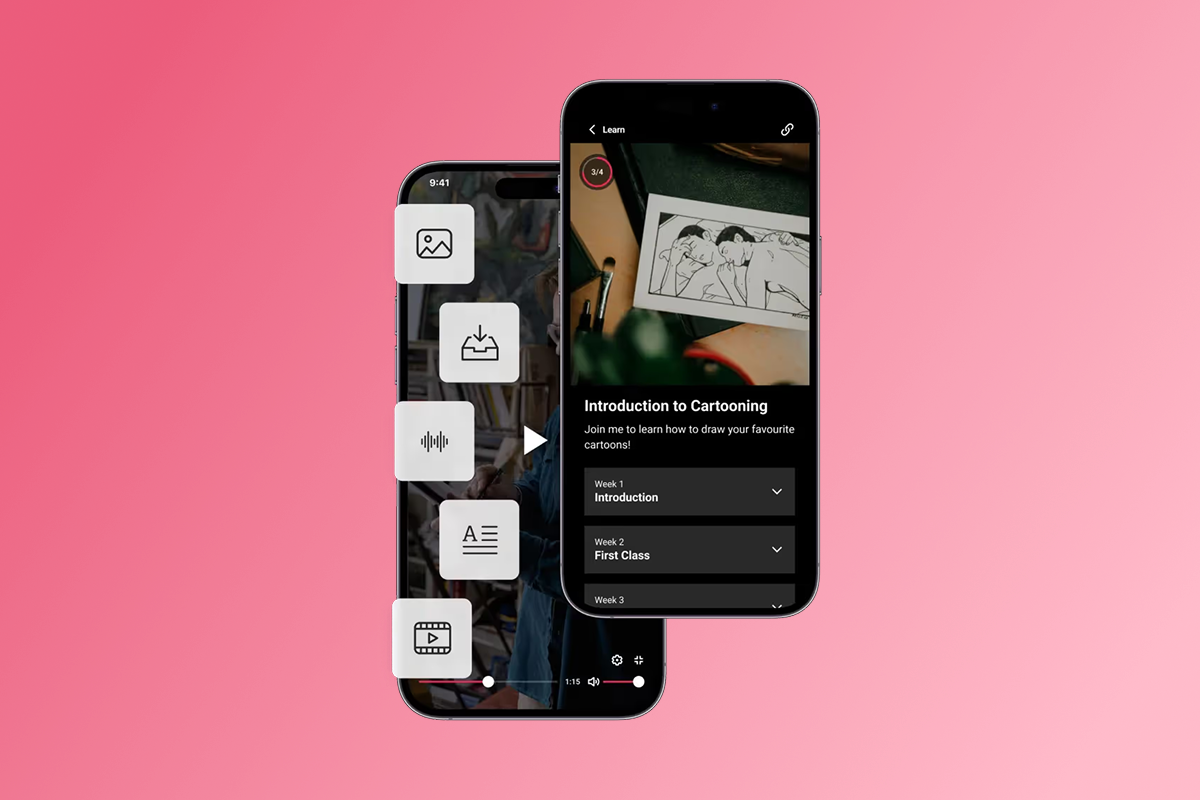
Personal development content often includes daily practices like meditation, affirmations, or journaling prompts. A mobile app allows creators to deliver these as push notifications according to research published in the National Library of Medicine, creating habit-forming touchpoints throughout the day. Everything Spiritual combines courses on Reiki, sound healing, and meditation with a supportive community.
Language Learning
According to Mordor Intelligence, the online language learning market reached $21.06 billion in 2025 and is climbing to $44 billion by 2030, with a compound annual growth rate exceeding 16%. Growth is driven by globalization, the need for multilingual professionals, and the expansion of mobile learning.
Revenue benchmarks:
- Average course price: $99-$299 for structured language programs
- Typical subscription MRR: $19-$79 per month for ongoing access and live practice sessions
- Customer lifetime value: Language learning requires sustained engagement over months or years. Students who achieve conversational fluency in one language often continue subscriptions to learn additional languages or maintain skills.
Why mobile dominates:
Mobile applications account for over 62% of the online language learning market share. Students learn in short bursts during commutes, lunch breaks, or while waiting in line. This aligns perfectly with the bite-sized lesson approach that works best on mobile devices. Lessons should be 3-7 minutes long to match mobile learning patterns.
Differentiation opportunities:
While giants like Duolingo and Babbel dominate the broad market, niche opportunities abound. You could teach business Spanish for healthcare workers, Mandarin for tech professionals, or conversational French for travelers. You can build interactive features like audio lessons, pronunciation practice, and community conversation practice that create engagement standalone video courses never achieve.
Choosing Your Platform: Marketplaces vs. Self-Hosted vs. All-in-One
Your platform choice directly impacts your profit margins, long-term business control, and whether you own your audience or rent it. Many creators start on marketplaces for the built-in traffic, only to realize they're building on rented land with no access to student emails or relationships. Others spread their business across multiple tools (video hosting, email, community, payments) and spend more time managing software than teaching.
Here's a clear breakdown:
| Platform Type | Fee Structure | Audience Ownership | Best For |
|---|---|---|---|
| Marketplaces (Udemy, Skillshare) | Udemy: 37% on organic sales, 97% on your promos. Skillshare: ~20% of subscription pool | You do not own student emails or relationships | Testing a course idea with built-in traffic |
| Web-Based LMS (Teachable, Kajabi, Thinkific) | Monthly fees $49-$399. Transaction fees 0-10% depending on plan | You own student data and emails | Creators who want branding control and web-first delivery |
| Branded Mobile Apps (Passion) | $99-$599/month annual plans. 3.9% + Stripe for web, 15-30% for in-app purchases (no added platform fee) | Full ownership of customer relationships | Corporate professionals building a business to replace salary with recurring revenue and full ownership |
The margin math:
Let's say you sell a $49/month subscription and generate $10,000 MRR (204 members).
- Marketplace (Udemy on promotion): You receive ~$4,900/month (Udemy takes 50% on promotional sales, which drive most volume)
- Web LMS (Teachable Pro plan): You receive ~$9,419/month ($10,000 minus Stripe fees, no transaction fee)
- Branded App (Passion web checkout): You receive ~$9,400/month (3.9% platform fee + Stripe, no transaction fee on external sales)
The difference between keeping 49% and keeping 94% compounds dramatically as you scale. This is why creators can reach six-figure annual revenue with smaller audiences than marketplace creators need.
Mobile app advantage:
Generic mobile apps from web-based LMS platforms allow students to consume content, but they lack the branded experience and deep engagement features. A native branded app with your logo, colors, and name on students' home screens creates a premium perception and higher retention.
Monetization Strategies: Beyond One-Time Sales
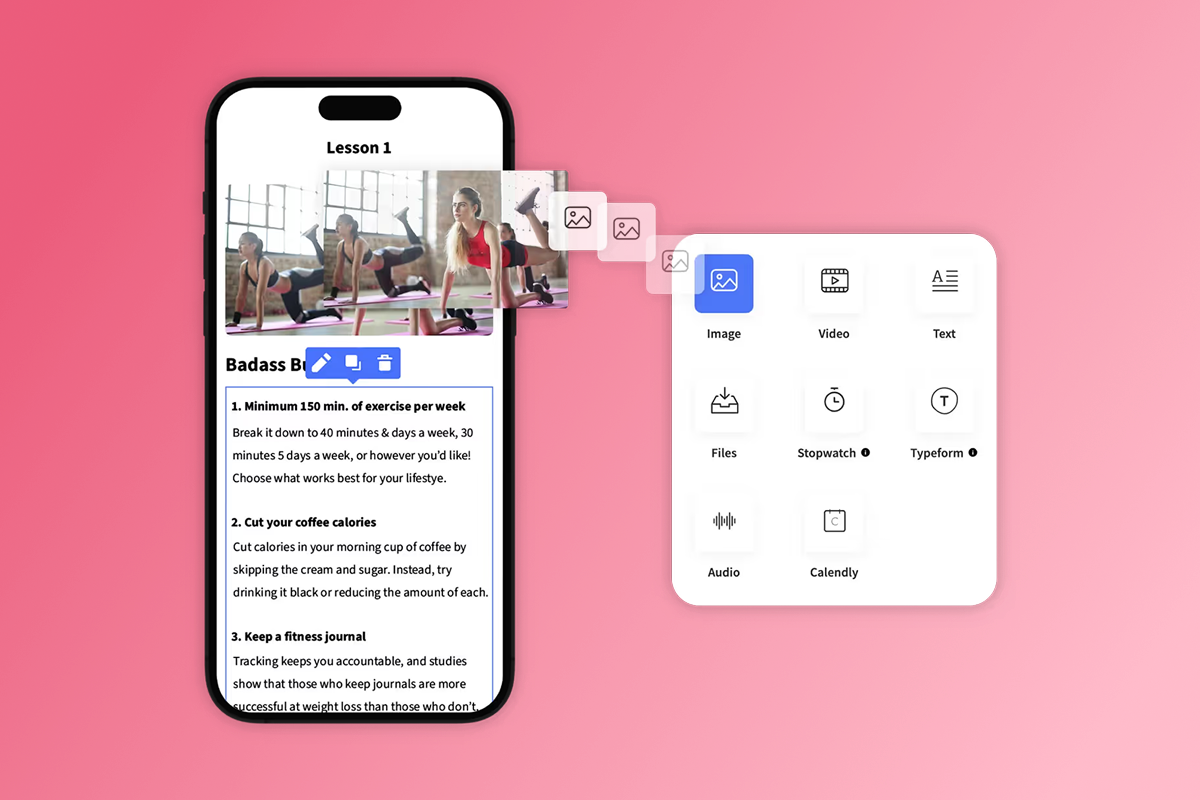
Building a $10K MRR business requires recurring revenue, not one-time course launches. Here's the difference:
One-time course model:
You sell a $197 course. To reach $10,000 in a month, you need 51 sales. The following month, you need another 51 sales. You're constantly marketing to new people, creating a feast-or-famine cycle.
Subscription membership model:
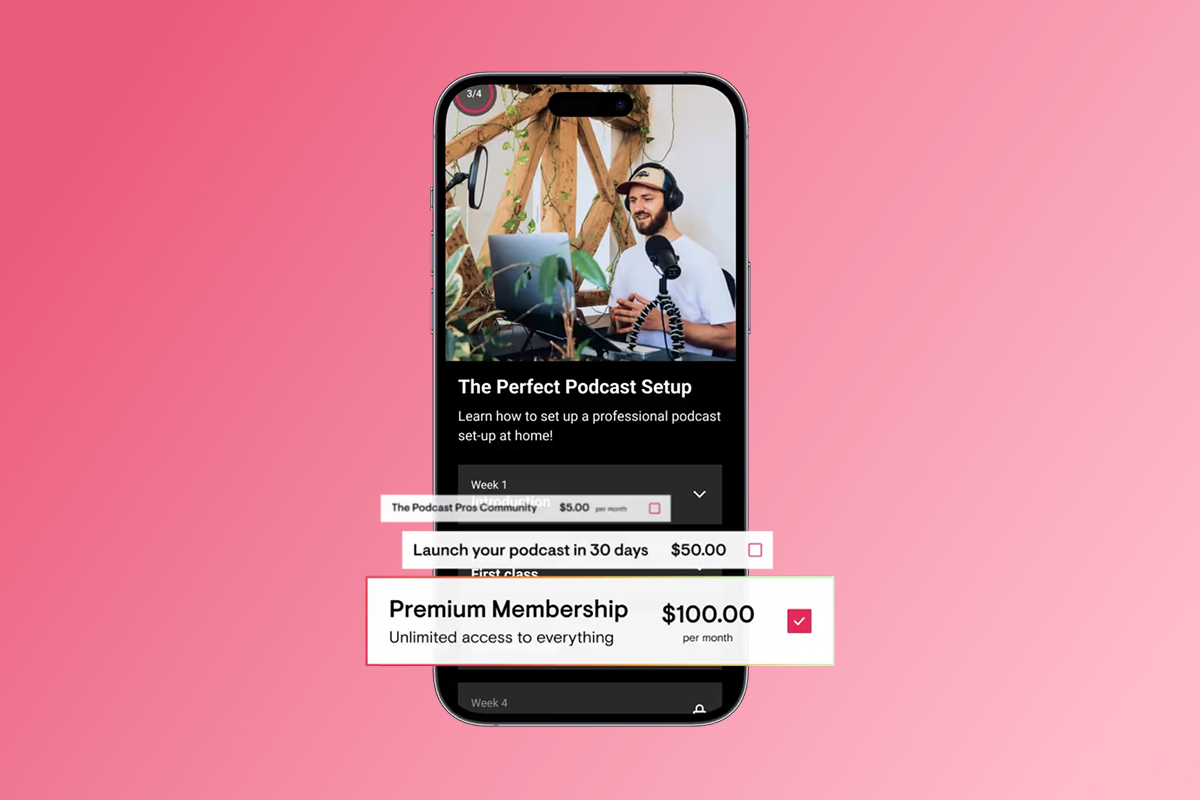
You charge $49/month for access to your content library, community, and monthly coaching calls. You need 204 members to reach $10,000 MRR. Month two, you keep most of those 204 members (assuming a healthy 5-7% monthly churn rate means you lose 10-14 members) and only need to add 15-20 new members to grow. By month six, your revenue base is stable and compounding.
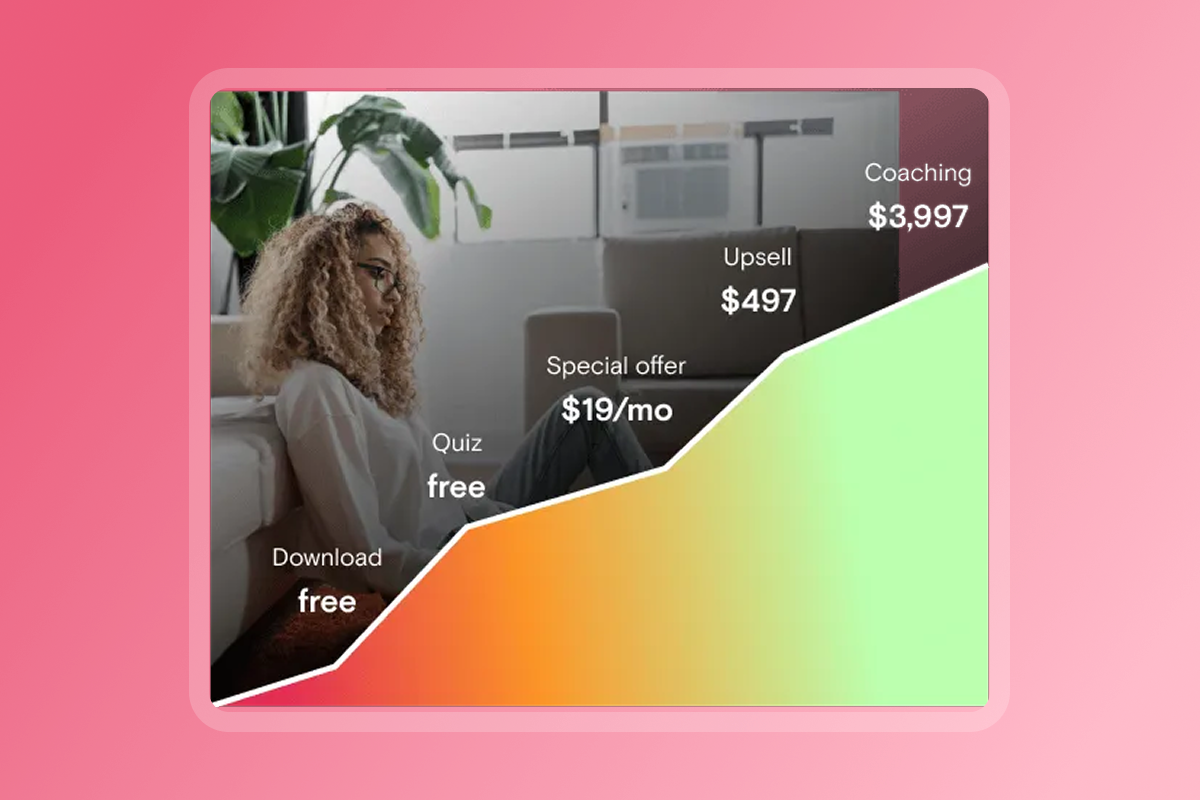
The pricing ladder in practice:
- Free content (YouTube, Instagram, podcast): Builds awareness and trust
- Low-ticket offer ($27-$97 one-time or $19-$29/month): A focused mini-course that solves one specific problem
- Core subscription ($49-$99/month): Full access to your course library, community platform, and group support
- High-ticket offer ($997-$2,997+): One-on-one coaching, mastermind groups, or VIP experiences
Marketing & Audience Engagement: Reaching Your Students
Build your first 50 members:
- Define your transformation clearly: "Learn Python" is a feature. "Build and deploy your first web app in 8 weeks" is a transformation students can visualize and value.
- Run a challenge funnel: A 5-7 day free challenge is the fastest way to convert cold audiences. You teach a condensed version of your methodology, provide quick wins, and invite participants to continue with your paid membership. Many creators use this model to launch with 30-100+ members.
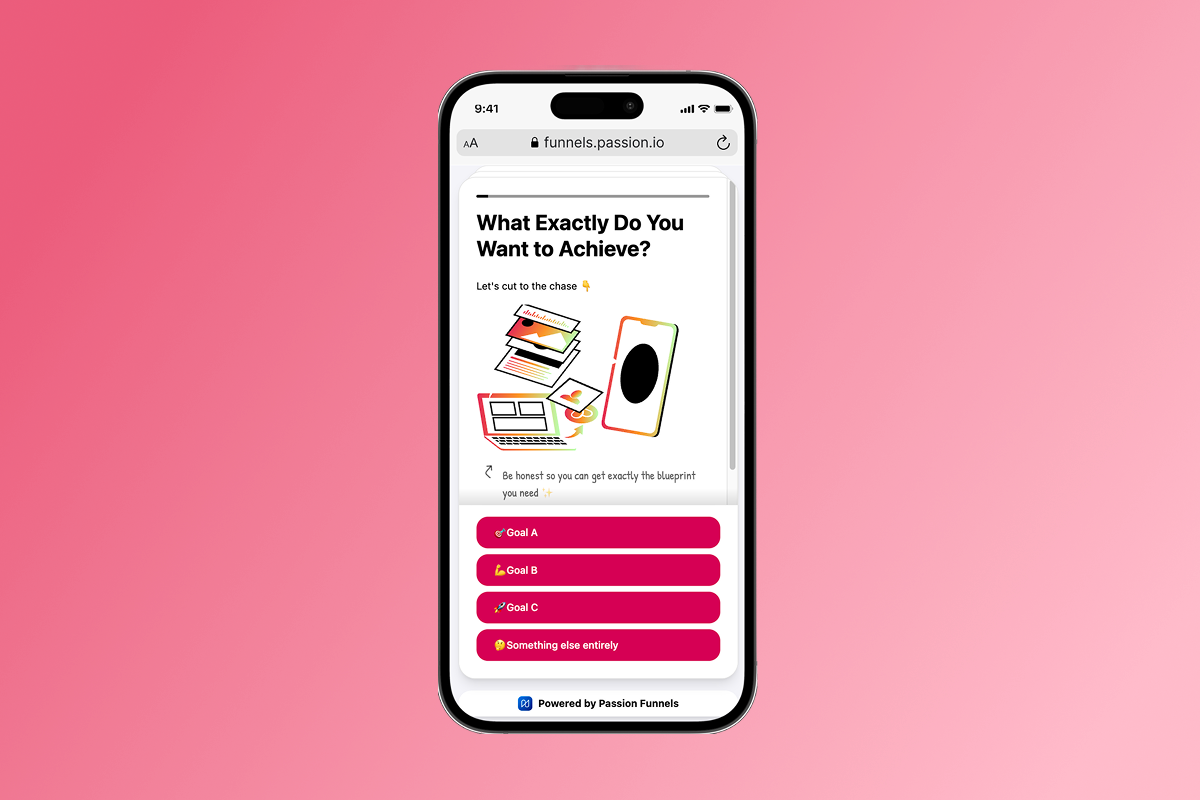
- Build an email list first: Collect 500-1,000 subscribers through a free resource that solves one specific problem before launch. An audience of 500-1,000 engaged subscribers is enough to launch successfully. You'll convert 2-5% into paying customers if you've built trust, which means 10-50 founding members from a 1,000-person list. That's $490-$2,450 MRR on day one at $49/month pricing.
"What I love about Passion is that it's not just a platform to create your own app – it also provides invaluable training on how to build and sell your course." - Verified user review of Passion
The Reality of Profitability: Effort, Competition, and Earnings
It is not passive income
Creating course content is the beginning, not the end. You'll market consistently, support students, update content, and build community. Most creators work 10+ hours per week on their business, even after the initial course is built. That said, efficiency is possible. Many creators earning $50,000-$100,000 annually spend less than 10 hours per week creating content once their systems are running. Smart systems and a focused niche matter more than sheer hours.
Realistic timelines
- Months 0-3: Course creation, platform setup, initial marketing
- Months 3-6: Launch, first sales, gathering feedback. Most creators see their first dollar around 6-7 months
- Months 6-12: Consistent marketing, growing membership, improving retention
- Months 12-18: If you've built momentum, you may reach or exceed $10K MRR
This is not a get-rich-quick timeline. It's a realistic path for someone willing to work consistently while maintaining a full-time job initially.
Churn: The metric that matters most
For subscription businesses, your monthly churn rate determines everything. Churn is the percentage of members who cancel each month. The average monthly churn for education subscriptions is 9.6%. A healthy rate is 5-7% or lower.
At 10% monthly churn, you lose all members in 10 months. At 5% churn, your average member stays 20 months. This difference doubles your customer lifetime value and cuts your marketing costs in half.
Lower your churn:
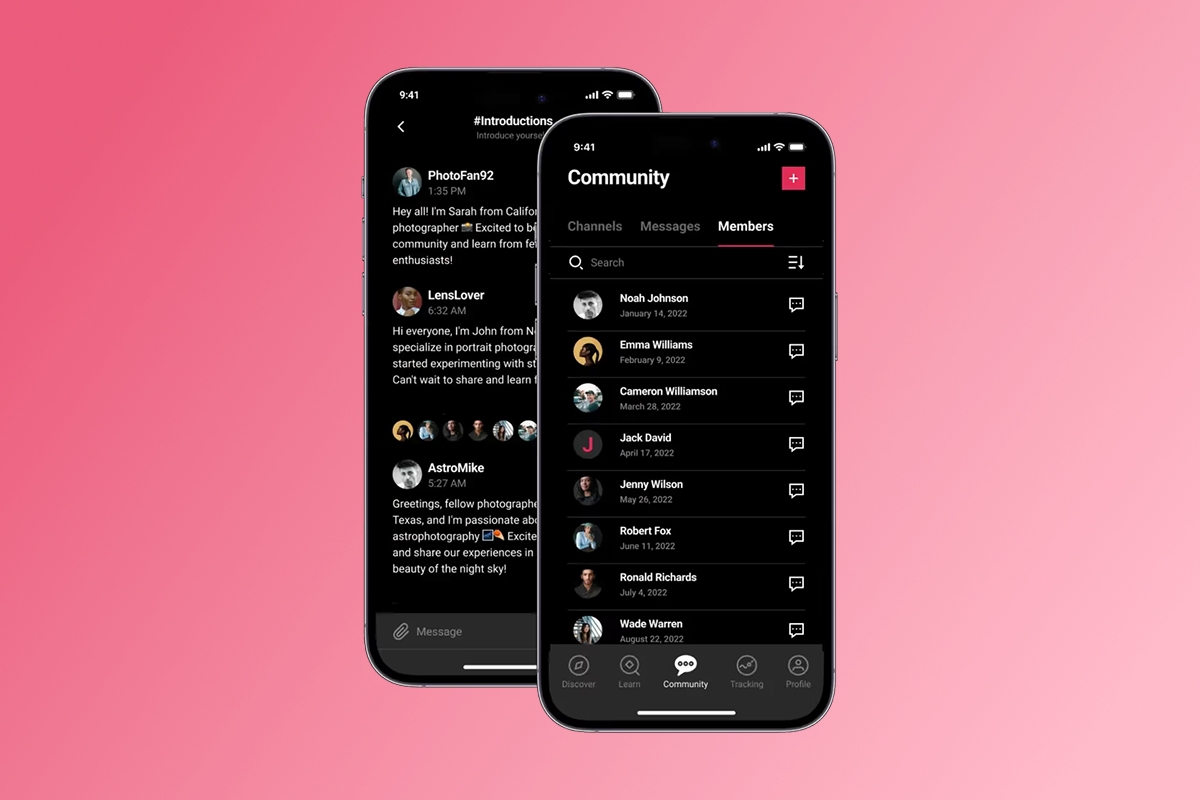
- Personalized onboarding: Guide new members to their first win in 48 hours.
- Build community: Students stay for peer connections, not just content.
- Recognize progress: Celebrate milestones with badges or shout-outs.
Platforms with mobile apps, push notifications, and communities consistently show lower churn than web-only experiences because they create daily touchpoints that build habits.
Real Creators Hitting $10K+ MRR: Case Studies
Numbers become real when you see actual creators reaching these milestones:
- Savannah Bohlin (Fitness): Personal trainer with over 250 subscribers at $22.22/month, generating $66,000+ per year.
- Spartan RAM (Fitness): 180 subscribers generating over $200,000 annually with monthly subscriptions ranging from $97-$297.
- Allie Cooper (Creative Skills): Circus and aerial art coach who made over $4,000 in her first week and generates $50K+ annually with 50+ subscribers.
- Colin Hiles (Business Skills): Business coach working with CEOs who uses his app to create competitive advantage and provide constant value.
These creators share common elements: focused niches, strong community building, mobile-first delivery, and subscription models. They didn't start with massive audiences. They built slowly with consistent effort and the right systems.
Your Next Steps: Validation to Launch
- Week 1-2: Choose and validate
Pick one niche where you have genuine expertise. Research competitors. Create a simple landing page offering a waitlist or pre-sale. Aim for 10-20 email signups or deposits to confirm demand. - Week 3-6: Build your minimum viable offer
Don't create 50 hours of content before you have your first sale. Build a core 4-6 week program that delivers one clear transformation.
- Week 7-8: Choose your platform
If you want maximum revenue retention, engagement, and brand control, a branded mobile app platform gives you the best foundation. - Week 9-12: Launch with a challenge
Run a free 5-7 day challenge that previews your methodology. Convert participants into founding members. Aim for 10-30 founding members in your first launch. - Months 4-6: Iterate and grow
Improve content based on feedback. Add community features and engagement loops. Test marketing channels. Aim to add 10-20 new members monthly while keeping churn below 7%.
Building a course business that generates $10K+ MRR is realistic for creators who validate demand, deliver real transformations, and build engagement systems that retain students. The corporate skills you've developed (project management, communication, problem-solving) transfer directly to this business.
Want to see what your niche looks like as a branded mobile app? Explore Passion to discover how push notifications, community features, and subscription tools can turn your expertise into recurring revenue you own.
Frequently Asked Questions
How long does it take to reach $10,000 MRR from online courses?
Expect 6-18 months with consistent effort. It takes an average of 6.5 months to earn your first dollar as a creator, and another 6-12 months to build to sustainable recurring revenue.
What's a realistic monthly churn rate for a course subscription?
The education sector averages 9.6% monthly churn, but top creators achieve 5-7% or lower through strong onboarding, community building, and engagement systems.
Can I build a profitable course business while working full-time?
Yes. Many creators start as a side project, working 10-15 hours per week. Once systems are established, successful creators earning $50K-$100K work less than 10 hours weekly on content creation.
Do I need a large audience before I launch?
No. An engaged email list of 500-1,000 people is enough to launch successfully. You'll typically convert 2-5% into paying customers if you've built trust and validated demand.
What's the difference between selling on a marketplace versus my own platform?
Marketplaces like Udemy take 37-63% of revenue on most sales and you don't own student relationships. Your own platform (web LMS or branded app) lets you keep 85-96% of revenue and own all customer data.
How much does it cost to create and launch an online course?
A low-budget approach costs under $500 (smartphone, mic, free editing). A mid-tier approach with better equipment and paid ads typically runs $1,000-$5,000, with 20-30% allocated to marketing.
Key Terms Glossary
Monthly Recurring Revenue (MRR): The predictable total revenue generated from all active subscriptions in a month. Calculated by multiplying total subscribers by average subscription price.
Churn rate: The percentage of customers who cancel their subscriptions in a given period. A monthly churn rate of 5-7% is considered healthy for educational subscriptions.
Customer Lifetime Value (LTV): The total revenue you can expect from a single customer throughout their entire relationship with your business. For subscriptions, calculate by dividing average revenue per user by your churn rate.
Red Ocean: A market with high competition and proven demand, where multiple providers compete for customers. Success requires differentiation through delivery, positioning, or niche focus.
Value ladder: A monetization strategy offering products at progressively higher price points, from free content to high-ticket coaching, allowing customers to invest more as they derive more value.
Transformation: The specific, measurable result a student achieves after completing your course. Successful courses sell transformations, not just information or access to videos.
Push notifications: Messages sent directly to a user's mobile device from an app, even when closed. They drive higher engagement than email for educational content. Higher engagement drives lower churn, which stabilizes your monthly recurring revenue.
Drip content: The practice of releasing course lessons on a schedule rather than all at once, maintaining student momentum and reducing overwhelm while improving completion rates.

Build the business
behind what you know.
Turn your expertise into a branded app with courses, community, and the You AI Coach. Launch plan from $99/month.