


5 Skills to Make $100/Day Online & Build Your Freedom Business
Senior Product Marketing Manager
Earning $100/day online ($3,000/month) is achievable through five high-value skills: niche coaching, curriculum design, community management, content creation, and no-code app building. The math is simple (30 members at $100/month or 60 at $49/month), but the vehicle matters. Freelancing trades time for money, while a branded app on Passion.io packages your skills into recurring revenue that sells while you sleep. Realistic timeline: 30 days to build, 60 days to first sales, 90 days to hit $100/day. Launch plan starts at $99/month annual ($119 monthly).
Why $100/day is your freedom milestone
Corporate professionals spend decades building expertise in marketing, operations, consulting, and finance. That knowledge has market value, but most people never see it because they rent their time to an employer.
The $100/day threshold ($3,000/month, $36,000/year) is not arbitrary. It covers a mortgage, car payment, or groceries. It is the financial lifeboat that makes quitting feel possible instead of reckless.
The coaching industry is booming. The International Coaching Federation's latest research shows the coaching profession generated $5.34 billion in revenue over the past year, with 122,974 global practitioners representing a 15% increase since 2023, signaling genuine market demand rather than hype.
People pay for solutions to concrete problems. If you have spent years solving those problems in a corporate role, you already own the raw material. The work ahead is packaging that knowledge into a format that generates income without requiring you to trade every hour for a dollar. This guide breaks down five skills that consistently produce $100+ per day for people starting from zero audience. Each includes realistic timelines, daily effort requirements, and a path to turn that skill into a branded app business using Passion's no-code platform.
The math of freedom: what $100/day actually looks like
To hit $100/day, you need $3,000 per month in recurring revenue. Here is the breakdown across different pricing tiers:
| Monthly price | Members needed | Annual value / member | Total annual revenue |
|---|---|---|---|
| $29/month | 104 members | $348 | $36,192 |
| $49/month | 62 members | $588 | $36,456 |
| $99/month | 31 members | $1,188 | $36,828 |
| $149/month | 21 members | $1,788 | $37,548 |
These two paths show the same number on a spreadsheet but produce completely different lives.
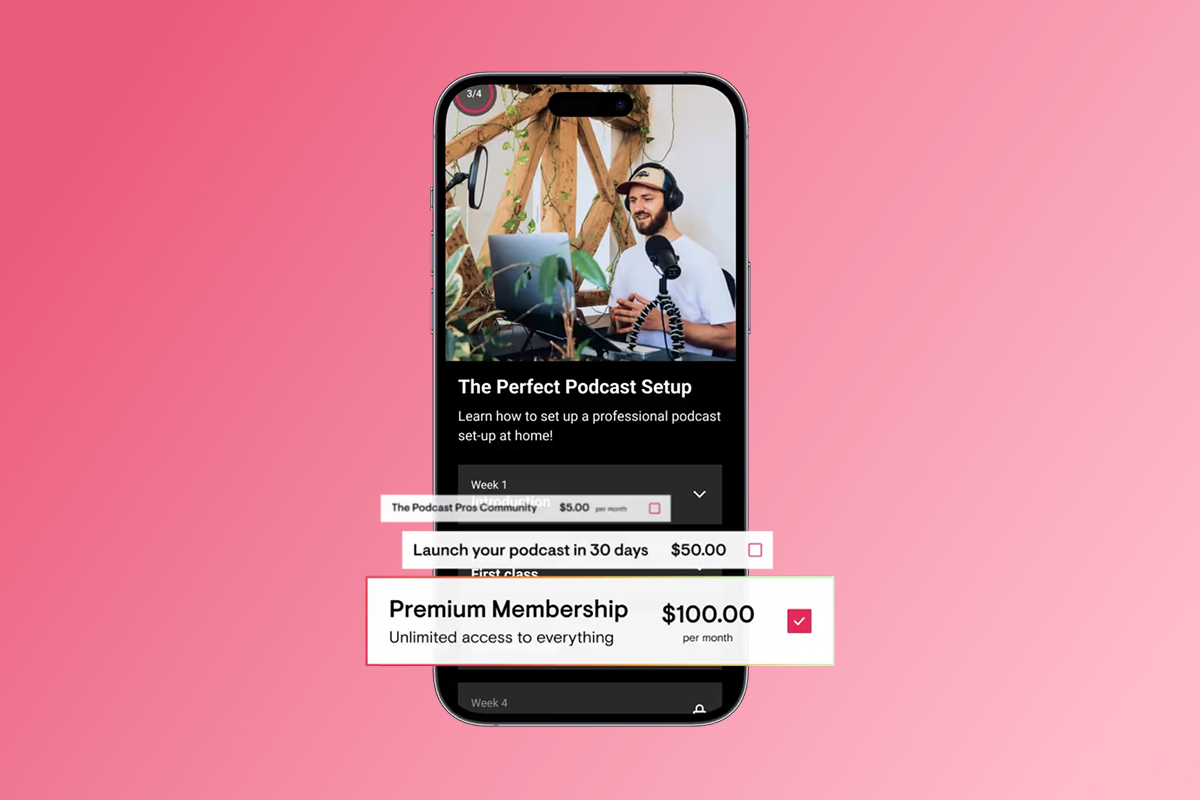
Path one: service (freelancing)
You sell your time on Upwork, Fiverr, or Toptal. If you charge $100/hour, you need one billable hour per day. At $50/hour, you need two. This model caps fast because you run out of hours, and every dollar requires you to show up. Freelance rates vary widely from $10 to $150 per hour depending on experience, but even top earners face the same constraint: time. Take a week off and your income stops.
Path two: product (app / course)
You package your expertise into lessons, coaching sessions, or a paid community inside a branded mobile app. Members pay monthly subscriptions. You deliver value once (record a lesson, write a framework, host a live call) and it scales to 10, 50, or 500 people. Revenue compounds as you add members, and content works while you sleep.
We focus on Path two throughout this guide because it builds an asset you control. Freelancing is a job with extra steps. An app business is a machine that runs whether you are working, traveling, or sitting in a corporate meeting planning your exit. Now let's break down the five specific skills that power this model.
Freelancing is a job with extra steps. An app business is a machine that runs while you sleep.
5 high-income skills you can monetize (and how to package them)
1.Niche coaching and instruction
What it is: Specialized coaching focuses on a specific problem for a specific audience. Instead of vague "life coaching," you teach mid-career professionals how to negotiate promotions, or you help new managers build high-trust teams.
Earning potential: Executive and leadership coaching typically command premium hourly rates. However, one-on-one coaching still trades time for money. The real scale happens when you package coaching frameworks into an app with group coaching, pre-recorded lessons, and monthly Q&A calls. Charge $99/month for group access and you hit $100/day with 31 members.
Learning curve: If you have five years of corporate experience, you already have the expertise. The skill to learn is packaging. How do you turn "I know how to run a product launch" into a repeatable system someone else can follow? That takes 30-60 days of structuring content, testing frameworks, and identifying the three problems you solve better than anyone.
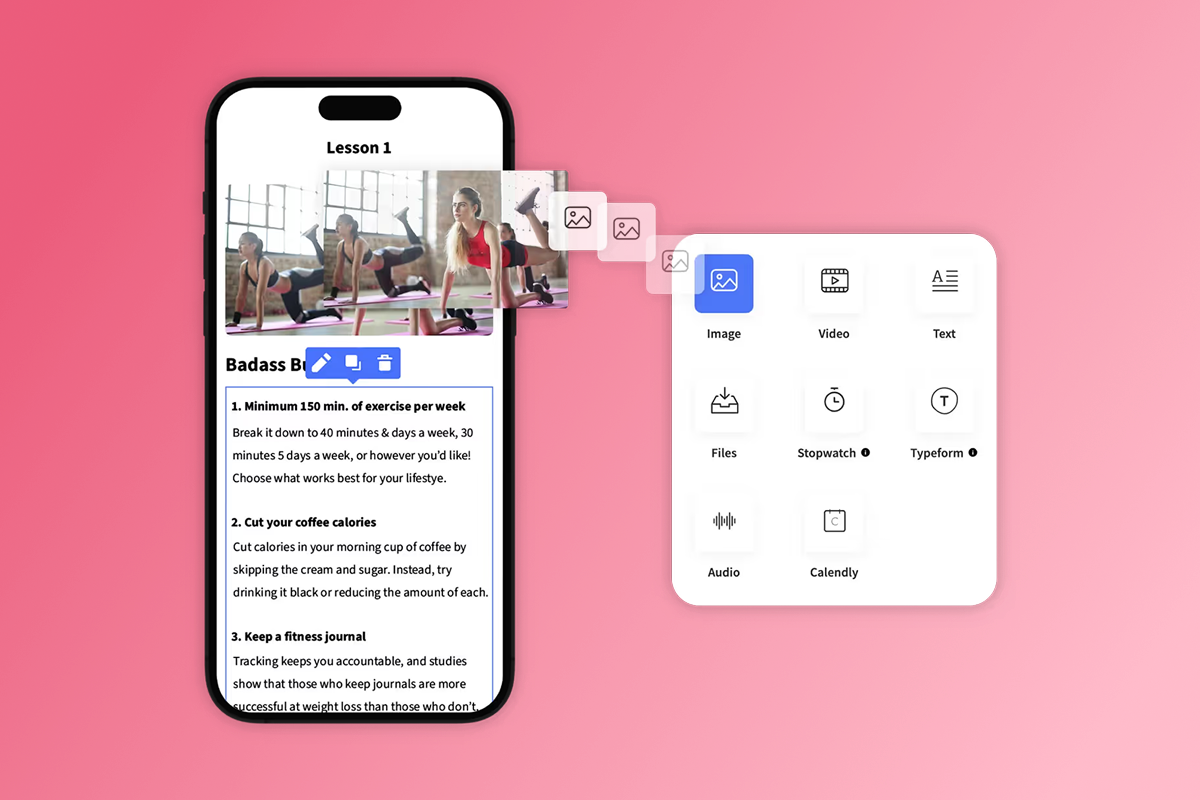
For example, one fitness creator we worked with launched a 30-day mobility challenge inside their Passion app and reached $4,200 MRR within 90 days with 42 paying members at $99/month. They turned years of training experience into a structured program members could follow from their phones.
- Build your signature framework. Break your expertise into 8-12 core lessons covering one clear transformation.
- Record lessons. Use your phone or a simple screen recorder. Upload videos, PDFs, and worksheets into Passion's drag-and-drop builder.
- Add live coaching calls. Integrate Zoom or Calendly for weekly group sessions where you deliver personalized feedback at scale.
- Set subscription pricing. Use monthly and annual tiers with a discount for annual commitment (e.g., $99/month or $990/year, saving $198).
Profitable sub-niches include executive coaching, career transition coaching, sales coaching, and financial coaching. These areas command premium pricing because the ROI is measurable. A client who lands a $20k raise after your promotion coaching will pay $500 without hesitation.
2.Curriculum design (turning knowledge into courses)
What it is: Curriculum design is the skill of organizing information into a logical learning path. Corporate trainers, instructional designers, and subject matter experts already do this inside companies. The same skill builds online courses that sell.
Earning potential: Course creators on platforms like Teachable or Udemy often see inconsistent income because they compete in crowded marketplaces and lose control of pricing. A branded app changes the equation because you own the customer relationship, set your own prices, and keep the revenue. A $49/month course membership with 62 active learners hits $3,000/month. Add upsells like premium tiers, one-on-one coaching, or certification and income scales further.
Learning curve: If you have ever built a training deck, written SOPs, or onboarded new hires, you understand instructional flow. The challenge you will face is technical execution, though Passion.io's templates and mobile-first design solve most of it. Expect 20-30 hours to build your first course if content already exists in rough form like slide decks, notes, or recordings.
- Audit your existing content. Dig through old presentations, training docs, and email threads where you explained a process.
- Structure into modules. Aim for 6-10 modules with 3-5 lessons each. Each lesson should deliver one clear outcome like "How to write a cold email that gets replies."
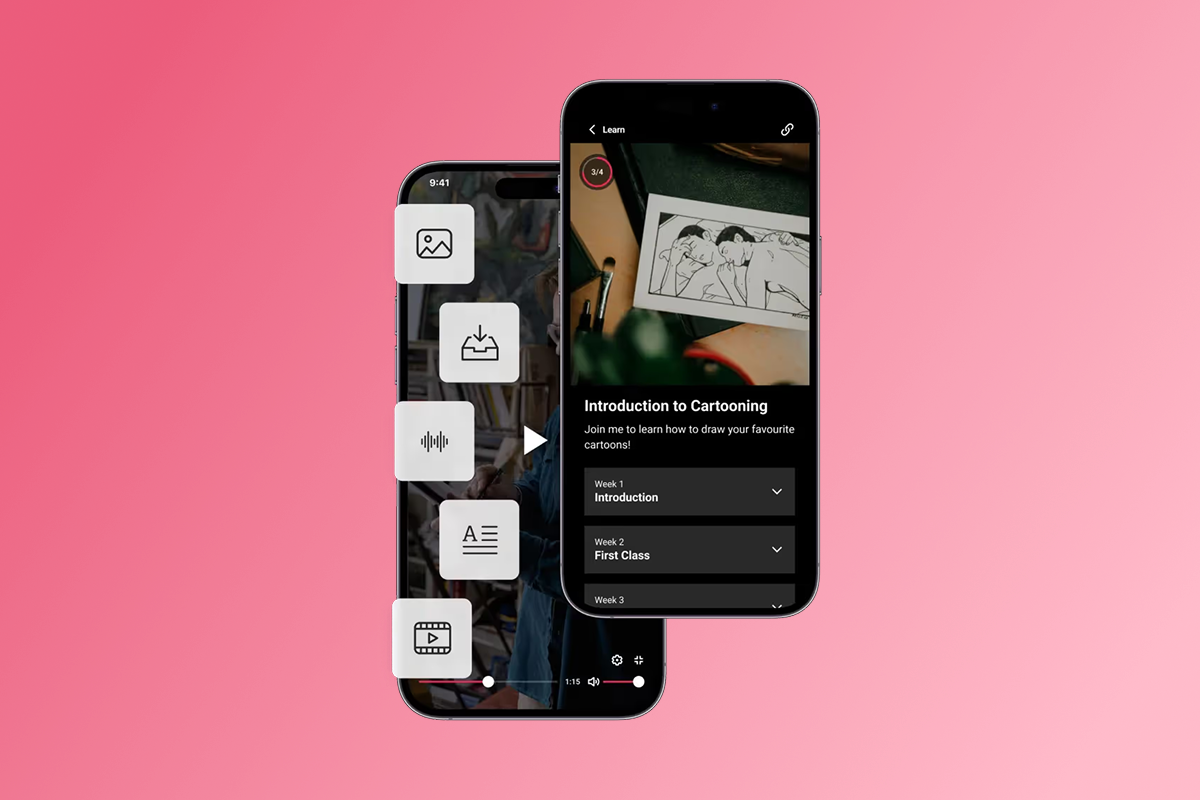
- Upload to Passion. Drag videos into the app builder, add quizzes or worksheets using Typeform integration, and set drip schedules so lessons release weekly.
- Track completion. Use built-in analytics to see where students drop off, then improve those lessons.
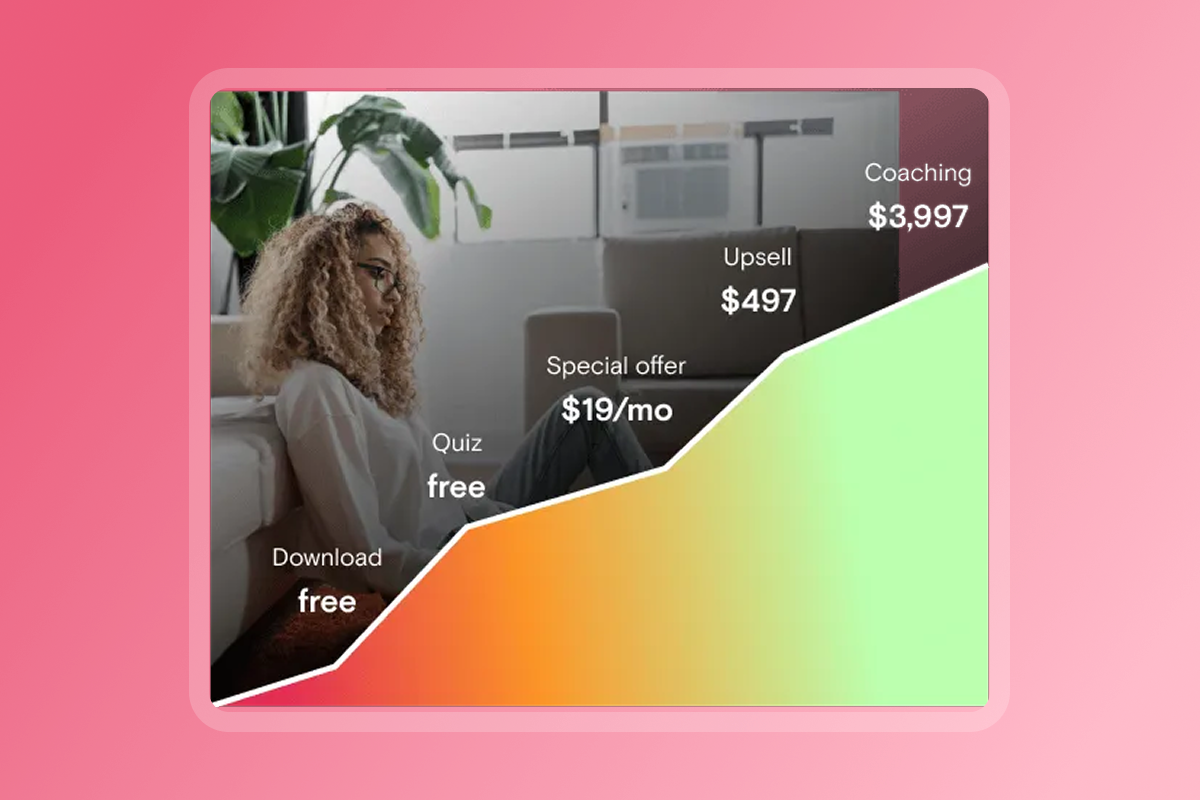
This skill pairs naturally with coaching. Sell courses for self-paced learners at $29/month, then upsell group coaching at $99/month for people who want live feedback.
3.Community management (running paid groups and challenges)
What it is: Community management involves creating a space where members connect, share progress, and hold each other accountable. Paid communities work because people pay for access to peers, not just content. A fitness challenge, a 30-day writing sprint, or a job-search accountability group all monetize through recurring membership fees.
Earning potential: Communities scale efficiently because the members create value for each other. You facilitate rather than deliver every piece of content. Charge $49/month and hit $100/day with 62 members. Many community operators run multiple cohorts per year, stacking revenue as old members stay and new ones join.
Learning curve: Low barrier to entry. If you have managed a team, moderated a Slack channel, or organized volunteer groups, you already have the foundational skills. The learning happens in engagement tactics: how to spark conversations, recognize contributors, and prevent ghost-town syndrome. Budget 10-15 hours per week in the first month to build momentum, then 5-7 hours per week to maintain.
- Pick your theme. The best communities solve a specific problem. "Marketing professionals learning AI tools" beats "marketers helping marketers."
- Set up channels. Use Passion's in-app community features to create discussion threads for member intros, wins, and Q&A.
- Run a challenge. A 30-day challenge with daily prompts and weekly check-ins drives engagement. Push notifications remind people to participate.
- Host live events. Weekly or monthly member calls build connection. Record and add them to your course library for members who miss the live session.
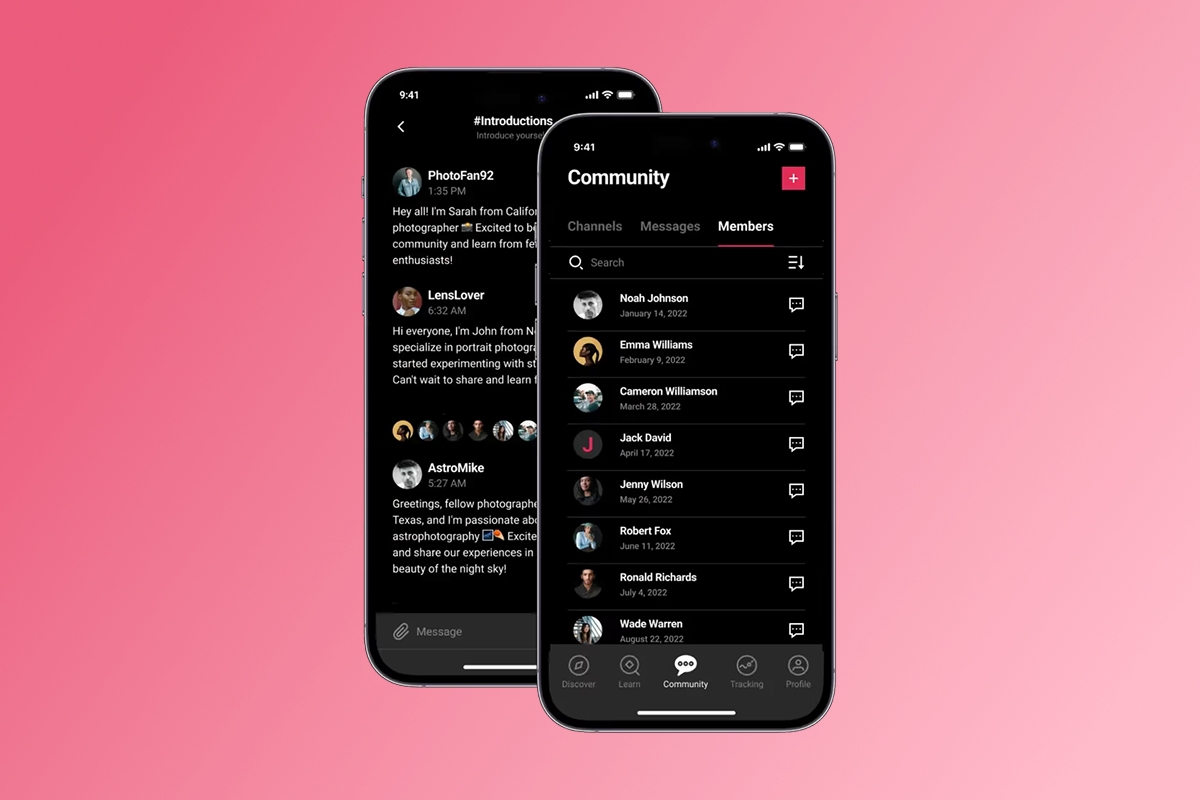
Communities often start as an add-on to a course or coaching program, then grow into the main product because retention is strong and members renew at high rates.
4.Content creation (video and audio for app lessons)
What it is: Content creation is the production skill behind courses, communities, and coaching apps. You record clear video lessons, edit audio, and write scripts that teach without boring people. This is not Hollywood-level production. Phone videos and simple screen recordings work if the teaching is solid.
Earning potential: As a standalone freelance skill, video editors charge varying hourly rates depending on experience and specialization. But the real money is in creating content for your own app. A library of 20-30 video lessons can generate $3,000/month in subscription revenue if packaged correctly. Alternatively, you can offer content creation as a service to other coaches and educators launching apps and charge per project.
Learning curve: Modern tools make this accessible. Free apps like iMovie, DaVinci Resolve, or Descript handle editing. Spend 20 hours learning basic cuts, transitions, and audio cleanup. After that, production speed improves. Expect to create one polished 10-minute lesson per hour once you hit a rhythm.
- Script your lessons. Write bullet-point outlines, not word-for-word scripts. Teach like you are explaining to a colleague over coffee.
- Record in batches. Set aside a half-day, record 5-7 lessons back-to-back, then edit later to save setup time.
- Upload to Passion. The platform handles hosting and streaming so you do not need to worry about video codecs or bandwidth.
Content creation is the engine for every other skill on this list. Strong content makes courses better, communities stickier, and coaching more valuable.
5.No-code app building (building apps for yourself or others)
What it is: No-code app building uses platforms like Passion to create functional mobile and web apps without writing code. You drag and drop features, customize branding, and launch a product that looks and feels like a custom-built app. For corporate professionals, this skill opens two income streams: building your own app business or offering app-building services to other creators.
Earning potential: If you build for others, app setup projects and recurring support retainers create steady income. If you build for yourself, you create the platform that hosts all your other monetization like courses, coaching, and community.
Learning curve: Expect 15-25 hours to become proficient. Walk through Passion's tutorial videos, build a test app with sample content, and practice integrating payments, push notifications, and community features. Once you understand the builder, you can launch a basic app in 2-3 days.
- Start with your own app. The best way to learn is by building something real. Create a mini-course or paid challenge as your prototype.
- Document your process. As you build, take notes on setup steps and design decisions. This becomes a playbook you can sell or use to train clients.
- Offer app-building as a service. Find coaches or educators on LinkedIn who complain about tool sprawl and offer to consolidate their content into one branded app for a flat project fee.
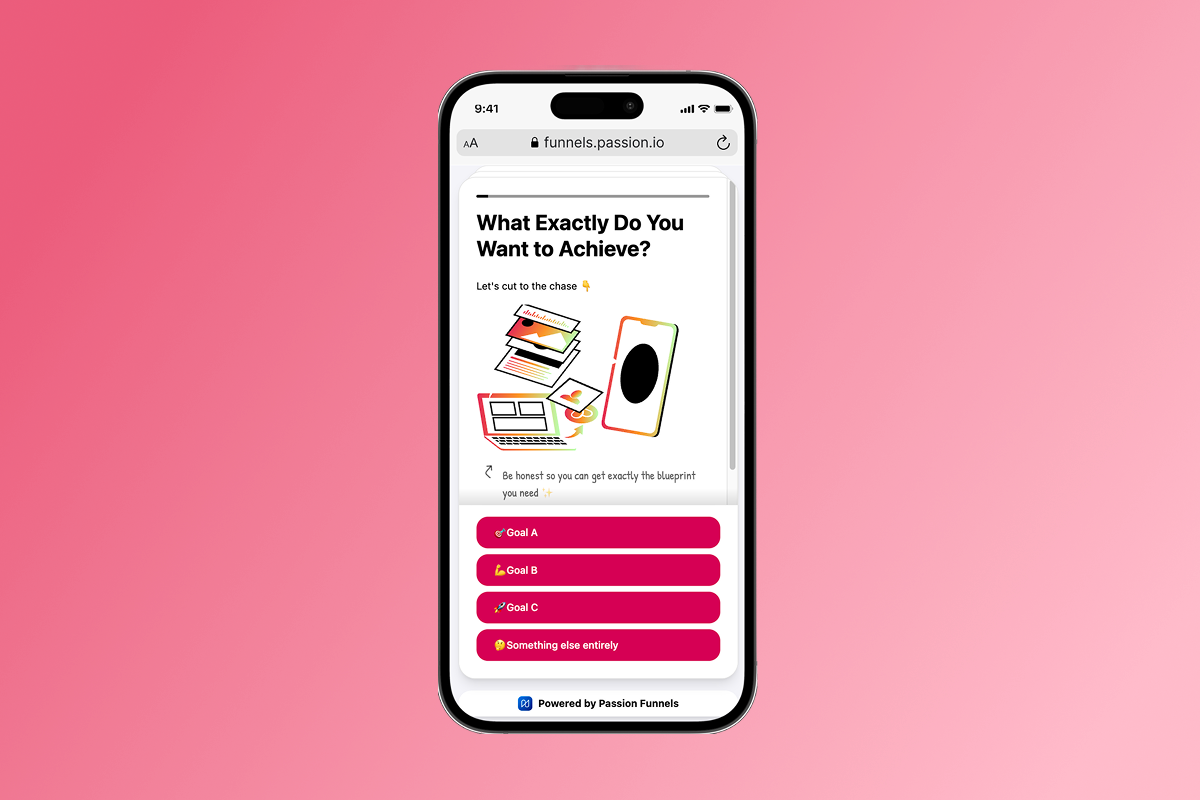
This skill has the highest meta-leverage. You use it to build the infrastructure for every other income stream, and you can sell it as a service while you grow your own app.
| Skill | Learning curve | Time to learn | Freelance potential | App revenue potential |
|---|---|---|---|---|
| Niche coaching | Medium | 30-60 days | High hourly rates | $3,000-10,000/mo |
| Curriculum design | Low-Medium | 20-40 hours | Project-based | $1,500-5,000/mo |
| Community management | Low | 10-20 hours | Hourly or retainer | $3,000-8,000/mo |
| Content creation | Medium | 20-30 hours | Per project or hourly | $2,000-6,000/mo |
| No-code app building | Medium | 15-25 hours | Project plus retainers | $3,000-15,000/mo |
How to build your $100/day engine (step by step)
Step 1: Choose your skill and niche
Pick one skill from the five above. Then narrow to a specific audience and problem. Use this formula: "I help [specific person] achieve [specific outcome] through [your method]."
Examples:
- "I help mid-career marketers transition into product management through a 90-day coaching sprint."
- "I help new managers build high-trust remote teams through weekly challenges and frameworks."
- "I help corporate professionals launch their first app business in 60 days without writing code."
Spend 5-7 days validating demand. Post your idea on LinkedIn, ask your network if they would pay for it, and join Facebook groups where your audience hangs out. If 10+ people say "I need this," move forward.
Step 2: Package it into a "launch" offer
Your first offer should be simple: a 30-day challenge, a 6-week course, or a 90-day coaching cohort. Price it at $49-99/month or $297-597 as a one-time payment. The goal is to prove people will pay, not to build the perfect product.
- 6-10 core lessons (video or audio)
- 1-2 live group calls per month
- A private community for members to connect
- Push notifications for accountability
Do not wait for perfection. Launch with "good enough" and improve based on member feedback.
Step 3: Build the MVP in Passion
Sign up for Passion's Launch plan at $99/month with annual billing or $119/month with monthly billing. This gives you the core features to build and launch your app: video lessons, community features, push notifications, and payment processing.
- Day 1-2: Set up branding with your logo, colors, and app name. Use Canva for quick design work.
- Day 3-5: Upload your core lessons. Record on your phone or computer, then drag videos into the platform's visual builder.
- Day 6-7: Set up pricing tiers with monthly and annual options. Add a free trial or intro module to reduce friction.
- Day 8-9: Create community channels for intros, wins, and Q&A, then write welcome messages.
- Day 10: Test the user experience. Download your app, go through the onboarding, and fix anything confusing.
Step 4: The "seed launch" to get your first 10 members
Your first 10 members come from warm outreach, not paid ads. Email your network, post on social media, and ask satisfied beta testers to refer friends. Offer an early-bird discount like 50% off the first month to create urgency.
- Send 3-5 personalized emails per day to people who fit your audience.
- Post daily on LinkedIn or Instagram with a specific problem and your solution.
- Host a free live workshop on Zoom or Instagram Live that teaches one framework, then pitch your app at the end.
- Use push notifications inside your app to welcome new members and guide them to their first lesson.
If 10 people pay, you have validation. If zero people pay, revisit your offer or pricing. Do not build more content until you prove demand.
Realistic timeline: the 90-day ramp to $100/day
Month 1: learn and build
- Week 1: Choose your skill and niche. Research competitors, validate demand by posting your idea on LinkedIn and asking 20 connections if they would pay $49/month for it, then outline your offer.
- Week 2: Create your core content. Record 6-10 lessons, write frameworks, and prepare live call topics.
- Week 3: Build your app in Passion. Set up branding, upload content, and configure payment tiers.
- Week 4: Beta test with 3-5 friends or colleagues. Gather feedback and fix onboarding issues.
Target outcome: App built, beta feedback collected, ready to launch publicly.
Month 2: beta launch and first revenue
- Week 5: Launch to your warm network. Aim for 10-20 founding members at $49-99/month.
- Week 6: Host your first live calls. Deliver value, gather testimonials, and ask for referrals.
- Week 7: Create social proof. Post member wins, collect video testimonials, and share behind-the-scenes content.
- Week 8: Open enrollment to cold traffic. Test small paid ads at $10-20/day on Facebook or Instagram, or post organically twice per day.
Target outcome: $500-1,500/month recurring revenue, 10-30 active members, proven member satisfaction.
Here is what this looked like for one creator: Month 1 ended with a finished app and zero revenue. Month 2 brought 14 members at $49/month ($686 MRR). Month 3 scaled to 47 members ($2,303 MRR) through referrals and a limited-time enrollment sprint. Month 4 crossed $3,000 with 62 active members.
Month 3: scale to $3,000/month
- Week 9-10: Double down on what worked in Month 2. If organic posts drove sign-ups, post more. If referrals worked, incentivize them by giving referring members a free month.
- Week 11: Add urgency by running a 7-day enrollment sprint with a deadline and bonus for new members. Offer something like "Join by Friday and get a free 1-on-1 coaching call."
- Week 12: Improve retention. Send weekly push notifications, celebrate member milestones, and add a new lesson or live call to keep engagement high.
Target outcome: $3,000/month ($100/day) with 30-60 active members depending on pricing tier and a repeatable enrollment process.
This timeline assumes you work 10-15 hours per week on your app business while holding your full-time job. If you go full-time, compress this to 60 days.
Start building your freedom business today
The path from $0 to $100/day is not a mystery. Pick one high-value skill, package it into an app, and sell it to 30-60 people who need what you know. The math is simple. The execution requires focus, but it does not require genius.
Freelancing keeps you on the treadmill, but a branded app on Passion turns your expertise into an asset that works while you sleep, travels with you, and grows as you add members. You stop trading hours for dollars and start building recurring revenue.
Download our free 30-Day Income Roadmap checklist at the Creator MBA hub to track your progress from skill selection to first paying member. The checklist walks you through validation, content creation, app setup, and launch week tactics.
The Launch plan at $99/month with annual billing gives you everything to build your prototype. The Launch plan lets you upload your first lessons, set your pricing, and invite 10 people who trust you. If it works, scale it. If it does not, you learned the skill in 30 days while keeping your paycheck. That is a low-risk bet on your freedom.
The corporate job will always be there if you need it. The question is whether you will still need it 90 days from now. Want proof it works? Read the creator case studies from people who did exactly this.
Frequently asked questions
What is the easiest skill to learn to make money online?
Community management and no-code app building require the least technical skill. If you have managed teams or organized projects, you already have the foundation.
How long does it take to earn $100/day?
Plan 60-90 days working 10-15 hours per week. Full-time effort or an existing audience accelerates this to 30-60 days.
Do I need a large audience to start?
No. Your first 10-20 paying members come from warm outreach like friends, colleagues, and LinkedIn connections.
What does Passion cost?
The Launch plan is $99/month billed annually or $119/month billed monthly. Add the Apple Developer Program ($99/year) and Google Play ($25 one-time) if you want native app store listings. See the full pricing breakdown.
Can I run this while working full-time?
Yes. Build your app on nights and weekends, launch with 10 members, then scale as revenue grows.
What is the difference between web checkout and in-app purchases?
Web checkout through Stripe offers lower processing fees. Apple and Google take 15-30% on in-app purchases, so use web checkout for lower fees and in-app purchases for mobile convenience.
Key terminology
- Recurring revenue
- Income that renews automatically each month or year, such as subscription fees. More predictable than one-time project payments.
- Branded app
- A mobile and web application with your name, logo, and design instead of a generic platform. Builds trust and ownership.
- Push notifications
- Messages sent directly to a user's phone from your app. Higher open rates than email for reminders, launches, and engagement.
- No-code platform
- Software that lets you build functional apps using drag-and-drop tools instead of programming. Examples: Passion, Webflow, Zapier.
- Drip schedule
- Releasing course content gradually over time, like one lesson per week, instead of all at once. Improves completion and retention.
- In-app purchases (IAP)
- Transactions completed inside a mobile app through Apple or Google's payment systems. Convenient but charge 15-30% fees.
- Churn
- The percentage of members who cancel their subscription each month. Target under 5% monthly churn for healthy recurring revenue.

Turn your skill into an
app that pays you back.
Build your branded app, add the You AI Coach, and launch to your first members. The Launch plan starts at $99/month.