


Native App vs Web Community: Which Drives More Engagement?
Updated February 23, 2026
TL;DR: Native apps retain 8% of users at Day 30 in the education category and generate 2.4x longer sessions than web communities because push notifications, offline access, and home screen presence create habit loops that email cannot match. Custom app development costs $50,000 to $250,000 and takes 6 to 12 months, but white-glove platforms launch branded iOS, Android, and web apps in 30 days. Web checkout preserves margin at 6.8% total fees, while in-app purchases add 15% to 30% but boost mobile conversion. Use web for marketing and acquisition, but deliver your product and community inside a native app you own.
For established creators running multiple programs and tiers, the problem is not whether you can build community on the web. You already have. The real question is how to move that community from a distracted, low-retention environment into a focused, high-engagement hub that you control. We have seen the shift from web-based portals to native mobile apps become the primary lever for increasing Monthly Recurring Revenue (MRR) and reducing churn in 2025.
We compare native mobile app communities versus web-based communities across engagement, retention, monetization, and operational complexity. You will see when native apps justify the investment and how we handle the technical complexity while you focus on growth.
Why native apps win on retention: Push beats pull
Native apps generate higher lifetime value because they reduce friction between intent and action. Web communities require "pull" behavior where users must remember to open a browser tab, navigate to your site, and log in. Native apps use "push" behavior where notifications bring users back before they forget about your content.
Day 30 app retention rates compared to significantly lower web retention rates, and app sessions run roughly 2.4x longer than mobile web sessions. More importantly, push notifications boost app retention by 50% compared to 30% on web apps.
Native apps sit on your home screen between Instagram and your banking app, and that visual presence creates passive reminders every time you unlock your phone. When you pair home screen visibility with push notifications and offline access, you build a habit loop that email-based engagement cannot replicate.
FaceID login eliminates password friction, while offline downloads let users consume video lessons during commutes or gym sessions without worrying about connectivity. Fast load times and smooth animations reduce abandonment, and these small conveniences compound into measurably higher completion rates and lower churn.
"Passion.io has covered all of their bases from start to finish... building the app was very easy." - Angie Marie on Trustpilot
This retention advantage translates directly to revenue for your business, as longer subscriber lifecycles increase LTV without changing your content or pricing.
Engagement mechanics: Push notifications vs. email reliance
Email open rates appear healthy on the surface (the average email open rate across industries is 42.35% as of 2025), but this figure is inflated by Apple's Mail Privacy Protection. The real issue is not whether people open your email but whether they act on it.
Push notifications drive action more effectively because push notification click-through rate data shows 28% CTR, well ahead of email across all industries. While the average open rate for push notifications ranges from 4% to 20% depending on context, contextual vs generic push open rates show 14.4% versus 4.19% respectively.
A push notification appears on your lock screen at the moment you pick up your phone and interrupts your attention before you open Instagram or scroll Twitter. Email arrives in an inbox competing with hundreds of other unread messages, where users batch-process email during specific times of day rather than acting immediately.
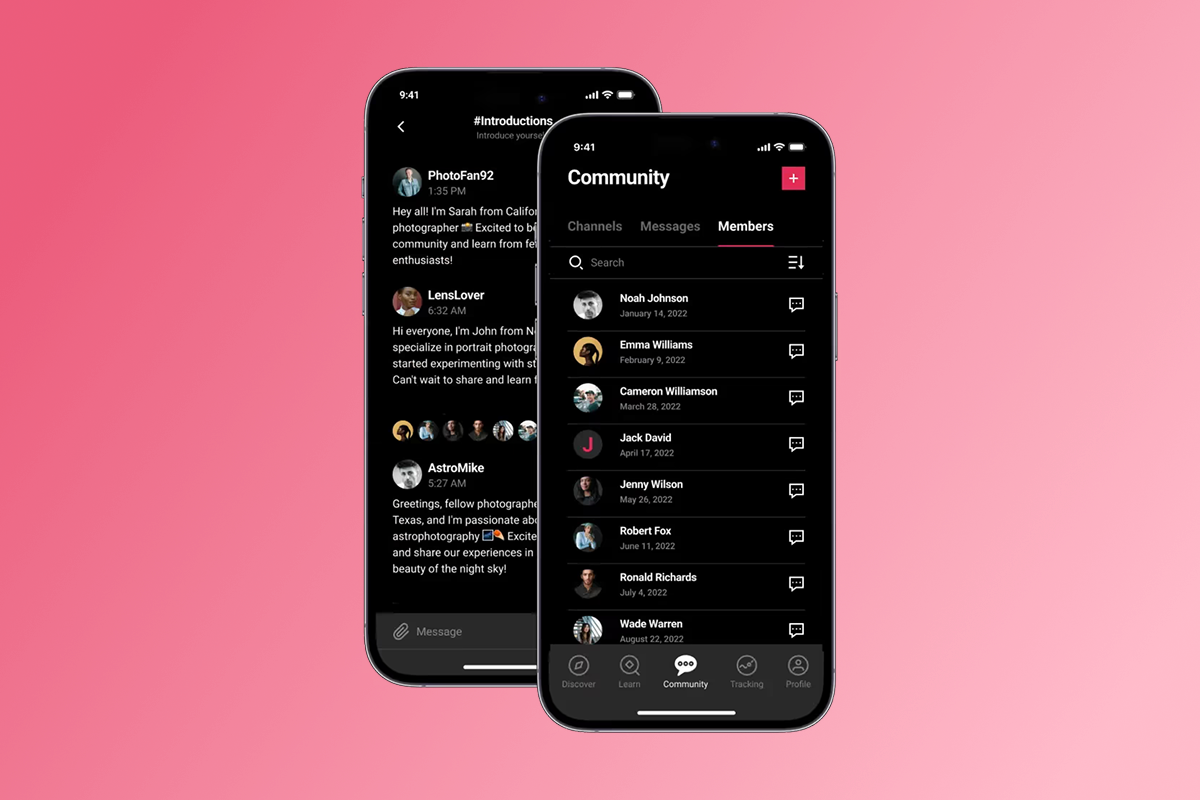
For creators running challenges, cohorts, or time-sensitive content, push notifications are critical because you can send a segmented notification 10 minutes before a live session starts or when a new lesson unlocks. We allow segmented push notifications so you can nudge specific groups without spamming your entire audience.
"Setting up my coaching app on Passion.io has been one of the easiest and most intuitive processes I've experienced... Everything is housed in one place. Content, communication, client access, design." - Everchanging Butterfly on Trustpilot
Social algorithms create additional friction for web communities because if you rely on Facebook Groups or Discord to drive traffic back to your web portal, you are fighting an uphill battle. Facebook group shutdown risks, and Discord's limited customization options of your space while Discord monetization and content limits.
Push notifications combined with in-app community features create a self-reinforcing engagement loop that email and social platforms cannot match.
Monetization and margins: In-app purchases vs. web checkout
Fee structure determines whether a native app increases or erodes your profit margin, so you must understand the trade-off between convenience and cost.
Apple and Google take a cut of in-app purchases. Under the App Store Small Business Program, Apple charges 15% on the first $1 million in annual revenue, but once you cross that threshold the commission jumps to 30% for the remainder of the year. For auto-renewing subscriptions, Apple subscription commission rates start at 30% for the first year but drop to 15% after you retain a subscriber for 12 months. Google Play Small Business Program offers a 15% service fee on the first $1 million in annual revenue, and for auto-renewing subscriptions the service fee is 15% from day one.
Web checkout preserves margin but adds friction. PassionPayments processing fee breakdown shows a 3.9% platform fee plus Stripe's standard processing fees of approximately 2.9% plus $0.30 per transaction, totaling about 6.8% plus $0.30. This fee is significantly lower than in-app purchase commissions, which makes web checkout the better option for high-ticket coaching packages or annual subscriptions where every percentage point matters.
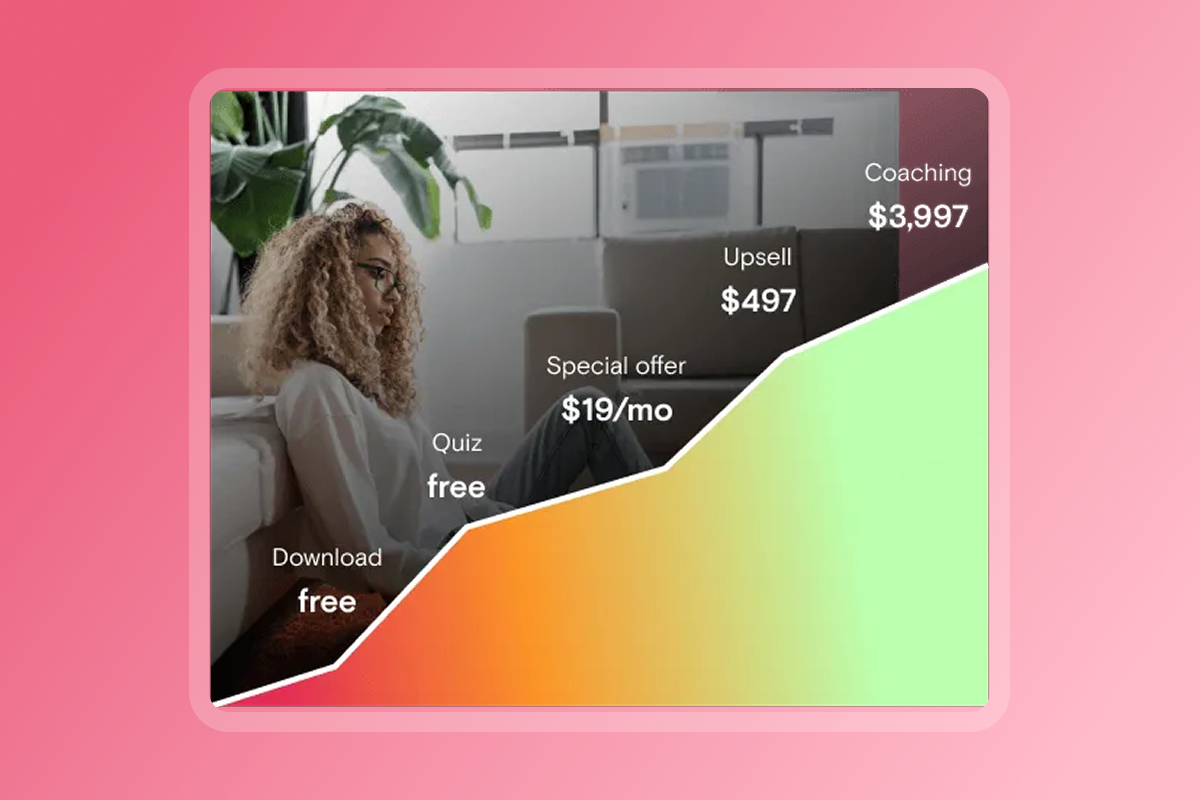
We recommend using both strategically. Route impulse purchases and mobile upsells through in-app purchases to reduce friction and increase conversion, while routing core subscriptions, bundles, and high-ticket offers through web checkout to preserve margin. Our hybrid payment system supports this dual approach, allowing you to choose the payment path based on the product type and customer context.
Payment fee comparison
| Payment Method | Platform Fee | Processing Fee | Total Cost | Best use case |
|---|---|---|---|---|
| PassionPayments (Web) | 3.9% | ~2.9% + $0.30 | ~6.8% + $0.30 | High-ticket, bundles, annual plans |
| Apple IAP (under $1M) | 15% | Included | 15% | Mobile upsells, impulse purchases |
| Apple IAP (over $1M) | 30% | Included | 30% | High-volume mobile conversion |
| Google IAP | 15% | Included | 15% | Android mobile purchases |
If IAP fees squeeze your margins, direct high-value customers to web checkout during onboarding and reserve IAP for convenience purchases. You can also external payment processor options and grant app access via Zapier on our Scale, Expand, and Plus plans, paying 0% platform fee and only the fees charged by your external processor.
Development paths: Custom dev vs. white-glove platforms
The cost and timeline of building a native app varies wildly depending on the development path you choose.
Option A: Custom development with an agency. Medium-complexity app development costs run $50,000 to $150,000 in 2024-2025, and feature-rich app development costs average $100,000 to $500,000 with timelines running 6 to 12 months from discovery to launch. Maintenance adds 15% to 20% of your initial development cost annually, covering ongoing app maintenance costs.
Custom development introduces scope creep that extends timelines, agency instability, and technical debt accumulation. For a time-poor creator running a mid-six-figure business, custom dev drains energy away from content creation and community building.
Option B: DIY no-code platforms. DIY tools work well for solo creators testing an idea, but they require significant founder time to configure layouts, upload content, test features, and troubleshoot bugs. If you are already managing a team and multiple revenue streams, DIY adds operational drag rather than removing it.
Option C: White-glove service with Passion Plus. Our white-glove service includes content migration, app store submission management, a dedicated success manager, advanced analytics, growth coaching, and priority support with a 30-day launch timeline. The process follows a clear sequence:
- Discovery: We define your goals, review existing content, and map your monetization strategy.
- Build: Our team configures your app, uploads content, and sets up branding.
- Submission: We handle Apple and Google developer account setup, app store submissions, and any review clarifications.
- Launch: Your app goes live on web immediately, with iOS and Android following after app store approval.
"Passion is taking care of the technical aspects of website/app development -- not my bailiwick! I also think that the app development is much more intuitive than i feared." - Stephen Campbell on Trustpilot
Our white-glove service eliminates the technical complexity that stops most creators from launching, allowing you to focus on marketing and content while we handle the infrastructure, updates, and app store compliance.
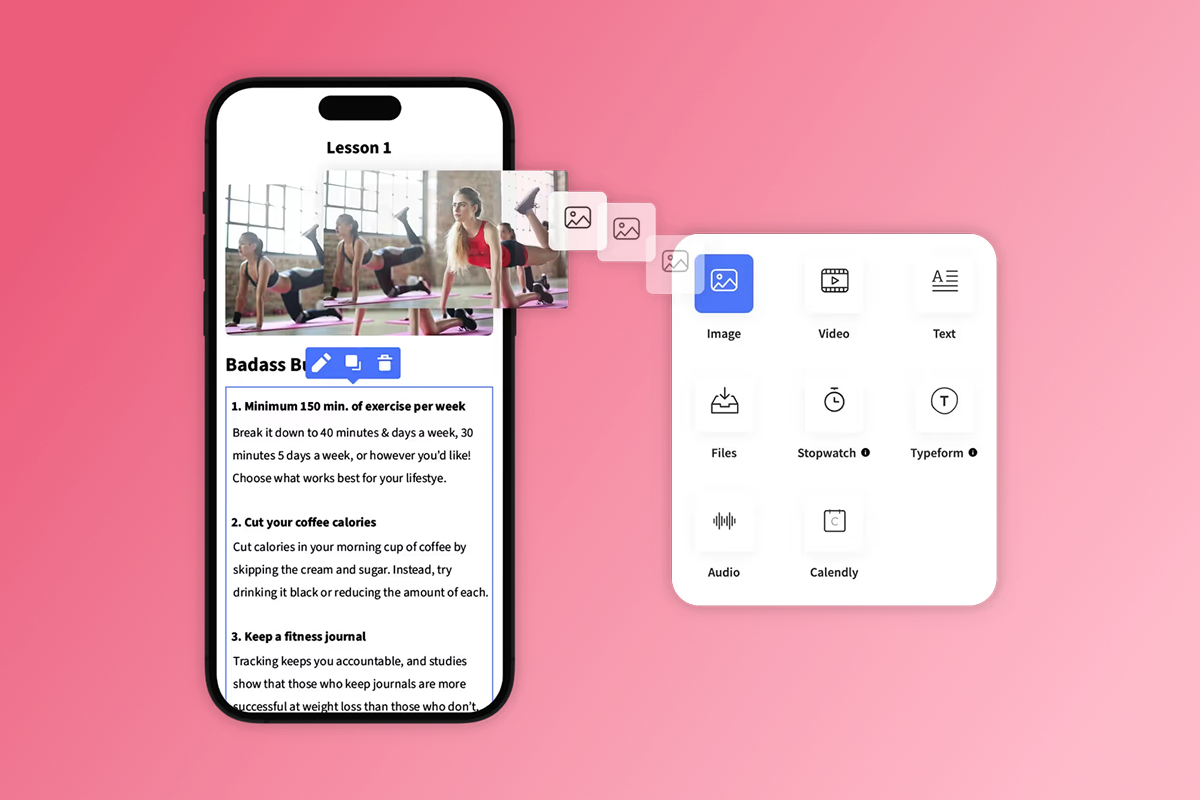
We provide health and fitness professionals with an all-in-one platform to monetize expertise and grow coaching businesses through branded apps. Our community features can be monetized with subscriptions, one-time purchases, and in-app purchases while maintaining full brand control.
Total cost of ownership and ROI analysis
Web-based community stacks feel inexpensive because you pay monthly fees for individual tools, but admin time is the hidden expense. How many hours per week do you or your team spend fixing broken Zapier integrations, managing access across platforms, copying links between tools, and troubleshooting login issues? If you value your time at $100 per hour and spend 5 hours per week on tool management, that represents $26,000 per year in opportunity cost.
Consolidating to a single platform reduces both direct costs and operational overhead. Our Expand plan pricing billed annually includes unlimited courses, community features, push notifications, custom branding, and analytics in one place.
You generate ROI from retention improvements and time savings because when moving to a native app increases your average subscriber lifetime, you increase LTV proportionally. Creator MRR growth results after launching on Passion.io.
Data ownership and security protocols
Platform risk is a legitimate concern for creators who have built audiences on social media. On your own app you own the data, control user access, set the terms of service, and maintain direct relationships with subscribers. If a social platform changes its algorithm or shuts down, your business does not evaporate overnight. Enable two-factor authentication for your admin account, use strong passwords, and regularly review user access logs.
Data ownership is particularly important for high-revenue creators building long-term brands because when you own the audience relationship you can migrate platforms, change pricing, or add new offerings without asking permission from a third-party algorithm.
"I am so excited to be a part of the Passion.io community... After building my online training programme, I have always wanted to create an app to make it more accessible for my clients, but could never afford it." - Jane Mullins on Trustpilot
When to migrate from web to native: A decision framework
Not every creator needs a native app immediately. Here is a clear decision framework:
Stay on web if:
- You are just starting and testing product-market fit.
- Your content is primarily text-based PDFs or articles without video or audio.
- Your audience prefers desktop-only access for technical or professional reasons.
Move to native if:
- You want to scale recurring revenue with a proven offer.
- Your content includes video, audio, or interactive lessons that benefit from offline access.
- You experience high churn due to low engagement or missed email reminders.
- You want to sell a premium brand experience and differentiate from competitors.
- You are managing disconnected tools and want operational simplicity.
Readiness indicators:
- Content library: You have core lessons, videos, or modules ready to migrate.
- Revenue proof: You generate recurring revenue from subscriptions or memberships.
- Engagement problem: Your current platform causes low completion rates or high churn.
- Time availability: You can dedicate 30 days to onboarding, migration, and launch with white-glove support.
- Monetization clarity: You have defined your subscription tiers, pricing, and payment paths (web vs. IAP).
If these indicators describe your business, you are ready to migrate from web to native.
Native app vs. web community comparison
| Feature | Web Community | Native App (White-glove) |
|---|---|---|
| Push Notifications | None (email only) | Yes, segmented and scheduled |
| Offline Access | Requires internet | Download videos, audio, PDFs |
| Home Screen Presence | Browser bookmark | App icon on home screen |
| Session Length | Baseline | 2.4x longer than web |
| Retention (Day 30) | Lower | 8% (Education category) |
| Payment Options | Web checkout only | Web + IAP hybrid |
| Payment Fees | 6.8% + $0.30 | 6.8% (web) or 15–30% (IAP) |
| Brand Control | Limited by platform | Full custom branding |
| Development Cost | $0 (DIY) to $50k+ (custom) | White-glove service available |
| Time to Launch | Weeks (DIY) to 6–12 months (custom) | 30 days (white-glove) |
| Data Ownership | Depends on platform | You own the data |
You face a choice: prioritize ease of entry or long-term value. Web communities help you test ideas and get started quickly, but native apps help you scale revenue, increase retention, and own the customer relationship.
For established creators with proven offers and rising operational complexity, migrating to native is not a luxury but the necessary step to reduce churn, increase engagement, and build a business you control. We built Passion.io to handle the technical complexity while you focus on growth. Book a platform demo to see how our white-glove service works, or try it out with a 30 day money back guarantee.
Frequently asked questions
What are the best Discord alternatives for creators looking to monetize?
Native branded apps like Passion.io offer better monetization through subscriptions and in-app purchases, plus you own the audience data and avoid Discord's Discord's monetization gaps explained.
Can I build a custom branded app without hiring developers?
Yes, white-glove platforms handle the technical build, submission, and migration in 30 days, eliminating the need to hire developers or manage custom code.
How do platforms handle payment processing fees?
PassionPayments fee breakdown, while Apple and Google charge 15% to 30% for in-app purchases depending on your revenue tier.
What is the difference between a web app and a native app?
Web apps run in a browser and require internet connectivity, while native apps install on your phone, offer push notifications, offline access, and faster performance with 2.4x longer session times.
How long does it take to launch a native app with white-glove service?
Passion Plus 30-day launch includes content migration, app store submission, and setup of iOS, Android, and web versions.
Key terminology
White-glove service: Done-for-you app setup including content migration, app store submission management, branding configuration, and dedicated success manager support.
Operational drag: The time, energy, and administrative overhead lost managing disconnected tools, broken integrations, and manual workarounds across multiple platforms.
Tool sprawl: The accumulation of single-purpose software subscriptions that increases complexity, cost, and coordination burden as your business scales.
MRR (Monthly Recurring Revenue): The predictable monthly income from subscriptions and memberships, calculated by multiplying active subscribers by average revenue per user.
Audience ownership: Direct access to user data, contact information, and customer relationships without algorithmic interference or platform dependency.