

7 High-Income No-Code Skills to Replace Your Salary (In 1-2 Hours a Day)
Updated 8th December, 2025
Corporate life offers stability, but the tradeoff is steep. You're trading hours for dollars while the dream of owning your time slips further away. Ten years ago, escaping required a computer science degree and $50,000 in startup capital. Today, it costs less than your monthly car payment and requires the same skills as building a PowerPoint deck.
No-code development opens a direct path from corporate expertise to recurring revenue. You already have high-value skills from your day job. You just need the delivery mechanism. This guide details seven no-code skills you can master in your spare time to build a real branded mobile app and launch paid courses and communities. We'll show you the exact Passion workflow to go from zero to launched in under 30 days.
Why "no-code" is the safest exit strategy for corporate professionals
A technical barrier used to separate corporate employees from business owners. Building an app required hiring developers at $50,000 to $500,000 and 4-6 months of development. That timeline and risk made the leap impossible for most professionals.
No-code platforms collapsed that barrier. Instead of writing code, you drag and drop content into templates. Instead of six-month dev cycles, you launch in weeks. Instead of five-figure investments, you start for the cost of a few dinners out.
The time advantage is dramatic. Traditional coding paths require months or years of focused training to become job-ready as a mobile developer. With no-code tools, you build a functional app in days and master the platform in three to six months of part-time learning.
The numbers tell the story:
Traditional coding vs. no-code: time and cost comparison
For corporate professionals, this isn't just faster. It's safer. You can test your business idea while keeping your salary. You can build in the margins of your day, 1-2 hours at a time, without risking your mortgage or your family's stability.
7 no-code skills that generate recurring revenue
The most profitable no-code skills cluster around a single outcome: turning your expertise into recurring revenue. Here are the seven skills that pay, how long they take to learn, and what you can realistically earn.
Branded app building
This is the foundation skill. A branded app puts your name on iOS, Android, and web platforms without writing code. You own the customer relationship, control the experience, and capture the value.
- Learning time: 2-4 weeks to build and launch your first app using a platform like Passion.
- Earning potential: $1,000 to $10,000+ per month, depending on your niche and pricing model.
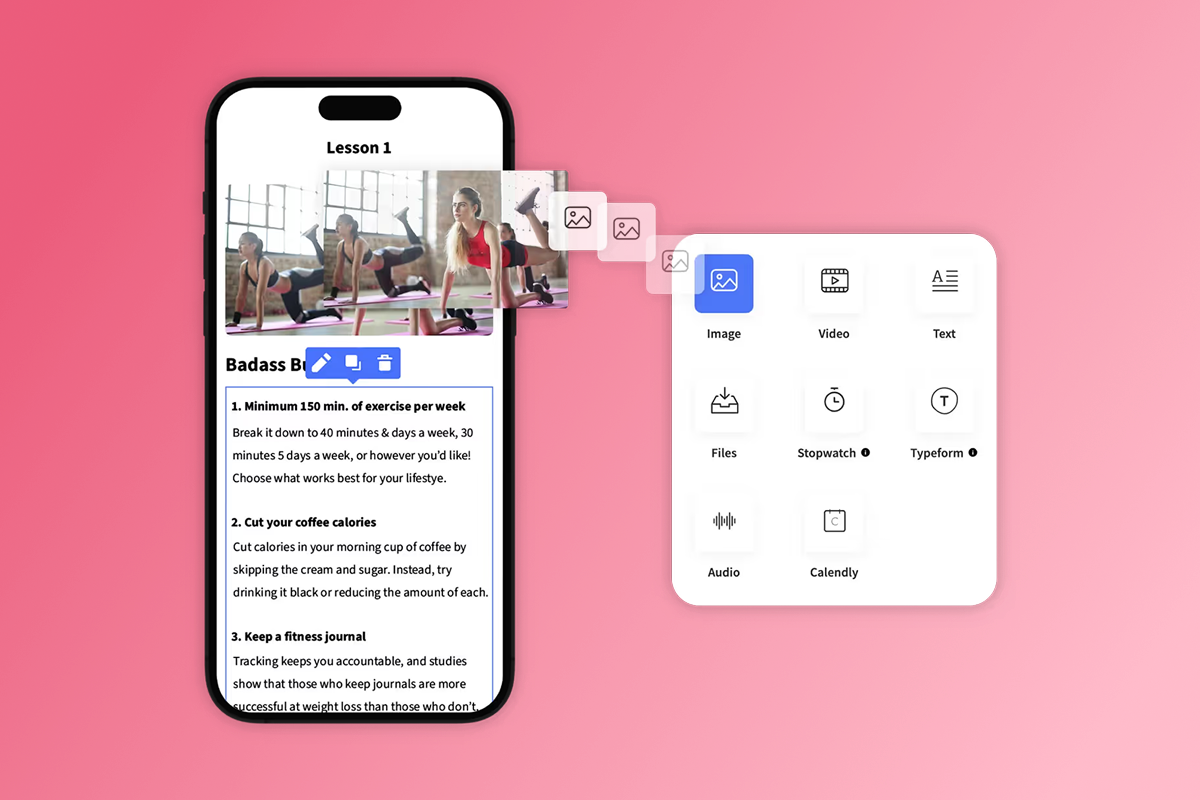
- How Passion handles it: The drag-and-drop builder lets you choose a template, upload your logo and colors, structure lessons and content, and publish to web in days. Mobile app submission to Apple and Google is included on higher-tier plans.
Real-world proof: Ellen Decker, a personal trainer with no tech background, launched her "Fit in Twenty" app and now generates $37,500 in monthly revenue from over 250 subscribers. Allie Cooper's "Cirque Plus" app for aerial arts coaching brought in $4,284 per month from 50 clients.
Membership site management
Membership sites turn one-time buyers into recurring subscribers. You set up access tiers, manage billing, and deliver content on a schedule that keeps members engaged month after month.
- Learning time: 1-3 weeks to configure membership tiers, payment flows, and member permissions.
- Earning potential: $500 to $7,500+ per month. Recent data shows 47% of B2C membership sites charge between $25 and $49 per month.
- How Passion handles it: You can create multiple subscription tiers like weekly, monthly, or annual plans, offer freemium access to sample content, and bundle courses with community access. PassionPayments processes web checkouts at a 3.9% platform fee, or you can enable in-app purchases for mobile convenience.
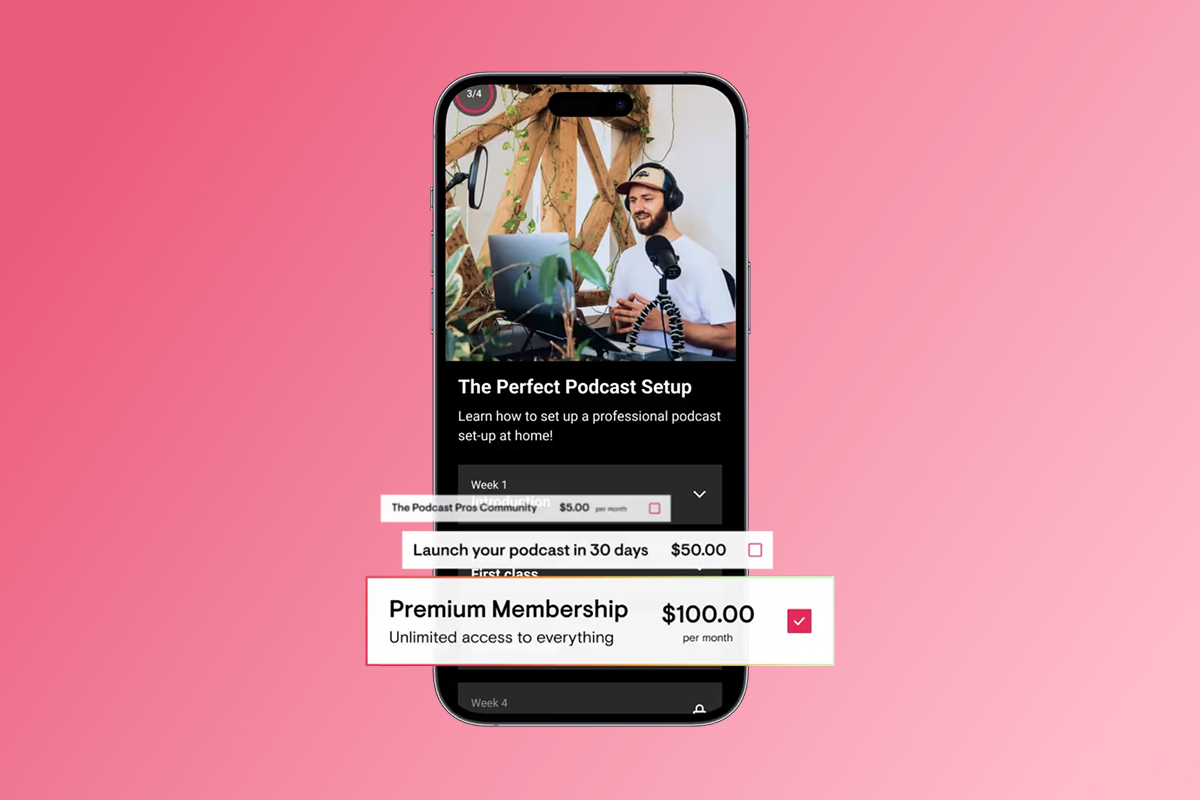
The math is straightforward. To hit $5,000 in monthly recurring revenue at a $37/month price point, you need 135 paying subscribers. At $49/month, that drops to 102 subscribers.
Community design and moderation
In-app communities offer a more focused, higher-value experience than Facebook groups or Discord servers. You control the platform, set the culture, and own the relationships.
- Learning time: 1-2 weeks to set up channels, establish guidelines, and create initial engagement prompts.
- Earning potential: $250 to $5,000+ per month. Community access is often bundled with memberships or courses.
- How Passion handles it: The in-app community feature lets you create discussion channels, run polls, host challenges, and enable direct messaging between members. You're not competing with algorithm-driven feeds.
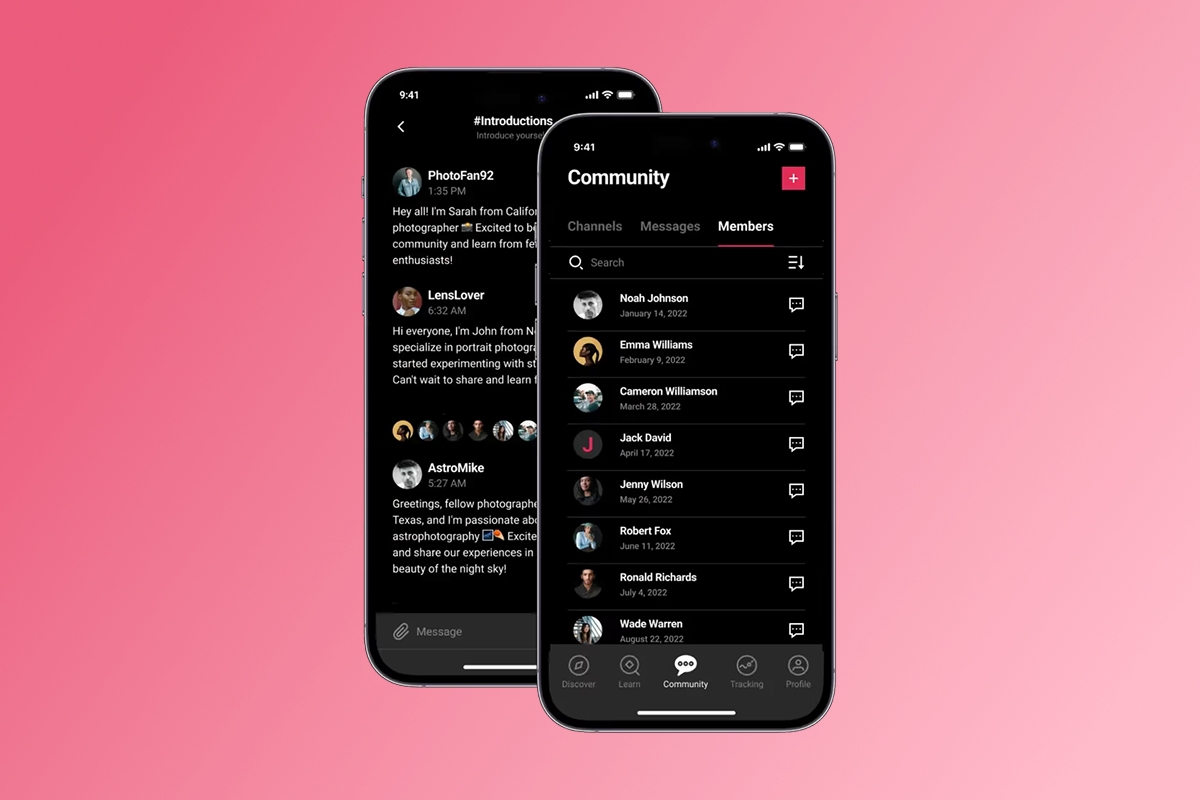
Mobile apps drive significantly higher engagement than web-only communities. Research shows that apps account for 70% of digital media time, while mobile browsers capture only 30%. Your community lives where your members already spend their attention.
Mobile course creation
Online courses remain one of the highest-margin digital products. Mobile-optimized courses with interactive features, offline access, and progress tracking command premium pricing and deliver higher completion rates.
- Learning time: 2-4 weeks to structure a curriculum, record video lessons, create worksheets, and set up assessments.
- Earning potential: $500 to $10,000+ per month. Analysis of over 132,000 course sales found the average online course price is $137, and successful creators often run multiple courses or cohorts per year.
- How Passion handles it: The course creation tools support video, audio, PDFs, and text. You can add quizzes, timers, goal tracking, and drip schedules to release content over time. Offline downloads let students learn without Wi-Fi. One music instructor running the "Bakerlou Music" app now earns over $4,100 per month with just 20 active subscribers.
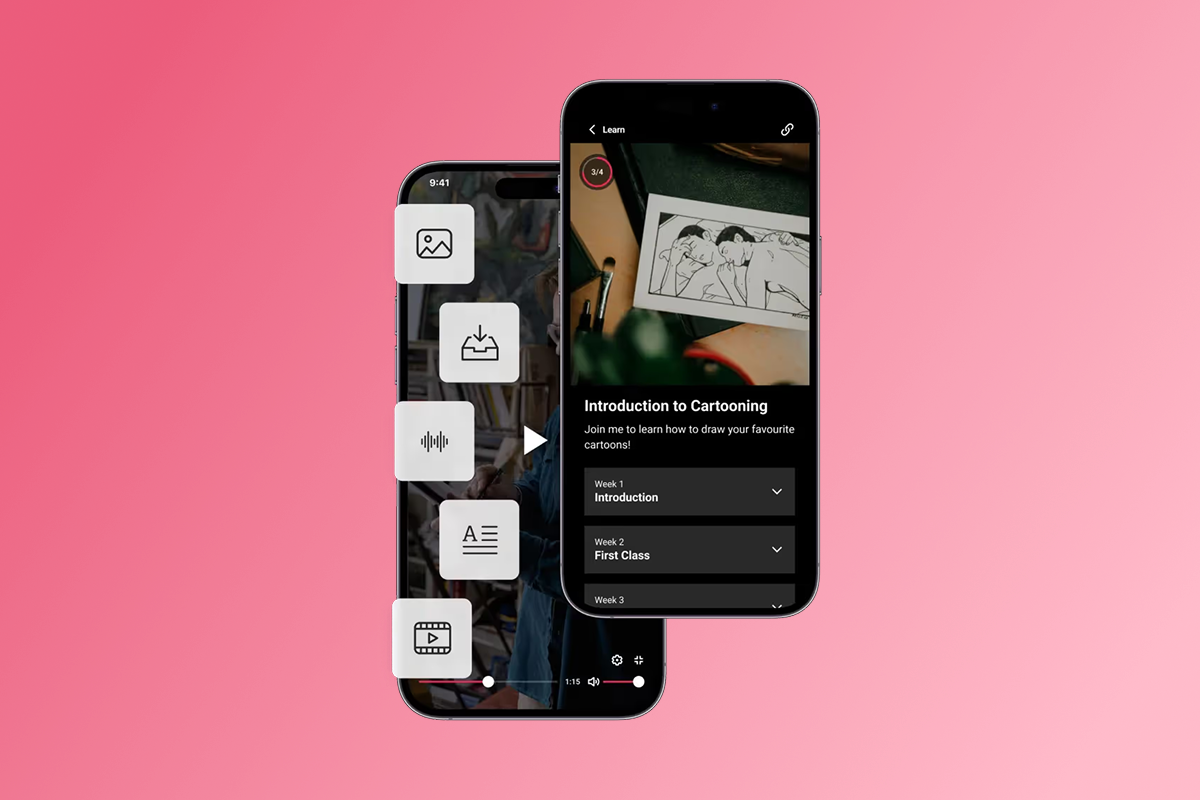
The global e-learning market is projected to reach $840+ billion by 2030, and mobile apps deliver higher completion rates because students can learn in short bursts throughout their day.
Challenge marketing
Challenges are time-bound, high-intensity experiences that drive engagement and convert free users into paying members. A 30-day challenge with daily check-ins and push reminders can transform your launch strategy.
- Learning time: 1-2 weeks to design the challenge structure, create daily content prompts, and schedule engagement touchpoints.
- Earning potential: Varies widely, often tied to course or membership sales during or after the challenge.
- How Passion handles it: Push notifications give you a direct line to participants every day. Automated push notifications deliver significantly higher open rates than email and prompt immediate action because they appear directly on users' home screens.
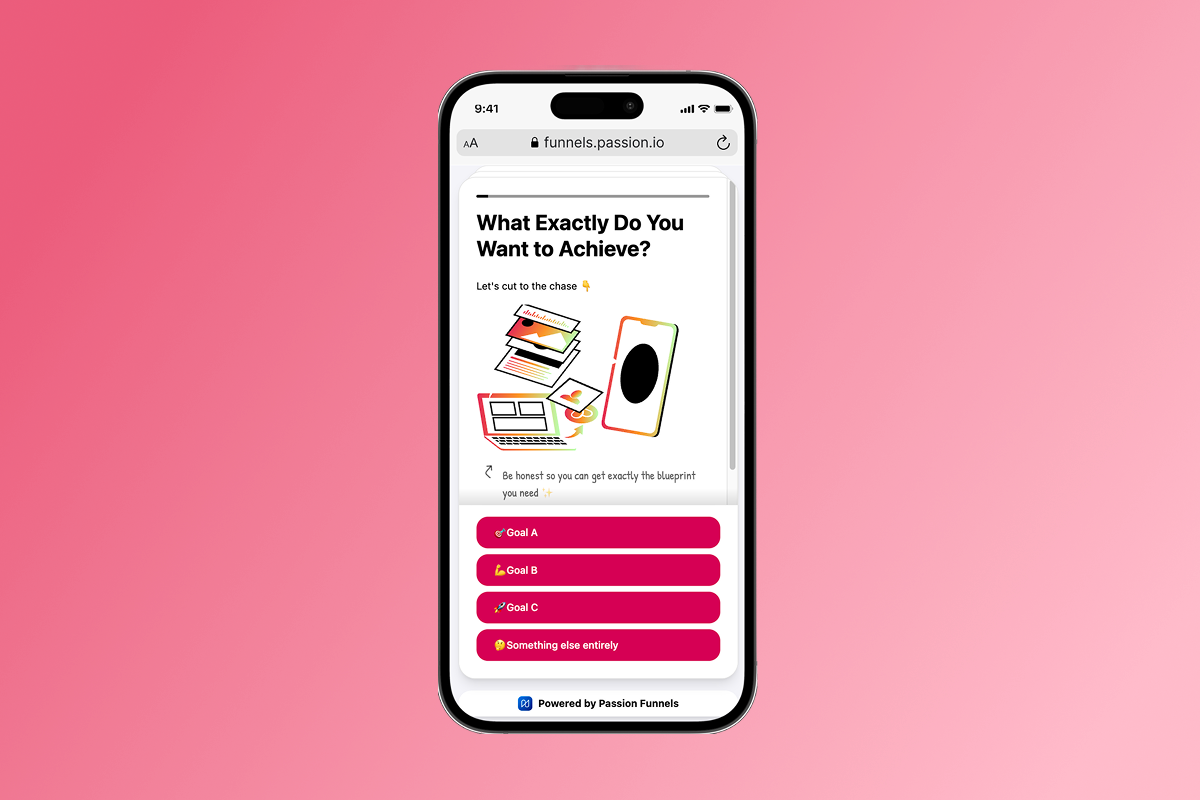
You can structure challenges inside your app with daily lessons, community check-ins, and milestone tracking. Participants stay accountable, and you stay visible.
Automated customer onboarding
New members need a smooth welcome. Automated onboarding sequences guide them through setup, introduce core features, and set expectations so they don't churn in the first 30 days.
- Learning time: Under 2 hours to set up welcome sequences, introductory messages, and first-week content.
- Earning potential: This skill indirectly impacts revenue by reducing churn. Lower churn means higher lifetime value per customer.
- How Passion handles it: Integrations with Zapier let you automate workflows. When someone subscribes, you can trigger a welcome email, assign them to a cohort, and send a push notification pointing them to the first lesson. You can also embed Calendly links for onboarding calls and Typeform surveys to understand their goals.
Typical membership site churn ranges from 5% to 10% per month. Better onboarding can bring that down, protecting your revenue base.
Digital asset monetization
Ebooks, templates, worksheets, audio guides, and other digital products provide an additional revenue layer. You create them once and sell them repeatedly with zero marginal cost.
- Learning time: Ongoing. Each asset takes time to create, but the upload and sales process is quick.
- Earning potential: $100 to $5,000+ per month, depending on product mix and audience size.
- How Passion handles it: You can sell digital assets as one-time purchases or bundle them with courses and memberships. Upload PDFs, audio files, or video guides, set a price, and enable either web checkout or in-app purchase. Creators combine courses, community features, and digital products to build diversified revenue streams reaching five and six figures annually.
Learning time and earning potential: summary table
How to build your business in 1-2 hours a day (step-by-step)
You don't need to quit your job to build a real business. You need a plan that fits into your existing life. This four-week workflow assumes 1-2 hours per day, scheduled around your job and family commitments.
Week 1: the setup (5-7 hours total)
What done looks like: Your Passion account is live, your app template is chosen, your branding is uploaded, and your pricing structure is set.
Steps:
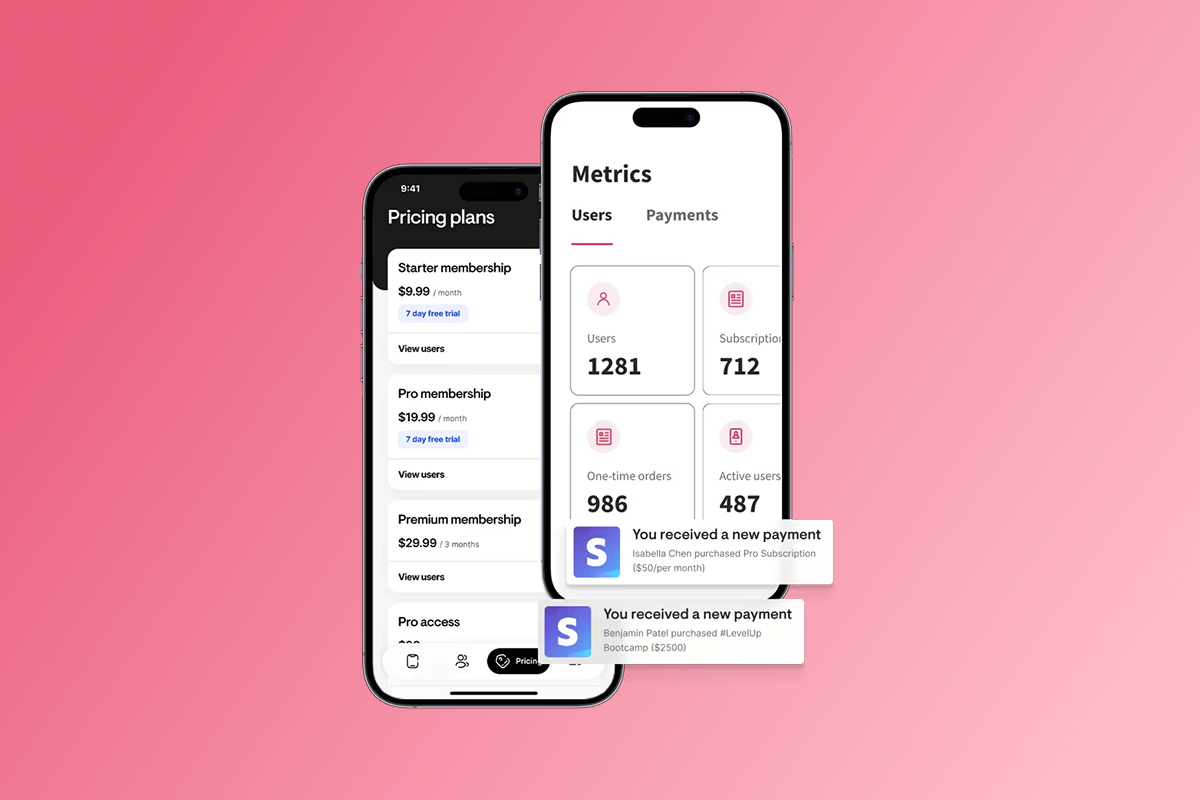
- Sign up for Passion: Start with the Launch plan at $99/month when billed annually to access the core features.
- Choose a template: Pick one that matches your niche, whether fitness, business coaching, or creative skills.
- Upload your branding: Add your logo, choose your color palette, and customize fonts to match your brand identity.
- Set your pricing model: Decide between monthly subscriptions ($25-$49 is the B2C standard), annual plans (offer a discount), or one-time course purchases. Configure web checkout via PassionPayments or plan for in-app purchases.
- Register Apple and Google developer accounts: Apple costs $99 per year and Google charges a $25 one-time developer account fee.
Recommended time: 1-2 hours per day for 3-4 days.
Week 2: content migration (5-7 hours total)
What done looks like: You've uploaded your core content, organized it into lessons and modules, and prepared it to deliver value to your first subscribers.
Steps:
- Identify your 5-10 core lessons: Start with your best material. Don't try to upload everything at once.
- Record or upload video content: Keep videos short (5-15 minutes) and focused on a single outcome per lesson.
- Create 3-5 downloadable resources: PDFs, templates, worksheets, or checklists that support your lessons.
- Structure your curriculum: Use the course builder to organize lessons into modules. Set a logical progression.
- Set drip schedules (optional): Release content over time to keep members engaged and reduce overwhelm.
Recommended time: 1-2 hours per day for 3-4 days.
Week 3: the "push" strategy (5-7 hours total)
What done looks like: Your push notification schedule is built, your first challenge or welcome sequence is ready, and your community channels are live.
Steps:
- Set up your in-app community: Create 3-5 discussion channels based on member needs (e.g., "Wins," "Questions," "Accountability").
- Write your first 4-6 push notifications: Schedule them for your first two weeks post-launch. Examples: "Welcome to the app," "Your first lesson is live," "Join today's challenge check-in."
- Design a 7-day or 30-day challenge: Map out daily prompts, milestones, and community engagement points.
- Test the user experience: Walk through the app as a subscriber. Check that links work, videos load, and navigation is intuitive.
Recommended time: 1-2 hours per day for 3-4 days.
Week 4: launch and submission (5-7 hours total)
What done looks like: Your web app is live, your Apple and Google submissions are in review, and your first 10-50 users are onboarding.
Steps:
- Publish your web app: This goes live immediately and lets you start marketing and enrolling members while you wait for mobile app approval.
- Submit to Apple App Store: Provide app name, description, screenshots, and privacy policy. Apple's review process can take a few days to two weeks, so plan for possible revision requests.
- Submit to Google Play Store: Google's review is typically faster, often just a few days.
- Turn on payments: Connect PassionPayments (Stripe) for web checkout or configure in-app purchases for mobile.
- Launch to your audience: Email your list, post on social, and invite your first cohort of beta users.
Recommended time: 1-2 hours per day for 3-4 days.
Total time commitment: 20-28 hours over four weeks, or roughly 1-2 hours per day.
Realistic earning potential and timelines
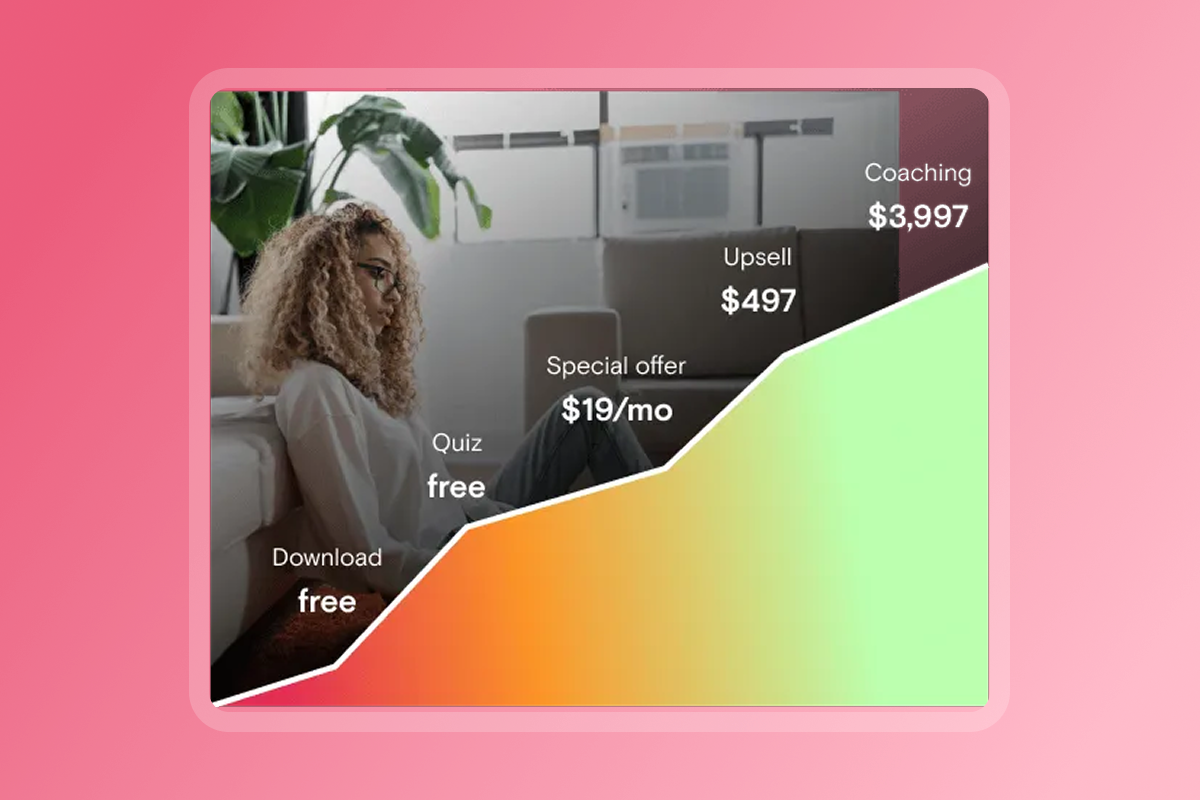
Building a business in your spare time means managing expectations. The path to replacing your salary is measured in months, not weeks.
The "runway" phase (months 1-3)
Most creators need an average of five months to earn their first dollar. Your focus should be on building a small, engaged audience and refining your content based on feedback. Some creators make their first sales within weeks, but treat any early revenue as validation to keep building.
Realistic revenue milestone: $0 to $500 per month.
The replacement phase (months 6-12)
After six months, you should have clarity on your niche, your offer, and your audience. Revenue starts to compound as you add subscribers and improve retention. One entrepreneur grew a membership site to $874 in MRR within three months. Another reached $10,000 per month in six months.
However, over half of all creators still earn less than $15,000 annually, and most need roughly 18 months on average to generate full-time income.
Realistic revenue milestone: $500 to $2,000 per month by month 12 for consistent effort.
Subscriber math: how many paying members do you need?
Revenue equals subscribers times price. Here's the math for common monthly recurring revenue goals:
Subscribers required for MRR targets
Factor in monthly churn of 5% to 10% and an email-to-subscriber conversion rate of 1-2%. To acquire 40 paying subscribers at a 1.5% conversion rate, you need an email list of approximately 2,667 people.
Minimum viable audience: when to launch
You don't need a massive audience to launch successfully. Jeff Walker, creator of the Product Launch Formula, suggests a list of 200-300 people is enough for a "seed launch." Amy Porterfield emphasizes that even an email list of under 500 highly engaged subscribers can lead to a successful course launch. The key is engagement, not size.
Common pitfalls for corporate switchers
Building a business in the margins of your day job requires discipline and strategy. Avoid these traps that stall new creators.
- Over-engineering the product: Perfectionism kills momentum. Launch a minimum viable product using Passion's template library. Customize the essentials and go live. You can add features based on what your first 10-50 users actually need.
- Ignoring distribution: Building a great app is half the battle. Start building your email list and social presence before you launch. Run a challenge or free mini-course to attract your first subscribers.
- The "free" trap: Offering everything for free undermines accountability and perceived value. Charge from day one, even if it's a small amount. A $25/month membership creates commitment.
- Trying to serve everyone: A vague niche leads to vague marketing. Pick a specific target audience and a specific problem. Specificity sells.
You have the skills. You have the time. You just need the platform.
No-code tools removed the technical barrier. You can launch a real branded app, build a paying community, and create recurring revenue in 1-2 hours a day while keeping your job. The first step is the hardest. By step 30, you have a business.
Start building your exit strategy today with Passion.
Frequently asked questions
Do I need to quit my job to start building?
No. The 1-2 hour per day method is designed for full-time employees.
How much does it cost to launch a no-code app business?
Passion's Launch plan starts at $99/month with annual billing, plus $99/year for Apple and $25 one-time for Google. Your total first-year cost runs approximately $1,400.
Is no-code really scalable?
Yes. Comet, a freelance marketplace built on no-code, scaled to over $800,000 in MRR. Beelango, an e-learning platform, supports over 100,000 users.
How long does App Store approval take?
Apple's review can take a few days to two weeks. Google's is typically faster, often just a few days.
What if I don't have an audience yet?
You can launch with 200-500 engaged subscribers rather than thousands of cold contacts. Build your list with a free challenge or lead magnet before you launch your paid app.
Key terms
No-code: A software development method that lets you create applications using visual drag-and-drop interfaces instead of writing traditional code.
Native app: An application that runs on a specific mobile operating system like iOS or Android and uses device features like the camera and GPS.
Push notification: A message an app publisher sends to a user's mobile device that appears on the home screen even when the app is closed.
In-app purchase (IAP): When users buy goods and services from within a mobile application, with Apple or Google processing the payment and taking a 15-30% commission.
Monthly recurring revenue (MRR): The predictable total revenue generated from all active subscriptions in a particular month. MRR is a key metric for subscription businesses.
Churn: The rate at which a company loses customers over a given period, typically expressed as a monthly or annual percentage.
Drip content: A content delivery method that releases lessons or modules on a schedule over time instead of all at once.

Build the business
behind what you know.
Turn your expertise into a branded app with courses, community, and the You AI Coach. Launch plan from $99/month.