


90-Day Roadmap: From 12% Churn to $10K MRR with Your Online Course
Updated 31st December, 2025
How do you reduce churn from 12% to $10K MRR?
The answer flips the traditional playbook: fix retention first (Month 1), optimize pricing second (Month 2), then scale acquisition (Month 3). Most creators treat their course like a digital book you sell once. This playbook shows you how to treat it like a subscription business with a system that keeps members. A branded mobile app with push notifications and community features can help you cut churn to 5-7%, more than doubling your customer lifetime value.
Who needs a retention-first scaling strategy?
If you work long hours in a demanding job while running a course that generates modest income, you are stuck in the middle. You have proven people will pay for your expertise, but your income is flat. You lose members as fast as you gain them. You do not have time to be a content machine, and the tech overwhelm is real.
Why does retention matter more than acquisition?
Most creators fail because they focus on selling (acquisition) rather than keeping (retention). The math is brutal: at 12% monthly churn, you need to replace 12 out of every 100 members just to stay flat. At 6% churn, you only replace 6. That difference compounds. Every dollar spent keeping a member is worth more than a dollar spent finding a new one. This playbook gives you the operational roadmap to scale to five figures by starting with the numbers that matter most.
What does $10k MRR actually require?
You do not need to go viral or build a 50,000-person email list to reach $10,000 in monthly recurring revenue. The path forward is about the math of retention and pricing.
Here are three proven models:
The key concept is monthly recurring revenue (MRR), not one-time sales. A single $997 course sale feels good today, but 10 people paying $97/month is $970 this month, next month, and the month after. The formula is straightforward and backed by research on lifetime value: LTV = Average Revenue Per User (ARPU) / Monthly Churn Rate.
If you charge $97/month and lose 12% of your members every month, your customer lifetime value is $808. However, when you cut that churn to 5%, the same customer is now worth $1,940. You more than doubled the value of every person who signs up without changing your price or your marketing.
That is why Month 1 focuses on retention, not acquisition.
Month 1: Fix the leaky bucket (Retention)
Goal: Reduce churn from 12% to under 7% by moving from web-only delivery to a mobile-first experience.
The problem is not that people do not want your content. We see education and e-learning subscriptions typically hit monthly churn rates between 8% and 12%, according to industry benchmarks. The problem is that people buy courses but do not finish them. If you lose 12% of your customers every month, you have to replace your entire business every year just to stay flat.
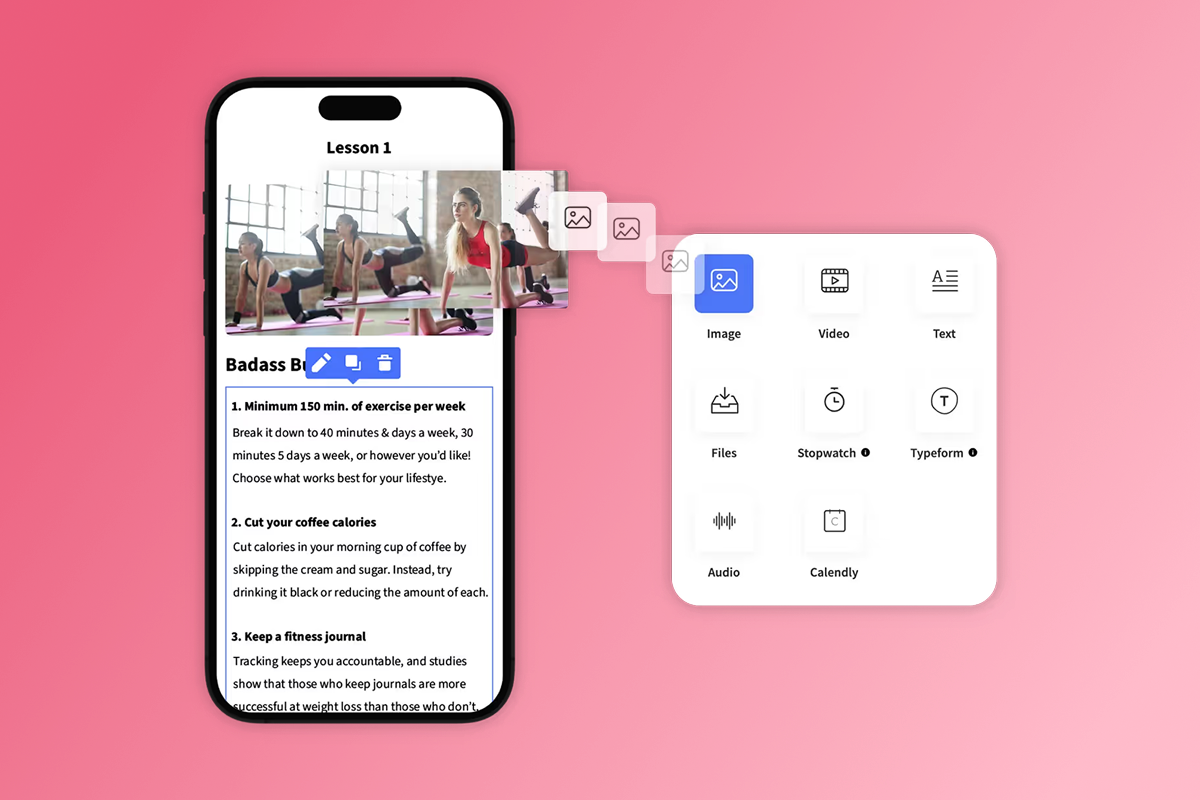
The solution is mobile engagement.
Implement push notifications: The nudge that drives completion
Email open rates continue to decline while your members check their phones constantly throughout the day, according to mobile learning research. Push notifications meet them where they are.
We have found that sending even a single onboarding push within the first week can boost retention by 71% over two months, and push notifications related to incoming messages increase session count, session length, and retention. For optimal results without notification fatigue, schedule 2-3 notifications per week because segmented push notifications achieve a 21% higher click-through rate than generic blasts.
Passion feature: The platform includes scheduled push campaign tools that let you set up a 90-day notification calendar in one sitting, then let it run. You can segment by user behavior (completed lesson 1 but not lesson 2) and send personalized nudges.
"The training on how to build and sell is invaluable." - Verified user review of Passion
Build an in-app community: The moat that locks people in
Community creates a cost of switching that protects your revenue. When your members make friends, ask questions, and share wins inside your app, they are not just buying content anymore, they are buying belonging. In fact, we see that strong community features can significantly boost retention, and one company that implemented social features saw a 26% higher retention rate for users who interacted with them.
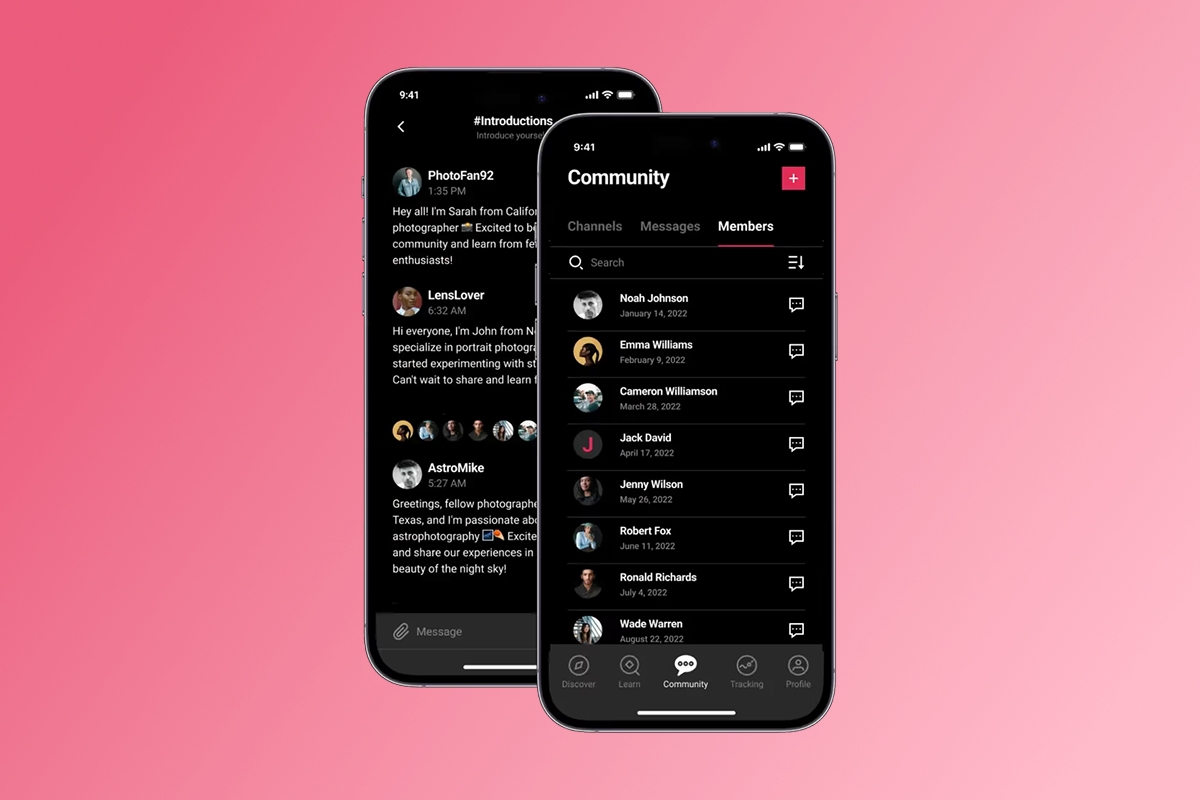
Set up three channels in your app: a welcome channel, a wins channel, and a Q&A channel. As a result, you create natural spaces for connection. Post in each one at least twice a week. Highlight member progress. Answer questions publicly so others can learn.
Passion feature: The platform includes in-app community channels and challenges that live inside your branded app, not on Facebook or Slack. You own the conversation.
The win-back campaign: Catch people before they cancel
Even with push and community, some members will drift. Therefore, a win-back campaign becomes essential. Set up an automated sequence that triggers when someone has not logged in for 14 days. Offer a preview of upcoming exclusive content, send a survey to understand their roadblock, or provide a temporary discount to re-engage. In practice, successful win-back campaigns see re-engagement rates of 5-15%.
Month 2: Optimize the funnel (Conversion & Pricing)
Goal: Increase revenue per user (ARPU) by implementing tiered pricing and choosing the right payment path.
With retention improving in Month 1, you are now ready to focus Month 2 on getting more value from each member without requiring more traffic.
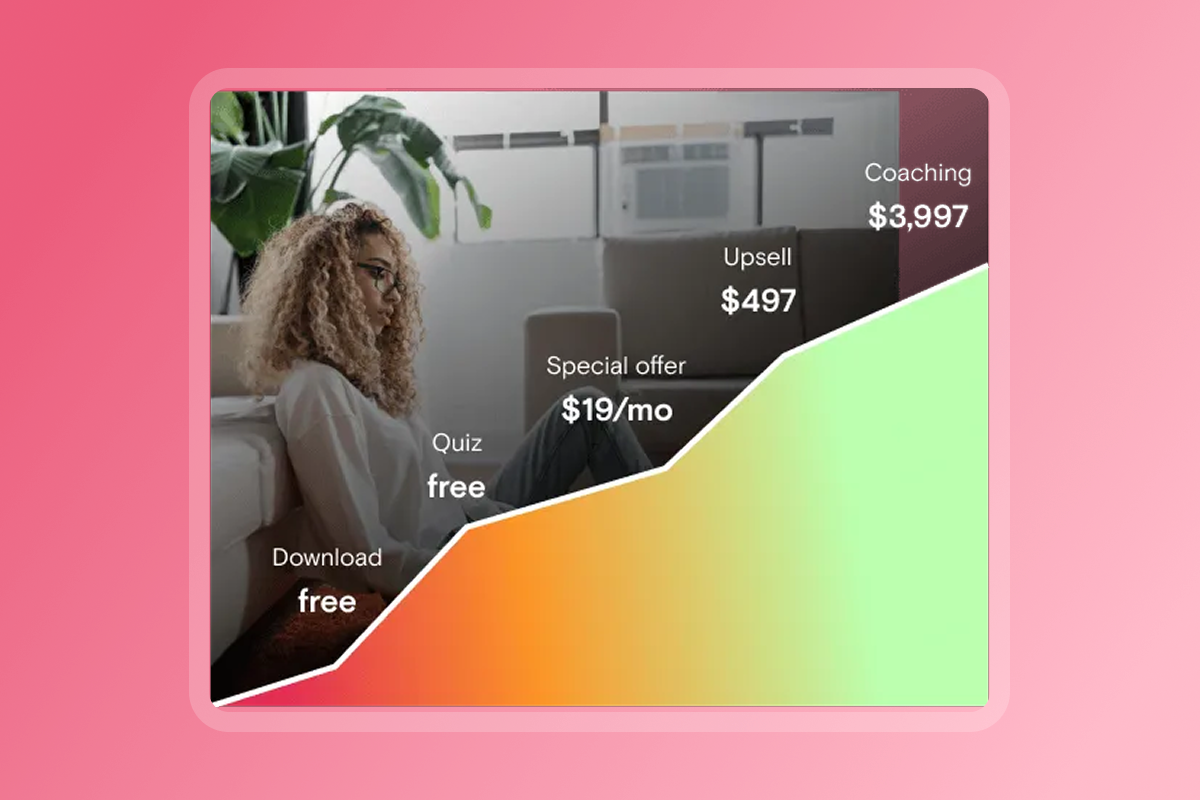
The pricing ladder: From entry to premium
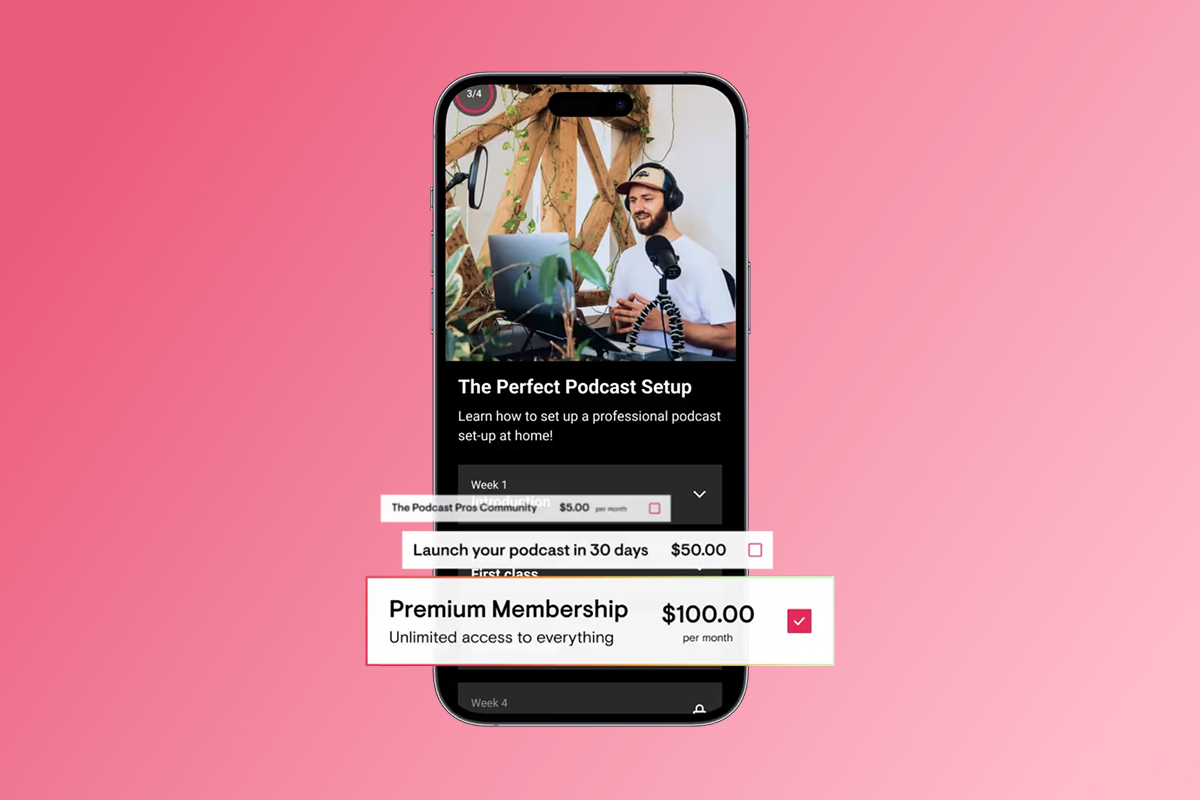
A pricing ladder is a strategy of offering multiple tiers so you can serve different willingness to pay while creating a clear upgrade path. This approach works because buyers self-select into the tier that matches their commitment level and budget.
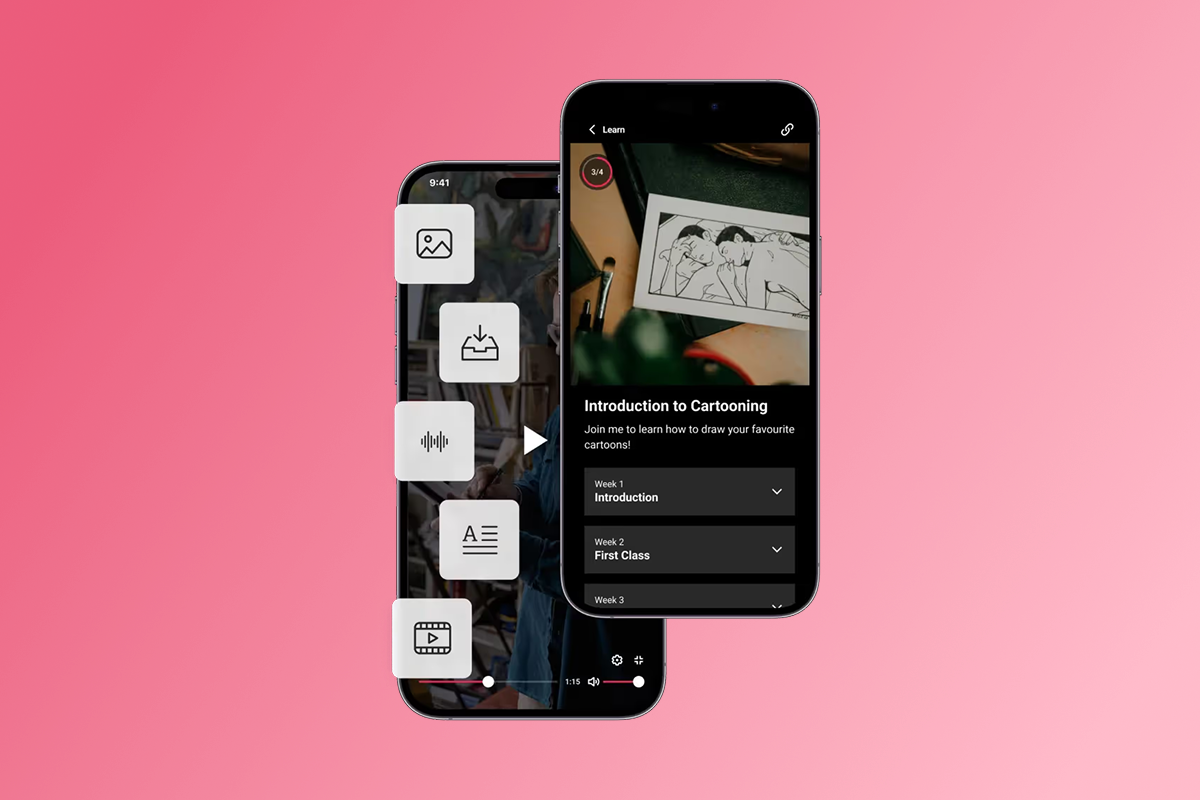
Here is a proven three-tier model:
- Entry tier ($47-$67/month): Core course content, community access, and weekly group Q&A.
- Mid tier ($97-$147/month): Everything in entry, plus bonus workshops, downloadable resources, and monthly challenges.
- Premium tier ($197-$297/month): Everything in mid, plus 1-on-1 coaching calls, priority support, and access to advanced content.
Our case studies document that fitness creator Adam Frater scaled his app to over $50,000 per month within the first few months of his relaunch. His pricing structure included a one-time purchase for his main program priced between $50 and $100, with plans to explore subscriptions.
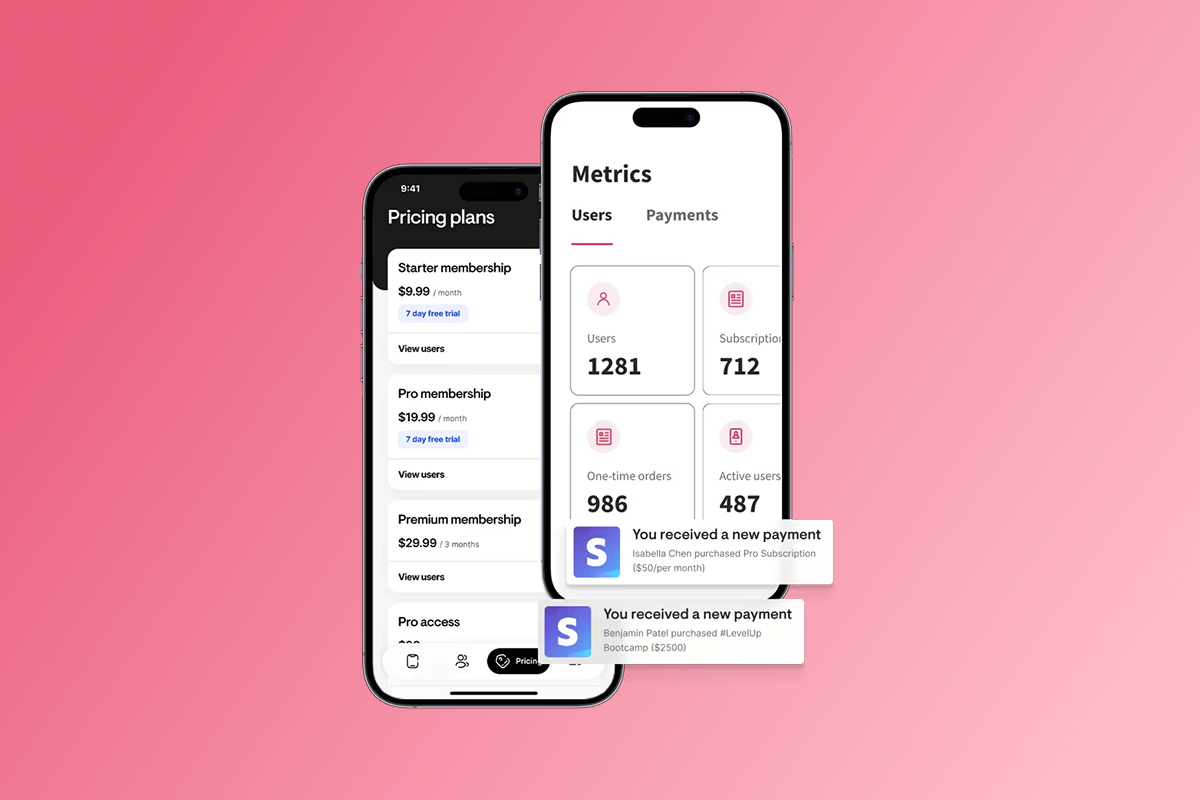
Passion feature: The platform's monetization tools let you set up multiple pricing tiers, free trials, and upsell paths inside the app builder without code.
Web checkout vs. in-app purchase: The conversion vs. margin trade-off
With your pricing tiers in place, the next decision is how to collect payment. When you sell through a mobile app, you face a critical choice: web checkout or in-app purchase (IAP)?
Web checkout via PassionPayments on Passion carries a 3.9% platform fee plus Stripe's standard processing fees, which gives you higher margins. In-app purchases route through Apple and Google, which take 15-30% of each transaction depending on your revenue and subscription model, according to App Store fee structures.
However, IAP offers a critical advantage. Our analysis of conversion rate testing shows that IAP conversion was between 27% and 30%, while the equivalent web flow was between 17% and 19%, a relative drop of 25% to 45%. The seamless, trusted checkout experience outweighs the higher fees for many creators focused on growth.
The strategy: Use IAP for your entry-tier subscription to reduce friction and increase conversion. Route your premium tiers and annual plans to web checkout to preserve margin on higher-ticket sales.
"Passion makes building your own e-learning app fast, simple, and stress-free... But what truly sets Passio(n)... (is) their no-code, drag-and-drop platform." - Verified user review of Passion
Platform fee comparison: Know your costs
Understanding platform economics is essential for forecasting profit.
Here is how popular course platforms compare:
*Udemy's revenue share varies: instructor-driven sales earn 97% (3% to Udemy), while Udemy-driven sales earn only 37% (63% to Udemy).
Udemy's marketplace model takes the highest cut. Self-hosted platforms like Teachable give you more control but lack native mobile push and community. In contrast, Passion gives you a branded mobile app with push notifications and in-app community, which drives the retention that makes the math work.
Month 3: Scale your audience (Acquisition)
Goal: Double your monthly lead volume while keeping acquisition costs sustainable.
Month 3 is when you pour fuel on the fire you built in Months 1 and 2. With retention fixed and pricing optimized, every new lead is worth more.
Understanding your funnel: Conversion improvements that compound
A realistic sales funnel conversion rate for online courses is 1-3%. To improve this to 3.5%, focus on refining your sales page copy to emphasize transformation (not features), adding social proof like testimonials and subscriber counts, and creating urgency with limited-time bonuses or cohort start dates. To sustain $10,000 MRR at a $97/month price point with 5% monthly churn, you need approximately 167 monthly leads at a 3% conversion rate to replace losses and grow.
Launch a referral loop: Turn happy members into marketers
We see consistently that referred customers convert 30% better than leads from other marketing channels, and referral marketing research confirms that referral programs can generate three to five times higher conversion rates. For software and digital goods, the average referral rate is 4.75%, which means every 100 active members will naturally refer 4-5 new customers if you make it easy.
Effective referral incentives include a recurring 10-20% commission on the referred subscriber's lifetime payments, a one-time $50 cash bonus for each successful referral, or a free month of subscription for every two referrals.
The tactic: Add a referral link to your member dashboard and promote it in your community channel. Highlight top referrers each month.
"I love my passion app and this community! I appreciate so much the support on the journey to create my own app and my business!" - Verified user review of Passion
The niche-down strategy: Stand out in a crowded market
In addition to referrals, the way to stand out in a saturated market is to niche down until you own a clear position. Instead of "online fitness coach," become "calisthenics for busy dads over 40." Instead of "business coaching," become "LinkedIn growth for B2B consultants." The smaller your niche, the easier your marketing and the higher your conversion rate.
In our experience, Tiffany Wilkerson of "Results Earned" focused on six-week fitness challenges priced over $400. She earned $16,000 in just six days from 40 clients and now generates consistent revenue of $5,000 per month. Her niche: structured, high-accountability fitness challenges for women.
Operational scaling: Automate and delegate
As you grow past $5,000 MRR, your time becomes the bottleneck. Here is how to scale without burning out: hire a virtual assistant for customer support and community moderation ($15-$30/hour, budget 10-20 hours per week), batch content creation by filming a month of lessons in one day, automate onboarding with welcome email sequences and in-app push series, and connect Passion to over 8,000 other tools via Zapier. For a walkthrough of automation, watch a Zapier tutorial on app workflows. In fact, research shows that automation can increase productivity by 40%.
Choosing your platform: Where ownership and profitability meet
Here is how the three main models compare:
We see in mobile learning research that learners report up to 70% increased engagement and 45% faster learning time on mobile devices compared to desktops. Furthermore, 70% of learners felt more motivated when using a mobile device.
The platform you choose dictates your retention ceiling. If you want recurring revenue and ownership, you need to own the relationship. A branded mobile app gives you that. For example, Adam Frater's "Calxthenics" app on Passion quickly surpassed 10,000 downloads and generates over $50,00 per month.
"The guidance and encouragement received is very basic and simple to follow. So nice to be guided." - Verified user review of Passion
What does it cost to build a $10k MRR course business?
Building a $10k MRR course business is hard work, and the costs are real. At the $5k-$10k MRR level, expect to invest approximately $2,500-$4,500 per month in platform fees (Passion plans start at $99/month, scaling to $239-$599 as you grow), payment processing (3.9% web or 15-30% IAP), app store accounts (Apple $99/year, Google $25 one-time), a virtual assistant ($1,200-$2,400/month), and content plus marketing tools ($500-$1,000/month). This leaves you with $5,500-$7,500 in net profit per month at $10k MRR.
Our analysis of creator earnings data shows that 18% of creators earn over $100,000 annually.
This is a real business. It requires investment, systems, and sustained effort. However, the payoff is a business you own, with recurring revenue that can replace your salary. For more success stories and tactical breakdowns, watch a Passion app examples video or read the official Passion case studies.
Take the first step today
You do not need to quit your job tomorrow. You need to build a system that makes quitting possible. This 90-day roadmap gives you the operational plan to get there.
Start with retention. Move your course into a branded mobile app with push notifications and an in-app community. Fix the leaky bucket before you try to fill it faster. Then optimize your pricing to capture more value from every member. Finally, scale your acquisition through referral loops and focused niche marketing.
You do not need to be technical. You do not need to quit your job first.
Try Passion and see how a mobile-first platform changes your retention math. Or book a demo to walk through the platform with a specialist who understands the creator economy.
Your next 90 days could be the quarter that changes everything.
Frequently asked questions
Can you really make $10k per month selling an online course?
Yes. At $97/month, you need 103 active subscribers. At 5% monthly churn and a 3% funnel conversion rate, you need approximately 167 leads per month to maintain this level.
How long does it take to reach $10k MRR?
For creators starting at $2k-$5k MRR with an engaged audience, we typically see 6-12 months of focused effort to reach $10k. Most creators start earning enough to support themselves at the 17-month mark from starting, so if you already have revenue, you are ahead of the curve.
What is a good churn rate for online courses?
For subscription-based education, a monthly churn rate between 5-7% is healthy. Anything above 8-12% is average but signals retention issues that will cap your growth.
Do I need a huge email list to hit $10k MRR?
No. With a 3% conversion rate, you need 500-600 leads per month to grow and sustain $10k MRR at a $97/month price point. A focused list of 5,000-10,000 engaged followers is more valuable than 50,000 cold contacts.
Is a mobile app really necessary?
If your goal is recurring revenue and high retention, yes. Mobile drives 70% increased engagement and push notifications boost retention by 71%, results that web-only courses cannot replicate. However, if you are testing your offer for the first few months, you can start with web-only and migrate to mobile once you have product-market fit.
Key terms glossary
Monthly Recurring Revenue (MRR): Predictable income from subscriptions that renews every month. MRR is calculated by multiplying the number of active subscribers by the average subscription price.
Churn Rate: The percentage of subscribers who cancel or stop paying each month. Lower churn increases customer lifetime value exponentially.
Lifetime Value (LTV): The total revenue you can expect from a single customer over their entire relationship with your business. LTV = Average Revenue Per User / Monthly Churn Rate.
Pricing Ladder: A monetization strategy that offers multiple tiers (entry, mid, premium) to serve different willingness to pay and create clear upgrade paths.
In-App Purchase (IAP): A payment you collect through Apple or Google's app store, subject to 15-30% fees but offering higher conversion rates due to streamlined checkout.
Push Notifications: Direct messages sent to a user's mobile device from your app, bypassing email and social algorithms to drive engagement and retention.
Red Ocean: A saturated market with intense competition. The solution is to niche down until you own a unique position.

Build the business
behind what you know.
Turn your expertise into a branded app with courses, community, and the You AI Coach. Launch plan from $99/month.