


Creator Passive Income App: Build Revenue While You Sleep
Updated January 20th, 2026
Most online coaches juggle Instagram DMs, a Facebook group, Stripe links, Zoom for live calls, and a separate course platform. You record content, answer access questions, post daily to beat the algorithm, and watch revenue spike after launches then dip again within weeks. The hamster wheel never stops because your income model demands constant active work.
True passive income for creators is not about doing nothing. It is about building a digital asset, a branded mobile app, that automates content delivery, re-engagement, and payments so you stop trading every hour for every dollar. A mobile app consolidates your courses, community, and subscriptions into one owned platform that uses push notifications to bring members back without you manually reminding them.
What Passive Income Means for Creators
Passive income is not a myth, but the phrase is misleading. It does not mean you press a button and money appears. It means you decouple your time from your earnings by building a system that sells, delivers, and retains customers with minimal manual intervention after initial setup.
The shift is moving from "service provider" to "asset owner." Service providers trade hours for dollars through 1-on-1 coaching, live workshops, or brand deals that require constant negotiation. Asset owners package expertise once into courses, challenges, or memberships that sell repeatedly.
The reality is that 57% of full-time creators earn below $44,000 annually, with many trapped in active income models because they rely on platforms demanding constant content production. Meanwhile, approximately 68.8% of creators still rely on brand deals as their primary source, which requires ongoing active work.
Passive income requires significant upfront effort, recording course content, building app structure, creating automated sequences, scheduling push notifications, but once live, the asset runs with lighter maintenance.
Why Branded Apps Automate Revenue Better Than Social Media
Social media platforms are "rented land." You build an audience on Instagram or TikTok, but the platform controls reach through algorithms. If you stop posting daily, engagement drops and income disappears.
The numbers tell the story. The average Instagram post reaches just a fraction of a brand's followers. That means, for example, that for every 1,000 followers, only 35 people see your post organically. To maintain visibility, you need constant content production, immediate comment responses, and paid ads to reach your own audience.
A branded mobile app flips this dynamic. Push notifications deliver messages directly to users who opt in, with average open rates between 4-20% depending on timing and content relevance. More importantly, push notification CTR hovers around 4.6% on Android and 3.4% on iOS, which means users take action, not just view.
Web course platforms like Kajabi and Teachable host content well but lack native mobile push notifications. They rely on email reminders, which average 34-43% open rates across industries and require students to actively check inboxes. A branded app sends push notifications directly to the home screen, reaching users instantly without competing with promotional email clutter.
Apps offer offline mode so users consume content anywhere without internet. There are no competitor ads inside your app poaching your audience. The environment is distraction-free, focused entirely on your content and community.
For creators juggling scattered tools, an app consolidates everything. As one creator shared:
"I purchased Passion.io to build an app that was easy for me and my clients to utilize. The group onboarding training was super helpful to getting started on the right foot." - LAT CPA Firm on Trustpilot
Three Passive Income Models to Build Into Your App
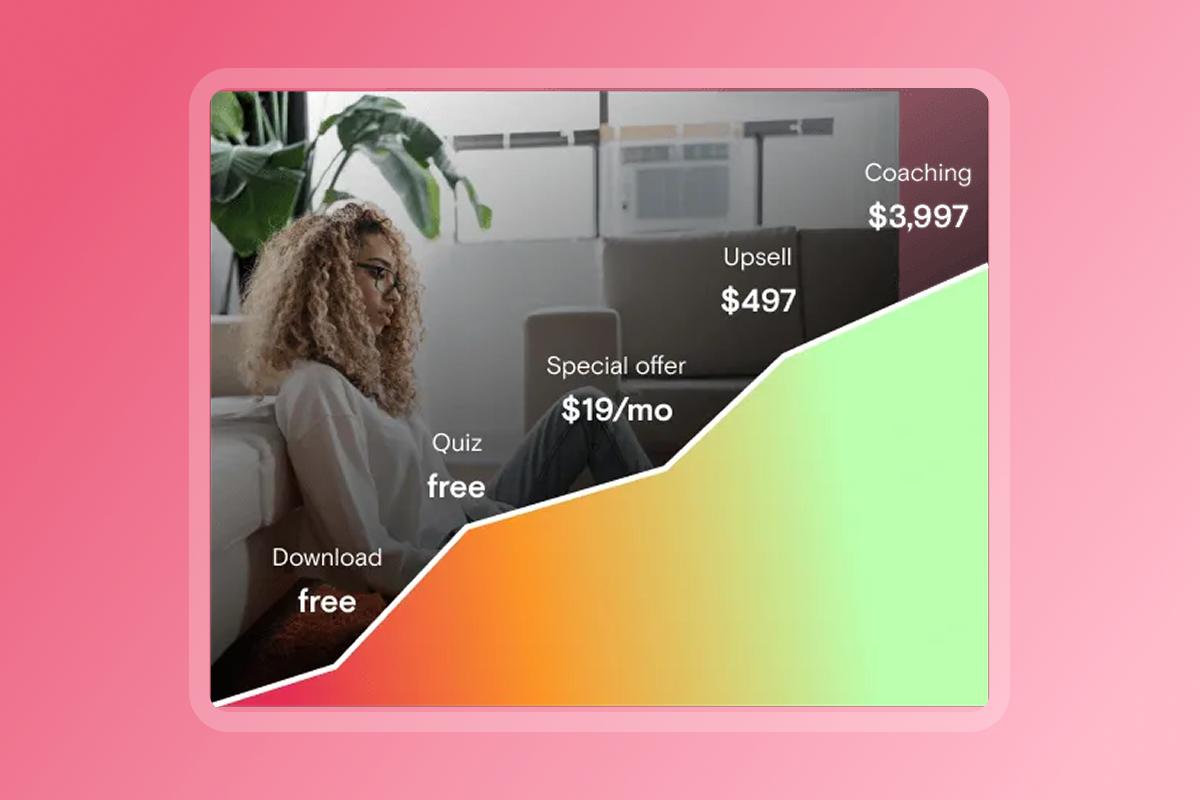
Choose one model to launch, then stack others as you grow. Most creators start with an evergreen course for predictable onboarding, add a membership for recurring revenue, then layer in challenges to spike engagement and conversions.
1. The Evergreen Course
Record your expertise once, structure it into lessons and modules, then sell access repeatedly. An evergreen course uses drip content to release lessons automatically over time based on enrollment date or specific schedules, keeping students engaged without you manually unlocking content.
A fitness coach records a 12-week transformation program with video workouts, nutrition guides, and habit trackers. The app releases content automatically as students progress, whether the coach is actively working or on vacation.
Drip content prevents overwhelm by delivering information in digestible chunks. Students cannot binge all content on Day 1 and disappear. The scheduled release creates anticipation and improves completion rates compared to releasing everything at once.
2. The Membership Subscription
Memberships generate monthly recurring revenue through ongoing access to a content library plus community. The passive element comes from positioning the archive as primary value, not weekly live calls that demand your time.
A wellness coach might offer a membership that includes 100+ meditation sessions, a private community feed, and monthly challenges. New members explore the archive while existing members return for fresh content and peer connection.
The math works at modest scale. One hundred fans paying $29/month generates $2,900 MRR or $34,800 annually. Scale to 250 fans at $49/month and MRR reaches $12,250 or $147,000 per year. The classic "1,000 True Fans" model demonstrates that smaller numbers of highly engaged supporters can sustain a creator business.
Real creators prove the model. Savannah Bohlin grew to 250 subscribers at $22/month using her branded app, generating $66,000 in annual recurring revenue through in-app community and interactive classes.
3. The Automated Challenge
Challenges are time-bound programs where daily tasks and push notifications run on pre-set schedules. A 30-day challenge might send a daily workout, journal prompt, or habit tracker reminder at consistent times, all scheduled before the challenge starts.
The creator records all content upfront; videos, PDFs, audio tracks—then schedules push notifications to deliver each day's task automatically. You queue multiple weeks of reminders in one sitting.
Challenges convert well because urgency and daily accountability create momentum. Students commit publicly, receive automatic nudges, and see progress tracked inside the app. The creator monitors community questions but is not manually sending reminders or tracking completion.
Allie Cooper, an aerial arts coach, made over $4,000 within one week after launching, demonstrating how challenges drive fast revenue when automated delivery handles operational load.
How to Choose the Right App Builder
Not all platforms create true passive income infrastructure. Web-only course sites lack mobile push notifications. Custom development costs prohibitive amounts. Here is how the options compare:
The gap in push capability is critical. Email requires active inbox checking. Push notifications reach users on their home screens instantly.
Beyond the builder, Passion.io includes training programs like the Expert Unleashed Challenge that teach launch strategy, pricing, and retention workflows. You are not handed a blank canvas and left alone. This training differentiates Passion.io from web-only course platforms that provide hosting but no playbook for recurring revenue.
Before committing to an app builder, ask these questions:
- Do I own my audience data and content, or does the platform retain rights?
- What are the total transaction fees including platform fees, payment processing, and app store commissions?
- What level of support is provided during onboarding and app store submission?
- Can the app function offline for students without internet?
- Are there limits on users, content storage, or push notifications per plan?
"Absolutely LOVE the Passion.io app platform. Everything you need to build and launch your app. They make it so easy and customer support is awesome!" - Shannon Reissman
Step-By-Step: Launching Your Passive Income App in Four Weeks
Week 1: Strategy and Content Audit
Audit existing content across all platforms. Pull videos from YouTube, PDFs from Google Drive, audio recordings from Dropbox. Identify one flagship offer; your best course, most popular program, or signature methodology.
Map content into a logical structure with modules and lessons. Define your pricing model. Will you charge a one-time fee for lifetime access, monthly subscription, or both? Start with monthly and annual tiers. Offer a discount on annual plans to improve cash flow and reduce churn. For example, if you charge $29/month, offer an annual option at $290/year (customers save two months). Test a free tier with 3-5 lessons to convert cold traffic, then gate the full library behind paid plans.
Week 2: Building the App Structure
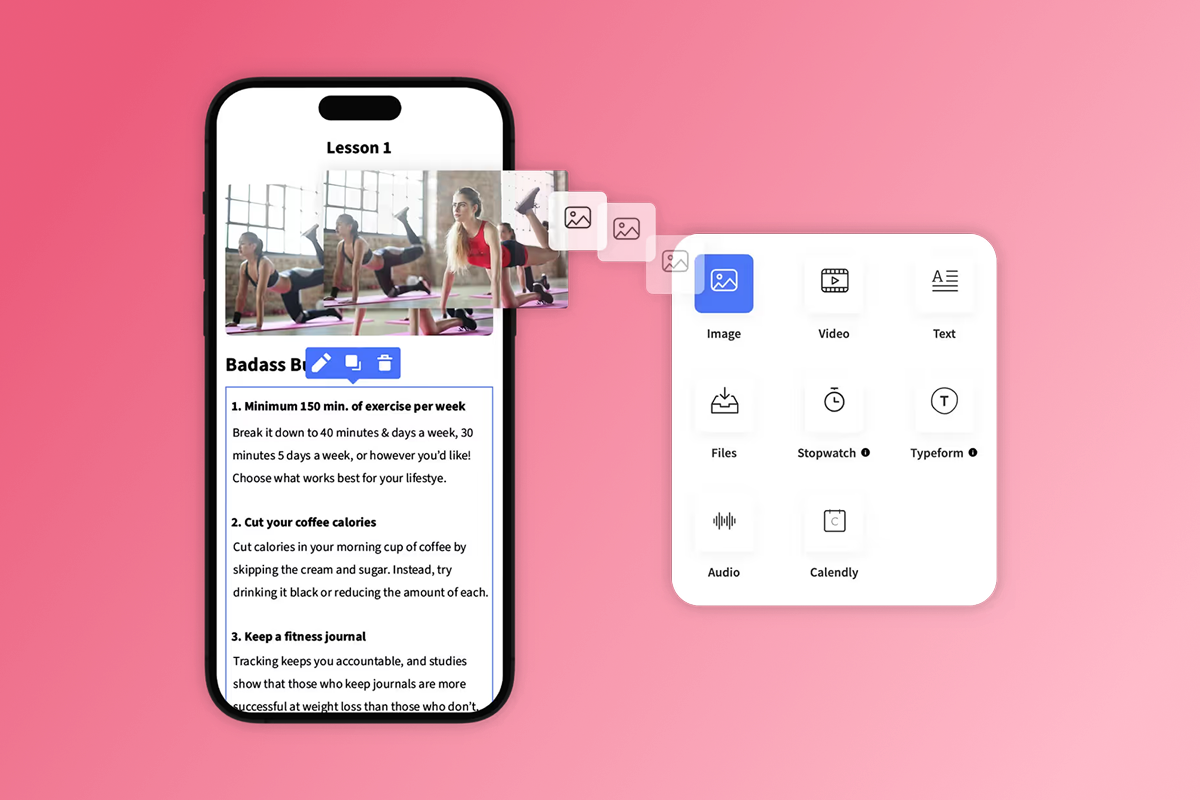
Passion.io's no-code builder uses drag-and-drop to upload videos, PDFs, and audio files. Add your logo, choose brand colors, and customize navigation. The interactive course builder includes progress tracking without touching code.
Set up drip schedules during this phase. Content released automatically based on enrollment date keeps students engaged over weeks. Students can access lessons offline by downloading content, which improves completion when internet is unreliable.
Build your in-app community with channels organized by topic. A fitness app might have channels for workout questions, nutrition tips, and member wins. Community becomes a retention tool where students support each other.
Week 3: Monetization and Payment Setup
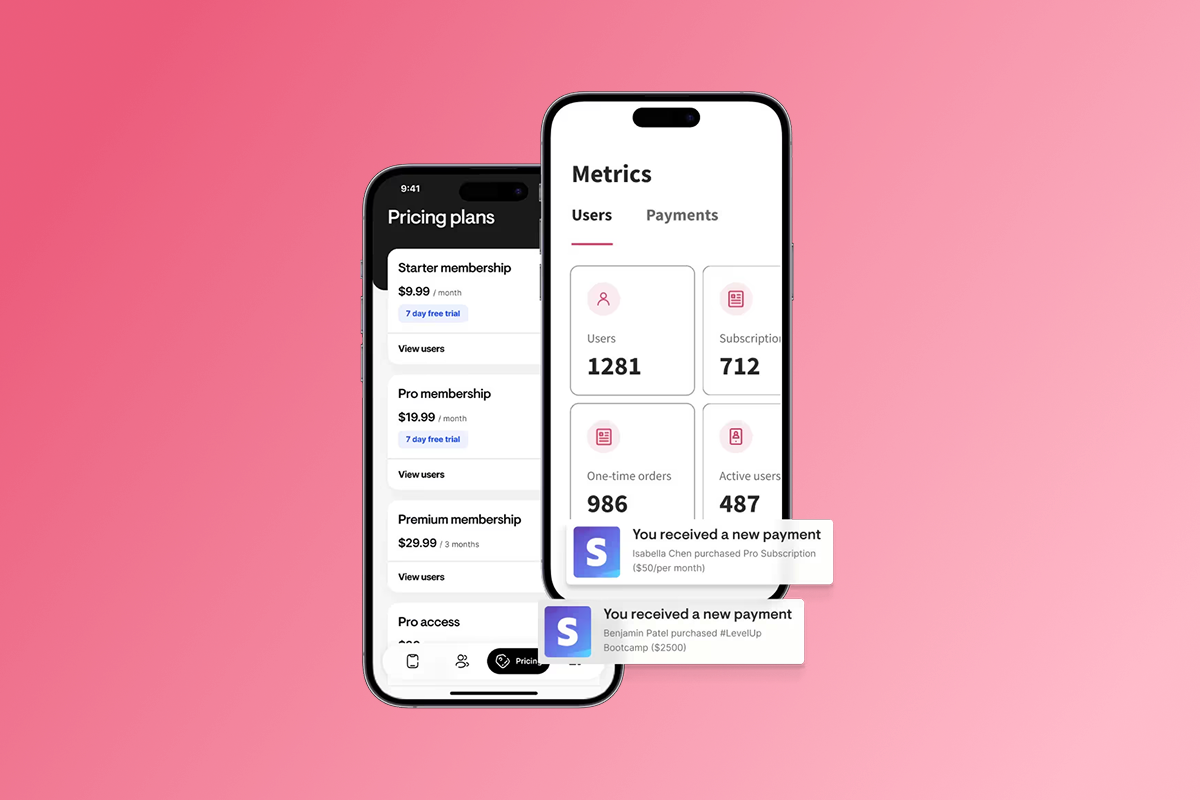
Connect your Stripe account to PassionPayments for web checkout. The platform charges 3.9% on web transactions plus standard Stripe fees, giving you approximately 6.8% total transaction cost for web sales.
For in-app purchases through Apple and Google, the platforms take 15-30% depending on your revenue tier. Choose your fee path strategically. Route high-ticket items and bundles through web checkout to preserve margin. Use in-app purchases for convenience on mobile.
Week 4: Submission and Launch
Your web app goes live immediately for testing and early access. App store submission to Apple and Google requires Apple Developer Account ($99/year) and Google Play Developer Account ($25 one-time fee), plus app metadata, screenshots, and privacy policy.
Apple reviews most apps within 24-48 hours, while Google Play typically completes review in 1-3 days, though complex apps may take longer. One creator noted the reality:
"I only give them a 4 out of 5 because the actual process of getting your app approved by the Google Play Store in particular is a lot more challenging than Passion makes it sound." - Jesse Wiens Chu on Trustpilot
Plan for potential delays by launching on the web first and building your initial subscriber base before app store approval.
Automating Engagement: Push Notifications and Zapier Workflows
Push notifications are the engine that makes passive income work. Schedule notifications in advance for course milestones, daily challenge reminders, new content drops, and community highlights. Effective timing varies by audience, but early morning (7-9 AM) and early evening (6:30-8:30 PM) show strong engagement across most app categories.
Zapier integration connects your app to email marketing, CRM, and other tools to build automation workflows. These workflows run 24/7 without you checking Stripe, clicking through email lists, or manually unlocking content.
Common automations reduce operational burden:
Auto-grant access: When Stripe processes a payment, Zapier automatically grants course access, eliminating manual setup emails.
Course completion triggers: When a student finishes your foundational course, Zapier triggers an email campaign promoting your advanced program.
Community notifications: Set up notifications when members comment in specific channels so you respond quickly without constantly checking the app.
"I have really enjoyed creating my passion app over the past year and half. I would not have been able to make my idea for an app come to life without the platform passion provides... It was easy to schedule a call to discuss any questions I had along the way." - FitWithBrit on Trustpilot
Passive Income Myths vs. Creator Reality
Myth: I can set it and forget it forever.
Reality: You need to market the app, onboard new subscribers, monitor community questions, and refresh content periodically. Passive income reduces daily operational burden but does not eliminate all work.
Myth: Apps are only for big influencers with development budgets.
Reality: No-code platforms like Passion.io start at $99/month annually and launch in weeks, not months. Aerial arts coach Allie Cooper grew her app to generate over $50,000 in revenue with 50+ subscribers, proving niche audiences sustain app businesses.
Myth: I need a huge audience to make this work.
Reality: Smaller audiences of highly engaged fans often monetize better than large, disengaged followings. Niche expertise commands premium pricing because you solve specific problems deeply.
"Creating an App takes commitment, patience and time I've found... Slowly but surely we're getting there and I'm grateful for getting this far." - Dr Liesl Roome Inc on Trustpilot
Stop Renting Your Audience and Start Building Your Asset
An app is the bridge between "burned out creator" and "business owner." Social media demands constant feeding. Email lists get filtered into promotions tabs. A branded mobile app sits on your audience's home screen, sends push notifications that reach them instantly, and delivers content offline without platform algorithms deciding who sees what.
The upfront effort is real; recording content, building app structure, scheduling automations, and submitting to app stores takes focused work. But once live, the asset generates revenue while you sleep, coach fewer 1-on-1 clients, or focus on creating new content because operational delivery runs automatically.
The proof is in creator results. Wellness creators with 250 active subscribers at $22/month generate over $66,000 annually. Niche educators with 50-100 students build sustainable businesses without needing influencer-level followings.
Stop renting your audience on social platforms and consolidate your scattered tools into one branded app that runs while you sleep. Start your Passion.io account today , or book a demo to see the builder and ask how other creators in your niche automated their revenue. Explore the Expert Unleashed training to learn the launch playbook that turns apps into recurring revenue engines.
Specific FAQs
Can I really launch an app in 30 days? Web apps go live in 2-3 weeks. App store submission to Apple and Google happens by week 3-4 and takes 24-48 hours for Apple, 1-3 days for Google.
What if I do not have a big audience? Focus on highly engaged fans who value your expertise. Niche creators monetize through premium pricing and deep problem-solving rather than massive reach.
Do I own my content and audience data? Yes. Passion.io gives you full ownership of content and subscriber data, unlike social platforms that control access.
What happens if I stop posting new content? Subscriptions continue because students access your archive, complete courses at their pace, and engage in community. Add fresh content periodically to reduce churn.
How much does it cost to maintain? Fixed costs: Passion.io Launch plan at $99/month annually, Apple Developer $99/year, Google Play $25 one-time. Variable costs: 3.9% platform fee plus Stripe processing on web sales, or 15-30% on in-app purchases through Apple/Google.
Key Terms Glossary
MRR (Monthly Recurring Revenue): Predictable monthly income from subscriptions and memberships. Calculated by multiplying active subscribers by average subscription price.
Drip Content: Automated content release on a schedule, either by specific dates or X days after enrollment. Prevents overwhelm and improves completion by delivering lessons in digestible chunks.
Push Notifications: Messages sent directly to a user's mobile device home screen. Requires app installation and user opt-in. Average open rates of 4-20%.
PassionPayments: Passion.io's integrated Stripe checkout for web transactions. Charges 3.9% platform fee plus standard Stripe processing fees.
In-App Purchase (IAP): Purchases made inside iOS or Android apps using Apple/Google accounts. Platforms take 15-30% commission depending on revenue tier and program eligibility.
Churn Rate: Percentage of subscribers who cancel monthly. Target under 6% monthly churn for healthy subscription businesses. High churn signals poor onboarding or weak content value.

Build the business
behind what you know.
Turn your expertise into a branded app with courses, community, and the You AI Coach. Launch plan from $99/month.