


How Pricing Ladders Increase Online Course Revenue by 25%
Updated 31st December, 2025
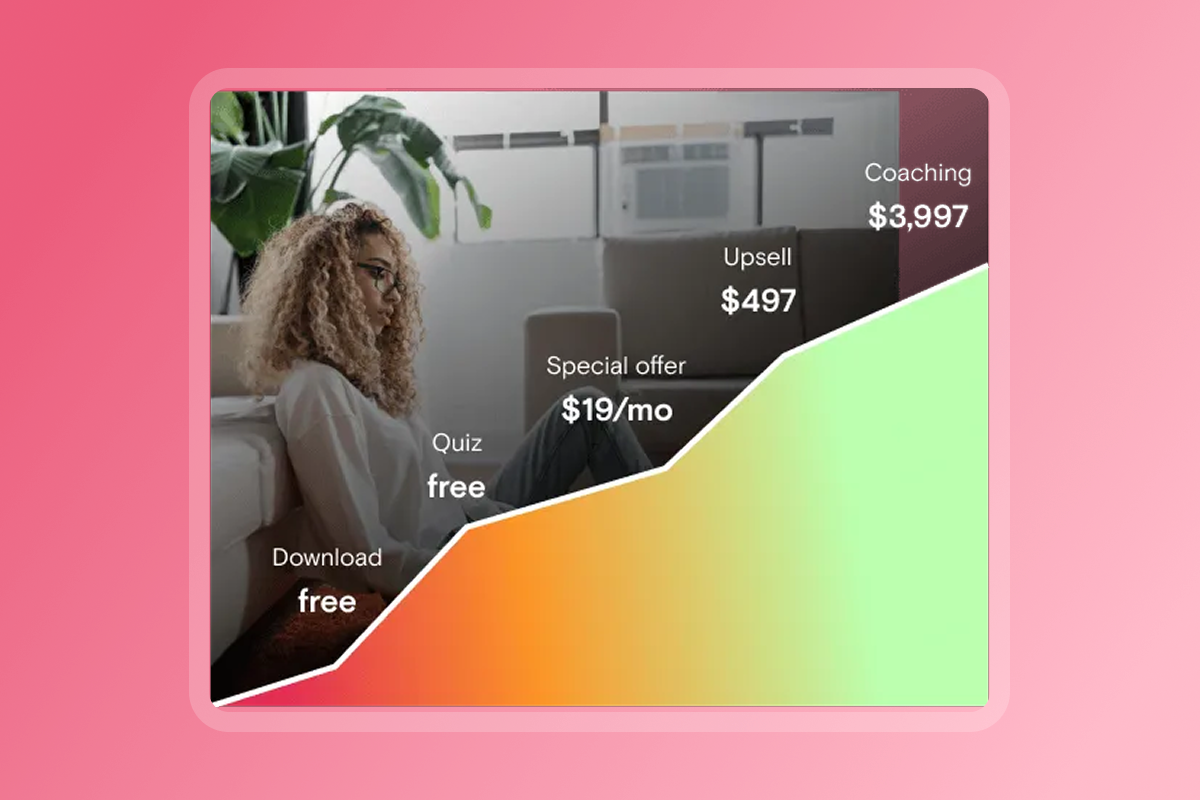
Most first-time creators who want to make money selling courses online face the same pricing paralysis. Price too high and nobody buys. Price too low and you never replace your salary. The default move is to pick one safe price point, but Business Initiative's tiered pricing data shows that offering a pricing ladder with 3-5 tiers can increase revenue by 25% or more without needing more traffic. Here is how to build a pricing strategy that serves every segment of your audience.
Why single-price models cap your income
When you sell a course at one flat price, you force every potential customer into a binary choice: buy or walk away. Some people would gladly pay more for extra support or exclusive access. Others want to start small before committing to a premium tier. A single price point captures neither group effectively.
The math is straightforward. According to Verifyed.io's analysis of professional development courses, prices range from $50 for beginner content to over $2,000 for advanced certifications, with many courses clustered in the $200-$500 range. If you price yours at $349 and sell to 100 customers, that's $34,900 in revenue. Now offer three tiers and let the same 100 people distribute across them: 40% at $297, 45% at $497, 15% at $997. Your total revenue jumps to $49,200, a 41% increase from the same audience with zero extra marketing spend.
Binadox's analysis of HubSpot's tiered structure documented how tiered pricing contributed to revenue growth from $375.6 million in 2017 to $883.9 million in 2020, a 135% increase over three years. Research on pricing optimization shows that companies attacking their pricing for the first time can affect absolute growth by 30-40%, while businesses that are more thoughtful see at least an 11-15% boost. If you're not offering customers choices, you're leaving money on the table and losing customers.
The pricing ladder framework: 3 tiers to success
Building a pricing ladder means creating distinct offers at different price points, each with its own feature set and value proposition. The most common and effective structure is a 3-tier model.
Tier 1: The starter (the low-risk entry point)
Your starter tier exists to remove the risk barrier for cautious buyers. Price it between $97-$297 as a one-time purchase. Include your core course content: the video modules, worksheets, and fundamental lessons that deliver on your main promise.
What you don't include: community access, live calls, direct support, or bonus resources. This tier is entirely self-paced with no hand-holding. It proves your expertise and builds trust. Once buyers see the value, a percentage will upgrade to higher tiers when you introduce the option.
Tier 2: The core (the best value anchor)
Your core tier is where most buyers should land. Price it at $297-$497 as a one-time purchase, or structure it as a monthly subscription at $47-$97/month. This tier bundles the complete course with access to your in-app community, bonus materials, and regular group coaching or Q&A sessions.
The subscription model creates monthly recurring revenue (MRR), which is the foundation of replacing your corporate salary. If 50 people subscribe at $67/month, that's $3,350 in predictable MRR. Scale that to 200 subscribers and you're at $13,400/month, or $160,800 annually.
Label this tier as "Most Popular" or "Best Value" on your pricing page. The visual cue and the contrast with your $997 elite tier push most buyers toward this middle option.
Tier 3: The elite (the premium ceiling)
Your elite tier justifies a price of $997-$1,997+ by offering direct access to you. This includes everything in the core tier plus 1:1 coaching calls, personalized feedback on student work, priority support, or access to a private mastermind group.
Only 10-20% of your audience will buy this tier, but that revenue is crucial. If 15 out of 100 customers choose the $997 elite option, that's $14,955. Without this tier, those 15 people would have either bought your mid-tier option (costing you $7,500 in lost revenue) or walked away entirely.
The elite tier also serves as a pricing anchor. When potential buyers see a $997 option next to a $497 option, the mid-tier suddenly looks affordable. This is the anchoring effect that Nobel laureates Amos Tversky and Daniel Kahneman documented in their research on cognitive bias. When a restaurant lists a $75 steak on the menu, customers are more likely to order the $45 option because it feels like a bargain.
Your starter tier delivers information. Your elite tier delivers transformation with accountability and personalized guidance. A fitness course teaching proper form is information. A fitness course with weekly live form-check sessions and a nutrition plan tailored to your goals is transformation. Price accordingly.

Choosing your platform: Where marketplaces fail you
Before you can implement a pricing ladder, you need a platform that supports multiple tiers, flexible payment options, and doesn't take a massive cut of your revenue.
The hidden cost of "free" marketplaces
Platforms like Udemy and Skillshare offer built-in audiences, which sounds appealing when you're starting from zero. But marketplace revenue share models typically keep 50% or more of each sale when the platform drives traffic. If a marketplace runs a promotion and sells your $100 course for $15, your take-home may be less than $8.
You also don't own the student data. You can't email your students, offer them upsells, or build a relationship. You're renting an audience, not owning one.
Platform comparison: Which model fits your goals?
The all-in-one app advantage
Passion solves the "tool sprawl" problem by combining courses, community, push notifications, and payments in one branded mobile and web app.
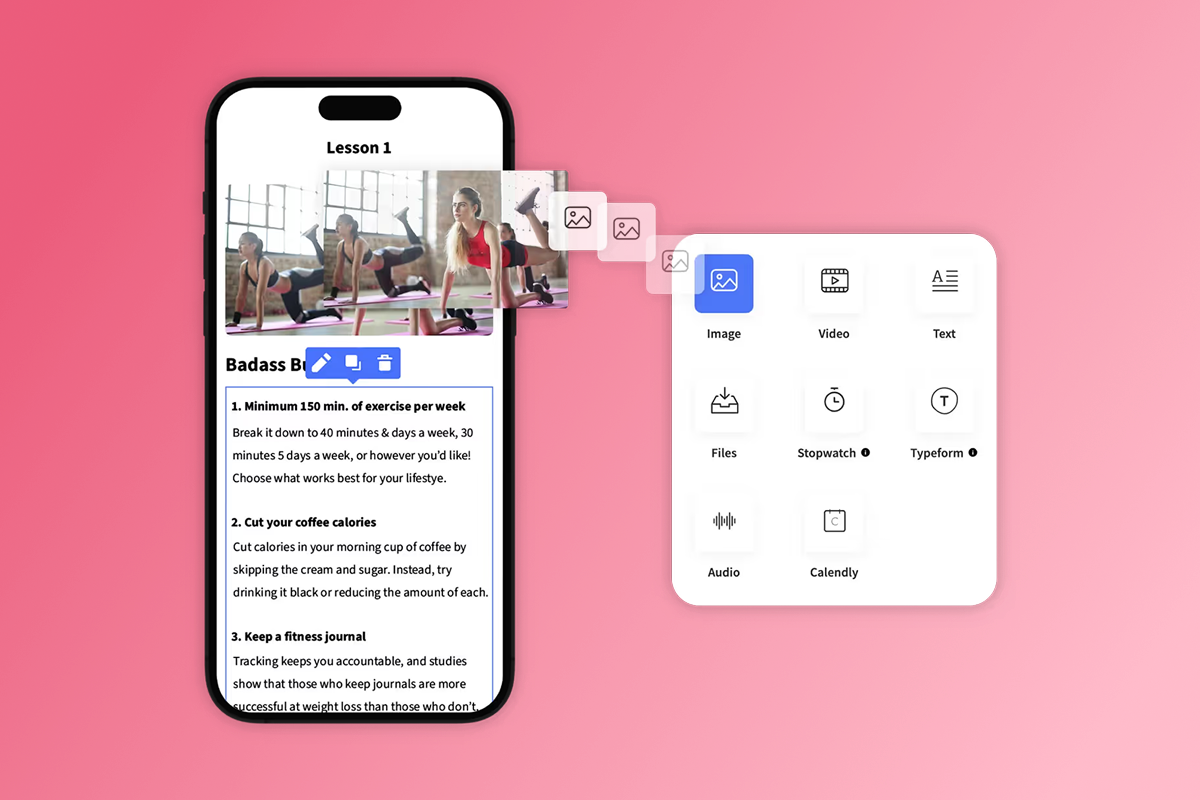
"Passion makes building your own e-learning app fast, simple, and stress-free. With their no-code, drag-and-drop platform, I was able to design, build, and launch a fully functional app in just a few hours." - Verified user review of Passion
The mobile-first approach drives higher engagement. Users don't need to remember a URL and log in through a browser. Your app sits on their home screen. Push notifications bring them back when they forget, and mobile apps reduce friction and increase course completion rates compared to web-only platforms.
Wellness creator Savannah Bohlin used Passion to generate $66,660 in annual recurring revenue from 250 subscribers. That's $266.64 per subscriber per year from a small, engaged audience she owns.
How to implement your pricing ladder on Passion
Once you understand the strategy, the tactical implementation is straightforward. Passion's platform handles the technical complexity of subscriptions, one-time purchases, and mobile payments without requiring code.
Step 1: Build your foundational course content
Your first step is uploading your core course materials to Passion. The platform supports video, audio, PDFs, and text-based lessons. Structure your content into modules and lessons, then add quizzes, progress trackers, and drip schedules if you want to release content over time.

For a step-by-step walkthrough, watch this Passion tutorial video that covers the no-code app builder interface.
Step 2: Define your tiers and differentiate features
Map out exactly what each tier includes:
- Starter ($297): Core course only, self-paced, no community, no support
- Core ($497 or $67/month): Full course, in-app community access, monthly group Q&A call, bonus resource library
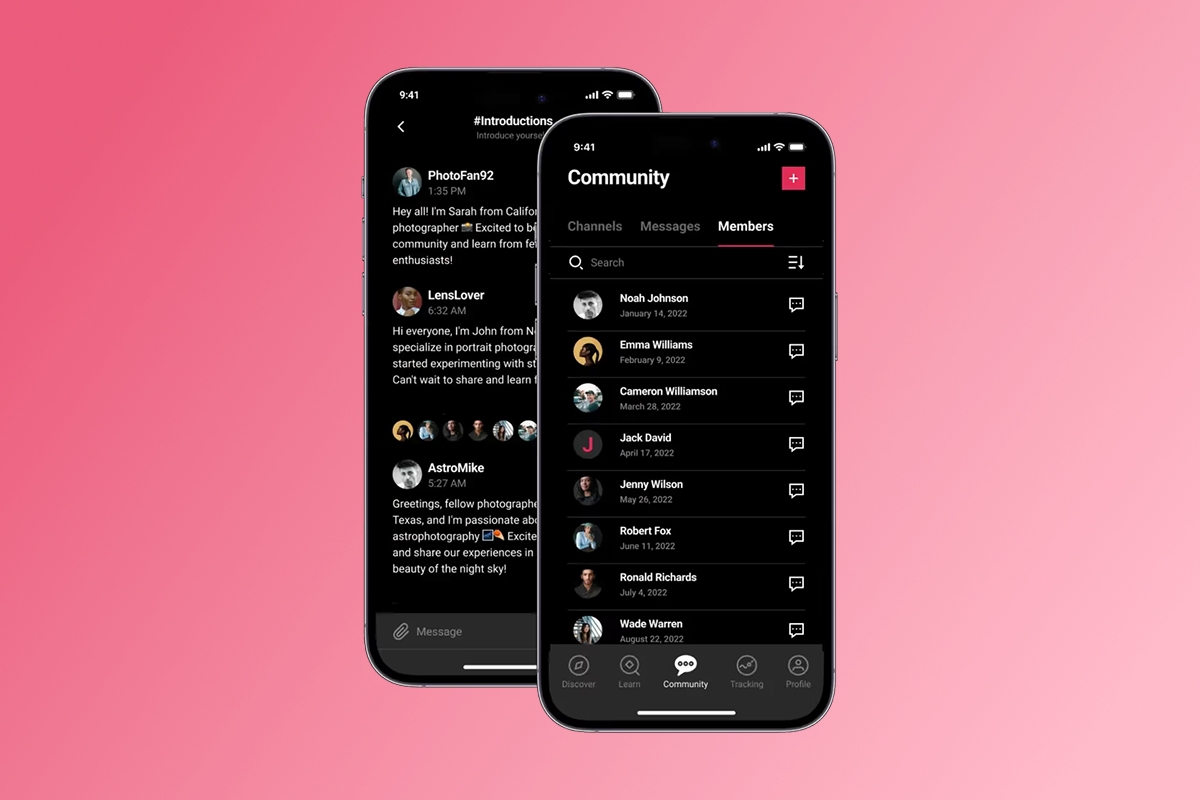
- Elite ($997): Everything in Core, two 1:1 coaching calls per month, direct messaging access, personalized action plan
Write these differences down clearly. Buyers need to understand what they're getting at each level. Confusion kills conversions.
Step 3: Configure pricing in PassionProducts
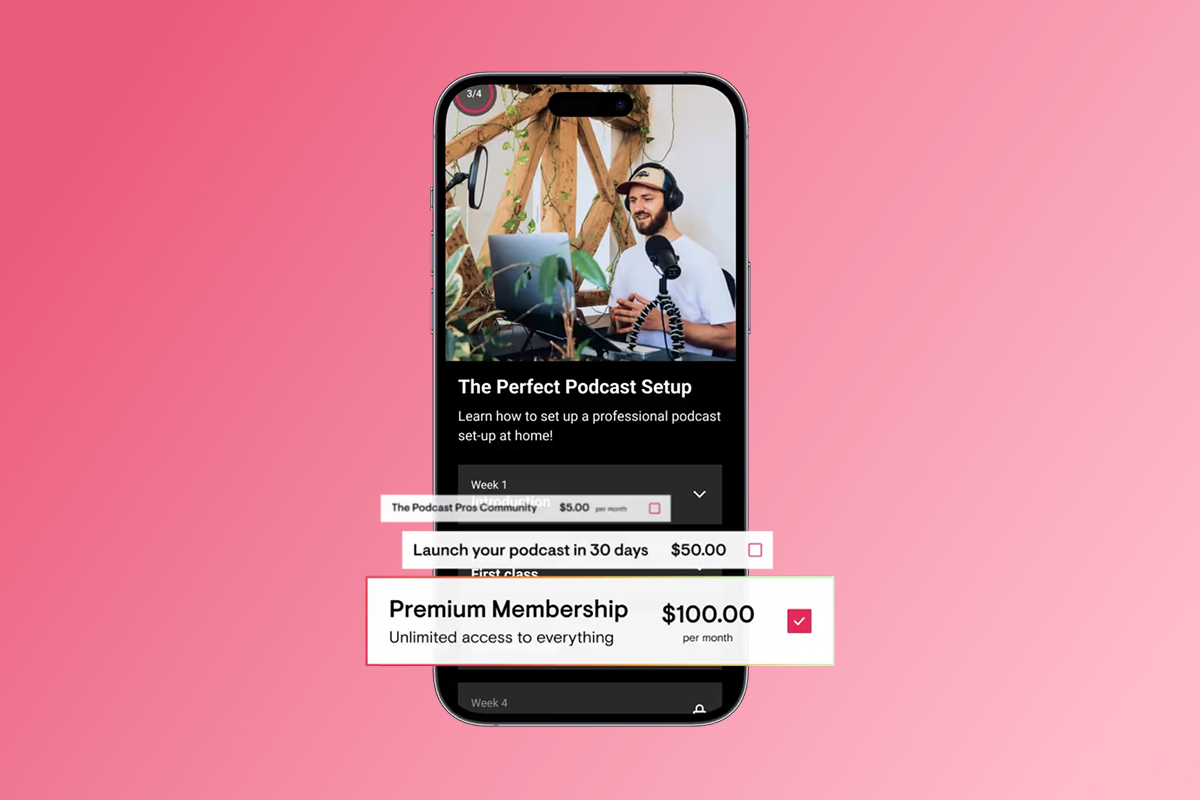
Navigate to the PassionProducts section in your Passion dashboard. Create a separate product for each tier. Set the price, billing frequency (one-time, monthly, annually), and trial period if you're offering one.
For your Core tier subscription, consider offering both monthly ($67) and annual ($597) options. The annual price should offer a 15-20% discount to incentivize upfront commitment, which improves your cash flow.
Bundle different elements within each product. Your Core tier product would bundle the course content with access to your community product. Your Elite tier would bundle everything plus a coaching product.
Step 4: Choose your payment gateways strategically
This decision directly impacts your profit margin. Passion offers two main payment options, and the right choice depends on the price point and customer behavior.
Web checkout (PassionPayments): For transactions processed through your web app, Passion charges a 3.9% platform fee plus standard Stripe processing fees (2.9% + $0.30). Total fees are 6.8% + $0.30 per transaction.
Use web checkout for your mid and high-tier offers. On a $497 purchase, you pay roughly $34 in fees and keep $463. On a $997 purchase, you pay roughly $68 in fees and keep $929.
In-app purchases (IAP): For purchases made directly within the native iOS or Android app, Apple and Google charge 15-30% commissions depending on your annual revenue and whether you qualify for small business programs. Passion adds no additional fee on top of these commissions.
Use IAP for low-priced impulse purchases. On a $47 starter product, a 15% fee ($7.05) is acceptable because the one-tap convenience increases conversion rates enough to offset the higher percentage.
Break-even comparison for a $497 product:
- Web checkout: You keep $463 (93.2%)
- IAP at 15%: You keep $422.45 (85%)
- Difference: $40.55
The conversion rate on IAP would need to be significantly higher to justify losing $40.55 per sale. For high-ticket items, always route buyers to web checkout.
Step 5: Build your pricing page
Create a sales page in the Passion app builder that displays all three tiers side-by-side in a comparison table. Highlight the features of each tier. Add a visual "Most Popular" badge to your Core tier.
Include testimonials, a course curriculum outline, and a clear call-to-action button for each tier. Link each button to the appropriate checkout page (web or in-app).
For design inspiration and examples, check out these 3 Passion app success stories showing how creators structured their pricing.
Your 4-week pricing ladder launch checklist
Use this timeline to move from idea to live app:
Week 1: Content and tier design
- Record and edit your core course modules (video, worksheets, templates)
- Write your tier definitions (Starter, Core, Elite) with clear feature differentiation
- Set your price points and calculate your revenue projections
Week 2: Platform setup
- Sign up for Passion based on your subscriber projections
- Upload your course content and organize into modules and lessons
- Build your community space and write welcome and guidelines posts
Week 3: Payment configuration
- Create PassionProducts for each tier (Starter one-time, Core subscription, Elite premium)
- Configure web checkout for mid and high tiers
- Set up IAP for mobile if offering a low-price impulse tier
- Test purchase flows on web and mobile
Week 4: Launch preparation
- Build your pricing comparison page with clear tier differentiation
- Write launch emails and social posts announcing your new course
- Set up push notification welcome sequence for new subscribers
- Go live and monitor your first 48 hours of sales closely
Setting realistic expectations: Effort and earnings
The creator economy is full of outlier success stories that can distort expectations. Before you quit your job, understand the realistic earning ranges and the work required to get there.
Realistic revenue benchmarks
Course Platforms Review's data on creator earnings shows creators fall into one of these categories based on audience size and engagement:
- Side income: $5,000-$25,000 per year with a small engaged audience (500-1,000 email subscribers)
- Full-time income: $50,000-$100,000+ annually with a larger audience (2,000-5,000+ engaged followers)
- High six-figures: $200,000-$500,000+ per year with a strong personal brand and often a team
While some creators do earn over a million dollars (as discussed in this Passion video on app launch secrets), treating that as the expected outcome is a mistake. Build your business plan around conservative estimates.
It's not passive at first (or ever, really)
The phrase "passive income" is misleading. You must create the course content, market it, support students, update materials, and continuously improve the experience. Passive income is the result of active effort compounded over time.
"The Passion Fighters challenge is helping me move step by step and not be overwhelmed. I'm trusting the process." - Verified user review of Passion
That's the right mindset: methodical progress, not overnight success.
Tracking success: Metrics that matter
Track five metrics in your first 90 days to validate your pricing ladder and spot problems early:
- Monthly Recurring Revenue (MRR): Total predictable revenue from all active subscriptions each month.
- Average Revenue Per User (ARPU): Total revenue divided by total active users. Rising ARPU signals your pricing structure is working.
- Tier distribution: What percentage of customers choose each tier? A healthy distribution shows customers across all three, not 90% on the cheapest.
- Churn rate by tier: Track cancellation rates for each subscription tier. High churn in a specific tier signals a mismatch between price and perceived value.
- Course completion rate by tier: Are Elite tier customers finishing the course at higher rates than Starter tier customers? This validates that the extra support drives results.
Check these metrics monthly for the first 90 days, then quarterly.
Building a pricing ladder is one of the highest-leverage moves you can make when learning how to make money from online courses. The math is clear: serving different customer segments simultaneously captures more total revenue than forcing everyone into a single price point. The psychology is proven: anchoring and tiered value perception drive buyers toward profitable middle-tier options.
Start with a 3-tier model. Price your starter tier at $297 for risk-averse buyers, your core tier at $497 for your primary audience, and your elite tier at $997 to anchor the range and serve premium buyers. Use a platform like Passion that handles the technical complexity of subscriptions, one-time purchases, mobile payments, and community access without requiring a development team. Try Passion and start building your app today.
Frequently asked questions
How many subscribers do I need before I switch to tiered pricing?
You can launch with tiered pricing from day one. The tiered model itself helps you discover which price points resonate most with your audience.
Can I change my prices after launch?
Yes, but grandfather existing subscribers at their original price and show new buyers the updated pricing. Communicate changes transparently to avoid backlash.
What's the difference between Launch and Scale plans on Passion?
Launch starts at $99/month billed annually and includes 100 subscribers and 100 videos. Scale is $239/month billed annually and offers unlimited subscribers, videos, and push notifications plus drip content and custom branding.
Should I offer monthly or annual subscriptions?
Offer both and price the annual plan at 10-12 months' worth of monthly fees. This improves cash flow and reduces churn.
How long does it take to build a course and pricing ladder in Passion?
Most creators can build and launch in 4-8 weeks depending on content readiness and technical comfort. The no-code builder reduces setup time significantly compared to traditional development.
What if my target audience is price-sensitive?
Tiered pricing solves this problem by letting your starter tier capture price-sensitive buyers while your elite tier captures buyers who prioritize results. A single price misses one of these groups entirely.
Key terms glossary
Pricing ladder: A monetization strategy offering multiple price points (typically 3-5 tiers) to capture different customer segments based on their needs and willingness to pay.
Monthly Recurring Revenue (MRR): Predictable revenue generated from active subscriptions each month. Calculated by multiplying the number of subscribers by their monthly subscription fee.
Anchoring effect: A cognitive bias where the first piece of information (the "anchor") influences subsequent judgments. In pricing, a high-priced tier makes mid-priced options seem affordable.
Average Revenue Per User (ARPU): Total revenue divided by total active users over a specific period. Rising ARPU indicates successful upsells and tier upgrades.
PassionPayments: Passion's integrated payment processing system for web checkout, charging a 3.9% platform fee plus standard Stripe processing fees.
In-App Purchase (IAP): Payment transactions processed directly within iOS or Android apps, subject to Apple and Google's 15-30% commission structure.

Build the business
behind what you know.
Turn your expertise into a branded app with courses, community, and the You AI Coach. Launch plan from $99/month.