


In App Purchases for Community Apps: Fees & Setup Guide
 By Julieta Gil
.png)
TL;DR: Apple and Google charge 15–30% on in-app purchases, while PassionPayments web checkout costs roughly 6.8% total. IAP converts 25–45% better because users trust one-tap Face ID payments. The optimal strategy is hybrid: use IAP for monthly memberships and web checkout for high-ticket bundles. Passion.io supports both simultaneously with zero platform fee on IAP, plus white-glove setup on Plus plans to handle App Store compliance and product configuration. You maximize MRR by accepting the IAP fee to capture mobile impulse buyers.
Building a profitable community app means understanding the friction-versus-fees trade-off. If you route every transaction through Apple or Google's in-app purchase system, you pay a 15-30% commission but capture impulse buyers who expect one-tap checkout. If you send users to web checkout, you save margin but lose conversion at the moment of highest intent. I focus on the hybrid model because it addresses both mobile convenience and business sustainability without forcing you to sacrifice either.
In this guide I walk through the exact fee structures from Apple's Small Business Program and Google Play's service fees, show you how to set up IAP inside Passion.io, explain the compliance boundaries that prevent App Store rejection, and demonstrate how to model revenue under different pricing strategies.
How in-app purchases work for community apps
In-app purchases are digital transactions completed entirely inside your mobile app. A user taps "Subscribe," authenticates with Face ID or Touch ID, and Apple or Google processes the payment, then notifies your app to grant access. IAP vs web conversion rates show 27-30% of viewers becoming paying subscribers, compared to 17-19% for web checkout, because payment credentials are already stored and the flow never leaves the app.
Compare this to Discord, Facebook Groups, or Patreon-style platforms where you force users to click an external link, open a browser, re-enter payment details, and return to the app. That multi-step handoff creates drop-off at every stage, and in testing by RevenueCat, forcing users to an external web checkout reduced initial conversion by 25-45% relative to native IAP.
When you enable IAP, Apple or Google becomes the merchant of record and handles tax and billing management while you simply receive a monthly net payout. You issue one invoice per month to Apple and one to Google instead of managing hundreds of individual transactions across dozens of countries.
The trade-off is control and margin. Apple and Google retain 15-30% of every transaction, and you cannot access customer payment details directly through IAP. The IAP model simplifies compliance but costs you a significant percentage of gross revenue.
"I've been a Passion.io customer for a few years now. I'm very satisfied with the overall service." - Ray Bing The Runner on Trustpilot
Breakdown of App Store fees vs. web checkout costs
Apple charges a standard 30% commission on in-app purchases and subscriptions, dropping to 15% after the first year for auto-renewing subscriptions. Apple's Small Business Program reduces the rate to 15% from day one if your total proceeds in the prior calendar year were $1 million or less. If your revenue crosses $1 million during the current year, the 30% rate applies for the remainder of that year, but you can re-qualify for the 15% tier in any future year when revenue drops back below $1 million.
Google Play Google Play reduced fee tier after you enroll in the reduced-fee tier, then 30% on earnings above that threshold. Auto-renewing subscriptions on Google Play are charged 15% from day one regardless of your overall annual revenue. Both platforms require separate developer accounts: Apple charges $99 per year and Google's $25 registration fee.
PassionPayments charges a 3.9% platform fee plus standard Stripe processing fees of approximately 2.9% + $0.30 per transaction, totaling about 6.8% + $0.30. Passion.io's IAP fee structure, so the 15-30% you pay to the app stores is the only fee.
| Payment Method | Fee Structure | Payout Timing | Conversion Rate |
|---|---|---|---|
| Apple IAP (Standard) | 30% Year 1, 15% Year 2+ | 33–45 days after month-end | 27–30% typical |
| Apple IAP (Small Business) | 15% (under $1M annual) | 33–45 days | 27–30% typical |
| Google Play IAP | 15% first $1M, then 30% | 15th of following month | 27–30% typical |
| PassionPayments (Web) | 6.8% + $0.30 total | 2–7 business days | 17–19% typical |
Because Apple and Google act as merchant of record for IAP, they handle tax collection and remittance in every jurisdiction where you sell. You receive a single monthly invoice from each platform and report that net amount as revenue. Web checkout through PassionPayments requires you to manage tax obligations directly, so consult your accountant about sales tax nexus and VAT registration thresholds in your primary markets.
The choice between IAP and web checkout is not purely about fees. Apple pays developers 33 days after the end of the fiscal month, while PassionPayments deposits arrive in 2-7 business days. If cash flow matters more than margin in your launch phase, web checkout provides faster access to capital.
"Passion.io have been so supportive in helping me develop my App, the training, customer support (especially Hope) have been second to none!" - Karen on Trustpilot
Strategic revenue modeling: IAP vs. web checkout
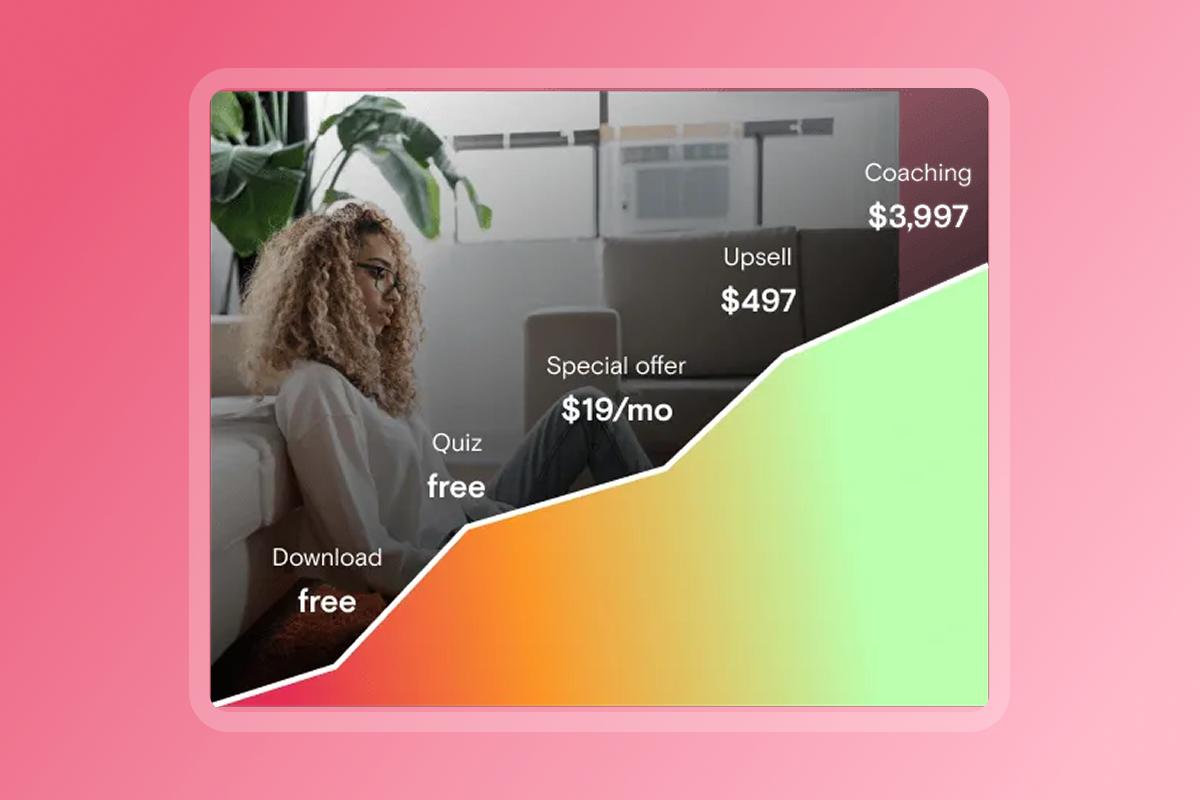
You can capture high-intent mobile buyers via IAP while preserving margin on high-ticket bundles through web checkout by running a hybrid pricing strategy. Start by analyzing your average transaction value and customer acquisition cost. If CAC is $50 and your monthly membership is $29, you need at least two months of retention to break even. Paying Apple 30% ($8.70 per month) means you net $20.30 per subscriber, so breakeven occurs at 2.5 months. If IAP increases conversion by 30%, you acquire more subscribers faster, which can offset the higher per-transaction cost.
Data from RevenueCat shows that in-app purchases convert at 27-30% while web-only flows convert at 17-19%. For every 100 users who reach your paywall, IAP generates 27-30 paying subscribers versus 17-19 for web checkout. Those 10-13 additional subscribers translate to substantially more revenue at the top of your funnel, even after Apple's commission.
For high-ticket offers like annual plans, lifetime access, or coaching bundles priced above $200, the absolute dollar cost of the 30% Apple fee becomes painful. A $997 annual membership loses $299 to Apple, leaving you with $698. The same sale via web checkout costs roughly $68 in fees, netting you $929. That $231 margin difference per sale compounds quickly. You should offer monthly and quarterly plans via IAP for convenience, then drive annual and bundle buyers to web checkout through email campaigns and social promotion.
| Pricing Strategy | Monthly Plan (IAP) | Annual Plan (Web) | Best For |
|---|---|---|---|
| Price Parity | $29 (net $20.30 after 30%) | $297 (net $276.81 after 6.8%) | New creators prioritizing subscriber volume |
| Price Uplift | $34 (net $23.80 after 30%) | $297 (net $276.81) | Creators with strong brand willing to test price sensitivity |
| Web-Only Annual | $29 IAP monthly only | $249 web only | Established creators with high email engagement |
Our guide to creator course metrics explains how to calculate LTV and payback period under each scenario. If your churn is 5% monthly, average LTV on a $29 plan is roughly $580 over the subscriber lifetime. Losing 30% to Apple reduces that to $406, but if IAP boosts initial conversion by 40%, you acquire substantially more subscribers for the same ad spend.
"I've only just started with Passion.io and I love the break down into units idea. The support is quite brilliant because of the online community and such a feeling of goodwill." - T Calver on Trustpilot
Step-by-step guide to setting up IAP on Passion.io
Before configuring IAP inside Passion.io, you must create developer accounts with Apple and Google. Apple Developer Program enrollment costs $99 per year, while Google Play charges a one-time $25 registration fee. Both platforms require you to complete tax and banking information in their respective consoles so they can remit your net proceeds. Apple enrollment processing typically takes 1-4 weeks while payment verification may take up to 48 hours, so start early in your launch timeline.
1. Configure developer account banking: Inside App Store Connect, navigate to "Agreements, Tax, and Banking" and accept the Paid Applications agreement. Upload your W-9 or equivalent tax form and enter your bank account details for direct deposit. Apple's 45-day payment cycle requires accurate banking information, so confirm your details before submission. In Google Play Console, complete the Payments profile under "Setup > Payments profile" and verify your business details.
2. Create subscription products in Passion.io: Navigate to your app settings, select "Monetization," and choose "In-App Purchases" as a payment method. Define your subscription tiers with Product IDs that match across Apple, Google, and Passion.io. For example, a monthly plan might use the Product ID monthly_membership_29 while an annual plan uses annual_membership_297. You must use identical IDs in all three systems so subscription status syncs correctly. Passion.io's help center walks through linking your developer accounts and mapping Product IDs.
3. Create matching products in App Store Connect: Log into App Store Connect and create in-app purchase products under "My Apps > [Your App] > In-App Purchases." Select "Auto-Renewable Subscription," enter the Product ID exactly as defined in Passion.io, set the pricing tier, and provide localized descriptions and screenshots for App Review.
4. Configure Google Play products: Repeat the process in Google Play Console under "Monetize > Products > Subscriptions." Google's review is often faster than Apple's, but both stores require that your app is already submitted or published before IAP products can go live.
5. Test with sandbox accounts: Create a test user in App Store Connect under "Users and Access > Sandbox Testers," then log into your app on a physical device using that test account. Attempt a subscription purchase and verify that access is granted immediately. Repeat the process with a Google test account. Passion.io's IAP management guide includes troubleshooting steps for common issues like product ID mismatches or failed webhook notifications.
"I purchased Passion.io to build an app that was easy for me and my clients to utilize. The group onboarding training was super helpful to getting started on the right foot." - LAT CPA Firm on Trustpilot
Navigating App Store compliance and rejection risks
Apple's Guideline 3.1.1 historically prevented apps from directing customers to alternative purchase mechanisms outside of the app. Following regulatory changes in the United States, developers in the US can now include links to their own websites for purchases and may inform users about comparative pricing, provided they continue offering IAP inside the app. However, IAP must remain available as an option and you cannot discourage users from choosing it. This means you can include a button labeled "View Web Plans" that opens your pricing page in Safari, and in the US you may now show that web pricing is lower than IAP pricing.
Google's updated policies effective October 2025 allow developers to communicate about external pricing and link to their own purchase flows. Be aware that Google may charge a 10% fee for auto-renewing subscriptions and 20% for other digital goods if the user completes a transaction within 24 hours of following the external link. This "link fee" is lower than the standard 15-30% IAP commission but still represents a cost.
The safest compliance strategy is to promote web checkout outside your app through email marketing, social media, and your website while keeping in-app messaging neutral and offering both payment methods. App Store rejections often occur when developers include ambiguous language about subscription terms or unclear privacy disclosures. Passion.io's Expand and Plus support includes pre-submission review of your screenshots, descriptions, and in-app messaging to catch compliance issues before Apple or Google review your app.
Apple requires clear disclosure of subscription terms, pricing, and renewal behavior on the paywall screen and in the app's metadata. Passion.io's IAP pricing guide includes templates for subscription disclosures that meet Apple's standards. If you receive a rejection notice, Passion.io's App Store rejection guidance and address the issue promptly to minimize launch delays.
Scaling with a white-glove launch strategy
If you manage mid-five to six-figure MRR, time is your scarcest resource. You will spend significant hours configuring developer accounts, mapping Product IDs, optimizing App Store screenshots, and responding to review feedback if you handle setup yourself. Passion.io's Plus plan offers a done-for-you launch service where your dedicated success manager handles App Store Connect and Google Play Console setup, creates and links IAP products, submits your app, and addresses any rejection notices on your behalf.
This white-glove service matters most during the compliance and submission phases because common pitfalls are caught in pre-submission review rather than during Apple's official review. Expand and Plus submission support, and for creators transitioning from platforms like Discord or Patreon, Passion.io also offers migration services that move your existing content, member lists, and pricing plans into your new branded app without manual imports.
You must protect member login details and community content even though PassionPayments and IAP abstract payment credentials away from your app. Enable two-factor authentication on your Passion.io account, Apple Developer account, and Google Play Console, rotate passwords quarterly, and restrict admin access to only the team members who need it.
"I am so excited to be a part of the Passion.io community... this approach makes it affordable, easy, fun and really quick to do!" - Jane Mullins on Trustpilot
If the submission process consumes significant founder time, the opportunity cost justifies white-glove support because you can redirect that time to content, community, and marketing activities that drive higher returns. Plus plans typically range from $10,000-$20,000 for the initial scope, which includes app design, content migration, IAP configuration, and submission support.
Book a demo with Passion.io to review the IAP setup flow, see how Plus plans handle compliance and submission, and model your hybrid payment strategy with our team. Try it with Passion.
Frequently asked questions about community app payments
Can I offer different prices for IAP and web checkout?
Yes, and in the United States you may now inform users about the price difference. Market web pricing through email and social channels, and you can include external links in your app under current guidelines.
How long do payouts take from each platform?
Apple pays 33-45 days after month-end, Google on the 15th of the following month, and PassionPayments in 2-7 business days.
Does Passion.io charge a fee on top of Apple or Google commissions?
No, Passion.io adds 0% platform fee on IAP transactions.
What happens if Apple rejects my app during review?
Typical rejections involve metadata or privacy disclosures and you can address the issue with guidance from Passion.io support to minimize delays.
Can I qualify for the Apple Small Business Program to pay 15% instead of 30%?
Yes, if your total proceeds were under $1 million in the prior calendar year. Apply through App Store Connect under "Agreements, Tax, and Banking."
Do I own my subscriber data with IAP?
You own anonymized transaction data and can export subscriber lists from Passion.io, giving you full audience ownership regardless of whether users pay via IAP or web checkout.
Key terminology for app monetization
Merchant of Record: The entity legally responsible for payment processing, tax collection, and refunds. Apple and Google act as merchant of record for IAP, while you are the merchant of record for PassionPayments web checkout.
Small Business Program: Apple's 15% commission tier for developers earning under $1 million per year. Google offers a similar reduced-fee tier.
Churn: The percentage of subscribers who cancel each month. Lower churn increases lifetime value and makes higher IAP fees more sustainable.
Operational Drag: The time and cost burden of managing multiple disconnected tools. Consolidating payments, content, and community into one platform reduces drag and frees time for growth activities.

Build the business
behind what you know.
Turn your expertise into a branded app with courses, community, and the You AI Coach. Launch plan from $99/month.