

White Label App Community Features That Cut Churn
Updated February 12, 2026
TL;DR: White-label mobile apps with in-app community features cut churn by centralizing your audience where your content lives. Push notifications deliver 20% open rates vs. Facebook's 1.37% organic reach. Five features drive retention: in-app feeds, push notifications, gamification, member directories, and offline mode. Custom development costs $80,000–$250,000 and takes 6+ months. Passion.io's Plus service launches your branded iOS, Android, and web app in 4–8 weeks for $10,000–$20,000, handling migration and App Store submission so you own your audience data and stabilize MRR.
If you run a six-figure coaching or education business, you already know the problem. Your community lives in a Facebook Group, your course content sits on a separate platform, your payments flow through Stripe links, and you spend half your week chasing people across DMs, emails, and Zoom.
Facebook's algorithm decides who sees your posts. Apple and Google own the in-app purchase relationship. Your brand equity is diluted across platforms you do not control, and your churn rate proves it.
White-label mobile app community features solve this by consolidating content, conversation, and commerce into a single branded destination you own, with native push notifications that bring people back and measurable engagement tools that reduce churn. This guide walks you through the five community features that actually drive recurring revenue, the transparent cost comparison between custom development and white-label platforms, and the white-glove path to launch in weeks.
Why Social Media Groups Are Killing Your Retention Rates
Facebook's organic reach across 2024 measured just 1.37%, with business page engagement averaging 0.06%. If you post from your page, only 1-2% of your followers see it. Even Facebook Groups, which generally deliver higher organic engagement than Pages, still run on an algorithm designed to sell ads to your customers, not build your business.
Distraction kills completion. When your paid members open Facebook to engage with your program, Facebook immediately serves them competing content, ads, friend updates, viral videos, political arguments. Your post about Module 3 or this week's challenge sits in a feed optimized for Facebook's revenue, not your completion rates. You cannot send a targeted message to members who have not logged a workout in seven days. You cannot deliver a push notification to celebrate a milestone. You rent space in someone else's storefront, and the lease terms change without notice.
Push notifications in a white-label mobile app deliver 20% average open rates, with contextual campaigns achieving 16.3% compared to just 4.7% for generic campaigns. That means you can reach 10-20x more of your audience on launch day, challenge kickoff, or the critical Day 7 re-engagement window. When your community lives inside the app where the content and payments also live, you eliminate the context-switching friction that kills momentum.
The 5 White-Label Community Features That Actually Drive MRR
White-label mobile app builders deliver community tools that unify your audience, content, and commerce in one branded destination. These five features directly address the retention and engagement problems that inflate churn in scattered tool stacks.
1. In-app community feeds vs. scattered Facebook groups
In-app community feeds place the conversation inside the same app where members consume lessons and track progress. No context switching. No competing newsfeed. When a member opens your app to watch Module 3, they see peer comments and coach replies in the same view. Shared discussion spaces, member-to-member messaging, and announcement channels keep updates visible without the clutter of open threads.
The structural advantage is focus. Ads, friend drama, and viral content cannot distract your members. The feed shows your program and nothing else. You control moderation, threading, and visibility. You can pin important posts, create topic-specific channels, and automate posts with Zapier to keep engagement high during busy weeks. For coaches running cohort-based programs, in-app feeds create the accountability and peer interaction that drive completion without the noise and platform risk of social groups.
"Best app ever! Great customer service, easy to use infrastructure, friendly support, promptness in answering questions and solving issues, genuine care for customers." - Georgiana Vasilescu on Trustpilot
Members engage more when the community lives where the value lives. Approximately 70% of apps doubled user engagement after integrating in-app chat, with in-app messages boosting retention by about 30%.
2. Push notifications: The cure for low open rates
Push notifications are the single highest-advantage engagement tool in a white-label mobile app. Push notification opt-in rates are 56% on iOS and 67% on Android, and the average reaction rate for all push notifications was 7.8% according to Airship's analysis of 50 billion notifications. Compare that to email open rates in the low teens and Facebook organic reach under 2%, and the advantage is clear.
Passion.io's push notification system lets you send the right message at the right time to the right users with engagement triggers you can set and forget. Combine in-app behaviors, users who are not paying subscribers, users who have not opened a lesson in three days, with time-based triggers to automate re-engagement. Launch a challenge on Monday and send a check-in push on Thursday to members who have not logged progress. Celebrate a 30-day streak with a milestone push. Notify the community when a new lesson drops or when a live Q&A starts.
"This has been an incredible experience because of the guidance and direction from the videos and written content, as well as the live support from the community (via Facebook). Passion.io is great with providing solutions and giving great customer service!" - Nitara Osbourne on Trustpilot
The retention impact is measurable. In-app community platforms help creators boost course completion 15-30% by unifying content and conversation in one branded mobile app. Push is not a "nice-to-have", it is the primary tool for reversing the drop-off that plagues mobile apps.
3. Gamification and challenges to spike completion
Gamification and challenges foster interaction and accountability. A 30-day fitness challenge with daily check-ins, progress photos, and peer support drives higher completion than static video lessons. Leaderboards, streaks, and cohort-based challenges add structure and social proof to your program, turning passive buyers into active participants. When members see peers completing Day 7 or posting wins, they stay engaged through the difficult middle of a program.
White-label app builders like Passion.io include goal tracking so members can log workouts, habits, or milestones inside the app. Pair that with push notifications and community feeds, and you create a habit loop, trigger (push), action (log workout), reward (streak badge), social proof (community post). That loop reduces churn by increasing the daily or weekly touchpoints with your brand.
The completion math is simple. If your course completion rate is 15% and you can lift it to 20% with challenges and gamification, you create more success stories, more testimonials, more referrals, and more upsell opportunities. Completed members renew. Incomplete members churn.
4. Member directories and peer accountability
Member directories and peer accountability features let your community members find each other. In a fitness app, members can connect with others in their region or at similar fitness levels. In a business coaching program, members can partner on accountability calls or joint ventures. Peer pressure and peer support both reduce churn because members feel accountable to the group, not just to you as the coach.
Passion.io's community platform includes member profiles and 1:1 messaging so members can build relationships inside your app. That network effect increases switching costs, members do not just lose access to your content if they cancel, they lose access to the peer connections they have built. For high-ticket programs and mastermind-style communities, peer relationships are often the primary value driver, and a white-label app makes those relationships visible and accessible.
"I have really enjoyed creating my passion app over the past year and half. I would not have been able to make my idea for an app come to life without the platform passion provides. The passion support team has also been extremely helpful." - FitWithBrit on Trustpilot
When members form accountability partnerships or small groups inside your app, they check in more frequently, complete more lessons, and renew at higher rates. Your job as the coach shifts from one-to-many broadcast to facilitating peer-to-peer connection, which scales better and creates stickier engagement.
5. Offline mode for engagement anywhere
Offline mode lets members download lessons, workouts, or resources to consume later without an internet connection. Passion.io's offline mode is available on the Expand plan and higher, giving members the ability to access content on flights, in gyms with poor Wi-Fi, or in rural areas. Accessibility increases usage frequency because members can engage with your program whenever and wherever it fits their schedule.
The completion impact is straightforward. If a member travels for work and cannot access your video lessons because they require streaming, that week of downtime often leads to churn. If they can download the week's lessons before they leave and watch them offline, they stay on track. That continuity matters, especially in habit-based programs like fitness, meditation, or skill-building where momentum is critical.
Custom Development vs. White-Label Platforms: The TCO Breakdown
The cost to develop a mobile app ranges from $80,000 to $250,000 and takes 3-6 months minimum for a funded team in the US or EU. Annual maintenance costs 15-20% of initial development, so a $200,000 app needs $30,000-$40,000 yearly for hosting, security patches, iOS and Android updates, bug fixes, and new features.
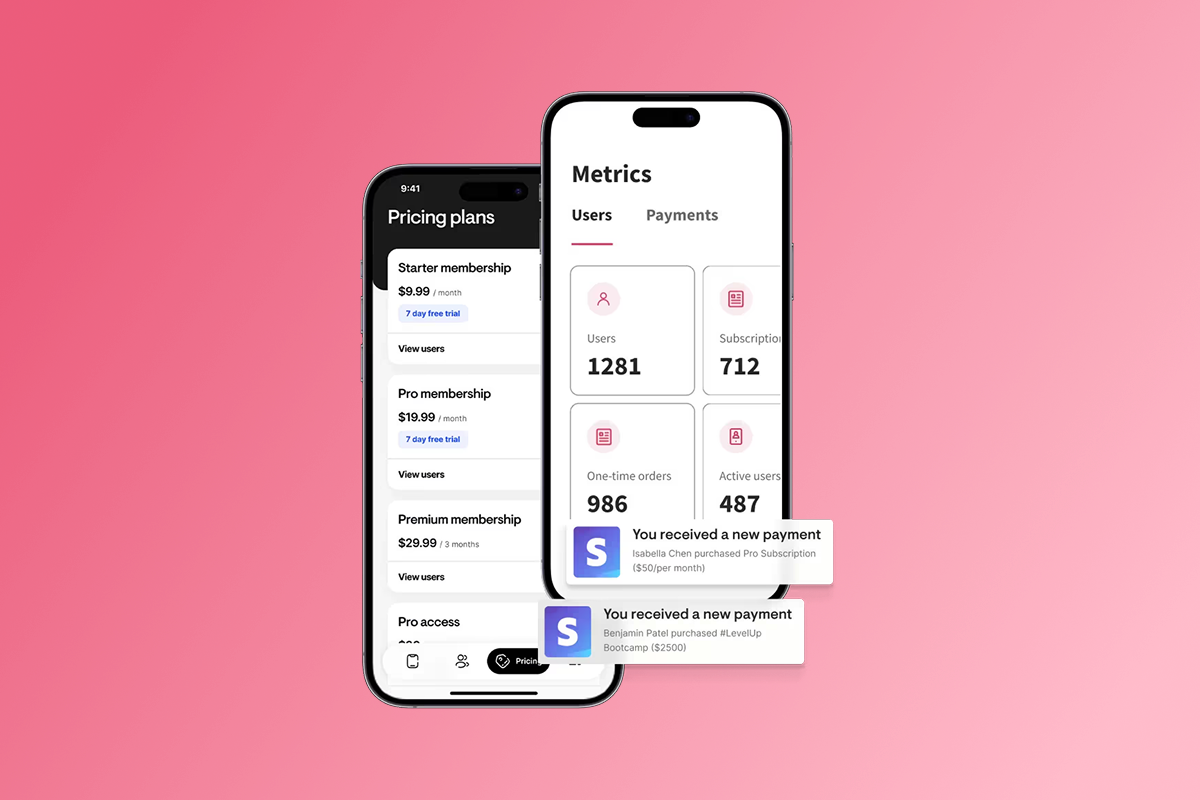
White-label platforms flip the economics. Passion.io's Expand plan costs $599/month annually ($7,188/year) and offers unlimited users, products, communities, videos, and push notifications, plus App Store listing support. That is $7,188 per year for a fully managed platform with automatic updates included. White-label apps can reduce overall costs by 50% or more compared to custom development upfront.
Your web app can launch in 2-3 weeks, with mobile store presence following within 4-6 weeks. Custom development takes 6-12 months and requires managing a dev team, QA testing, and ongoing iterations.
| Factor | Custom Development | Passion.io White-Label |
|---|---|---|
| Upfront Cost | $80,000–$250,000 | $10,000–$20,000 (Plus) or $7,188/year (Expand) |
| Timeline | 6–12 months | 4–8 weeks |
| Maintenance | $30,000–$40,000/year | Included in subscription |
| Updates & Features | Pay per feature | Automatic platform updates |
On top of the platform cost, you pay transaction fees depending on your checkout method. PassionPayments charges a 3.9% platform fee on web checkouts (plus Stripe processing). Apple App Store in-app purchases charge 15% on the first $1 million in annual earnings (Small Business Program) or 30% above that. Google Play charges 15% on the first $1 million and 30% above. You also pay $99/year for the Apple Developer Program and a $25 one-time fee for Google Play.
Choose web checkout for lower fees on bundles and high-ticket offers. Reserve in-app purchases for mobile convenience and impulse upgrades where the 15-30% fee is worth the higher conversion.
Security and Data Ownership: Moving Off Rented Land
When you build on Facebook, Instagram, or a third-party course platform, you rent the land. The platform owns the user data, the algorithmic reach, and the terms of service that can change overnight. Your audience is not portable. Your brand equity is diluted by platform branding.
Moving to a white-label mobile app means you own the customer relationship, the data, and the infrastructure. Passion.io gives you ownership without algorithm or platform risk. You export user data, manage your own email lists, and control the branded experience from splash screen to checkout. The platform uses SSL/TLS encryption in transit and standard SaaS best practices. As an operator, enforce two-factor authentication on your admin account and encourage members to use strong passwords.
The ownership angle is the key. When you move off Facebook Groups and onto your own branded app, you stop building someone else's asset. Your member list, engagement data, and brand equity are yours. That reduces platform risk, increases LTV, and gives you the strategic flexibility to pivot pricing, features, or messaging without asking permission.
How to Launch Your Branded Community App (DIY vs. White-Glove)
You have two paths to launch a white-label mobile app: build it yourself with a no-code platform, or hire a white-glove service to do it for you. The choice depends on your available time, technical confidence, and revenue level.
The PassionPlus Approach: Done-for-You Migration and Launch
PassionPlus is a done-for-you service starting around $10,000-$20,000. Passion.io's team builds your app, handles content migration, manages App Store submission, and provides a dedicated success manager.
The Plus plan includes everything in Expand plus specialized 1-to-1 support from a success manager, custom analytics, fast content migration, app submission service, and a dedicated expert marketing and growth coach. The team walks you through pricing strategy, monetization pathways, App Store submission checklists, and launch campaigns. You get a named contact who knows your business and can troubleshoot issues quickly.
"Since signing up three days ago, I have had a VIP experience. From the fast response to an earlier question I had about billing to the wonderful welcome call I had with Amanda S. (one of the App Success Advisors) who answered all of my questions with kindness and enthusiasm, I feel well taken care of." - Deane Falcon on Trustpilot
The DIY Path: What to Expect
The DIY path uses Passion.io's no-code builder on the Launch or Expand plan. You drag in videos, PDFs, and text, set up lessons and sections, style the app with your logo and colors, configure pricing and checkout, and submit to the App Store yourself. The platform provides training videos, help docs, and support via the PassionFighters community, but you do the work.
The Launch plan starts at $99/month billed annually. The Expand plan at $599/month annually adds unlimited communities, push notifications, offline mode, and App Store listing support. DIY works well if you have more time than budget and are comfortable working with App Store policies.
"Passion.io have been so supportive in helping me develop my App, the training, customer support (especially Hope) have been second to none! I highly recommend them if you are thinking of developing an App. They guide you through the process every step of the way." - Karen on Trustpilot
Real Results: Benchmarks for In-App Engagement
Creators using white-label apps with in-app community and push notifications report measurable lifts. Push and in-app communities drive completion rates up by 15-30% in 90 days, with one fitness coach seeing lesson completion jump 22% in 9 weeks and monthly churn drop from 8% to under 6%.
Day 1 retention around 25%, Day 7 around 11-13%, and Day 30 around 6% are typical across consumer apps. Creator apps with strong engagement features can improve on these benchmarks when you combine content, community, and challenges in one destination.
"I've been a Passion.io customer for a few years now. I'm very satisfied with the overall service." - Ray Bing The Runner on Trustpilot
For niche creators in aerial arts, drumming, business coaching, and spirituality, tight-knit communities where peer support and social proof drive retention can deliver six-figure months and mid-five-figure MRR outcomes. The common thread is ownership; when you own the platform, you control the engagement mechanics and keep the revenue.
Stop Renting Your Community
Moving your community from Facebook Groups to a white-label mobile app consolidates five tools into one owned asset. You eliminate algorithm risk, distraction, fragmented logins, and platform fees that throttle your growth. You gain push notifications, in-app community, offline access, gamification, and transparent data ownership.
Custom development costs $80,000-$250,000 and takes 6-12 months. Passion.io's Plus service launches your branded iOS, Android, and web app in 4-8 weeks for $10,000-$20,000. You own the relationship, the data, and the future. And if you're not satisfied, there's a 30-day money back guarantee.
See how creators launch in weeks by booking a demo for PassionPlus.
Specific FAQs
What is the difference between a white-label app and a custom app?
White-label apps are pre-built platforms you rebrand with your logo and content, launching in weeks for $10,000-$20,000. Custom apps are built from scratch by developers, costing $80,000-$250,000 and taking 6-12 months.
Do I own the data in my white-label community?
Yes, you own the customer list, engagement data, and content. You can export user data and migrate to another platform if needed.
How long does it take to migrate a Facebook group to an app?
Web app launch takes 2-3 weeks, with App Store presence following within 4-6 weeks. Plan four to six weeks for phased community migration with announcement periods, invite links, and launch events to give members time to transition.
What are push notification open rates compared to Facebook?
Push notifications deliver 20% average open rates. Facebook organic reach is 1.37%, with business page engagement averaging 0.06%.
How much do Apple and Google charge for in-app purchases?
Apple charges 15% on the first $1 million annually (Small Business Program), then 30%. Google charges 15% on the first $1 million, then 30%. Developer accounts cost $99/year (Apple) and $25 one-time (Google).
Key Terms Glossary
White-label app: A ready-made mobile app platform you rebrand with your logo, colors, and content, launching in weeks without custom development.
Push notifications: Mobile messages that appear on users' lock screens or notification trays to drive re-engagement, averaging 20% open rates.
IAP (In-App Purchase): Digital content or subscriptions purchased inside a mobile app, subject to Apple or Google's 15-30% revenue share.
Churn rate: The percentage of users who cancel their subscription or stop using an app over a given period, typically measured monthly.
MRR (Monthly Recurring Revenue): The predictable revenue a business can expect every month from subscription-based services or products.