


Best yoga app builders for instructors: Top platforms compared (2026)
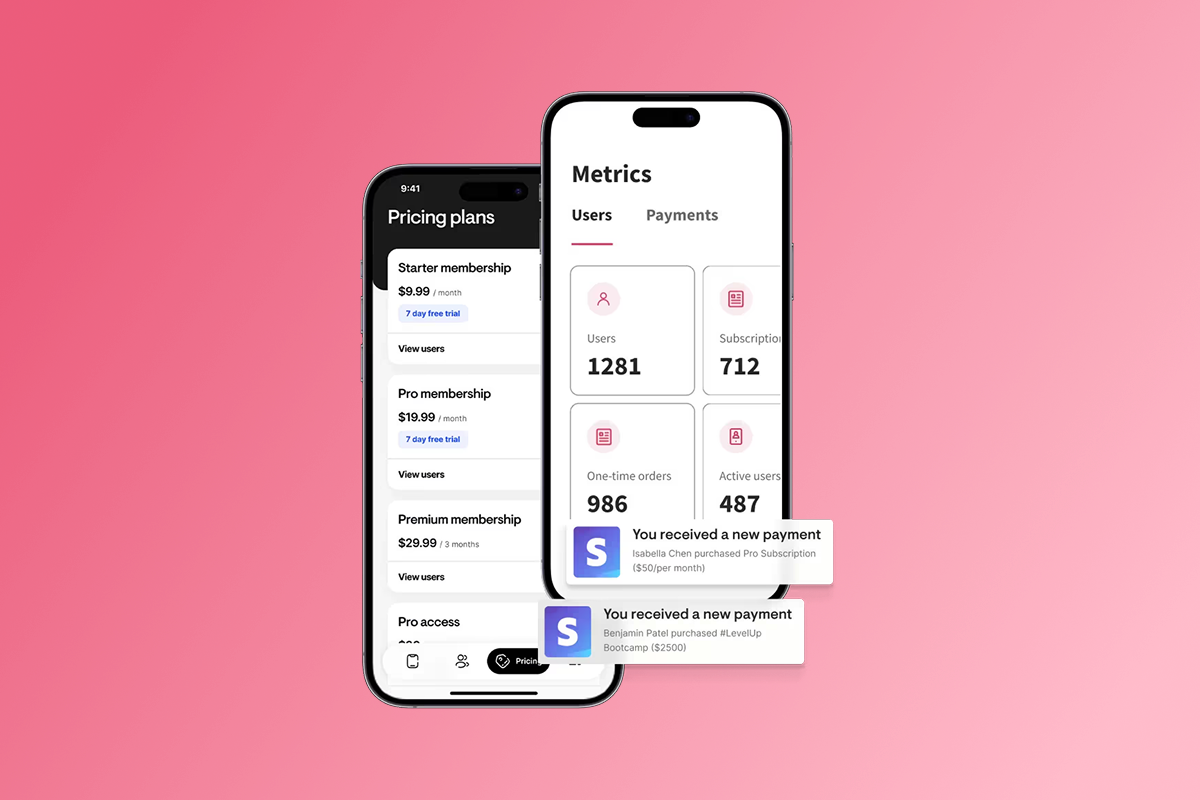
Updated March 12, 2026
Yoga instructors building digital businesses in 2025 face a revenue-stability decision: keep growing an audience on platforms you don't own, or move to a branded app where the audience, data, and payments are yours. Not all yoga app builders deliver what they promise. Some are video libraries with weak mobile experiences. Others lock you into a single high-fee payment path. A small number give you native iOS and Android apps with community, push notifications, and flexible checkout options that protect your margins.
This comparison covers four leading platforms, with exact fees, app store realities, and a 90-day launch plan you can act on. If you already have an audience and want to compare specific app builders before making a purchase decision, the breakdown below shows which platform fits your business model.
Why top yoga instructors are moving from rented platforms to branded apps
The algorithm threat is real
Your Instagram following belongs to Instagram. When the algorithm shifts, your reach drops without notice or appeal. For instructors who built their entire income on social reach, that's not a hypothetical risk - it's the core reason so many are moving to owned platforms in 2025.
A branded app changes that dynamic entirely. When a student downloads your app, you have a direct line to them through push notifications, in-app community threads, and offline content. No algorithm sits between you and your audience. The question isn't whether to build an app - it's which builder gives you the fastest path to owning that relationship.
Mobile habits drive retention
Students who buy video courses on generic web portals rarely finish them, and low completion drives churn. According to Passion.io's mobile app retention benchmarks, app sessions run roughly 2.4x longer than mobile web sessions. Push notifications are central to that retention lift. MobileLoud's push notification benchmarks report an average click rate of 28% for push notifications, compared to 1-2% for email clicks. For a yoga instructor running a 30-day challenge, that difference between "saw the nudge" and "opened the app to practice" directly determines whether students finish your program or churn after week one.
5 non-negotiable features your yoga app builder needs
Before comparing platforms, these five features separate a real yoga app from a mobile-friendly website:
- Native mobile experience: Students need offline access for sessions in studios, parks, and on the road. A native app lives on the device and works without Wi-Fi. A Progressive Web App (PWA) runs in a browser and often can't access push notifications or offline playback reliably, as current PWA vs. native comparisons confirm.
- Push notifications: The highest-impact retention tool available. Scheduled nudges re-engage students who would otherwise drift. Without push, you rely on email, which delivers a fraction of the reach.
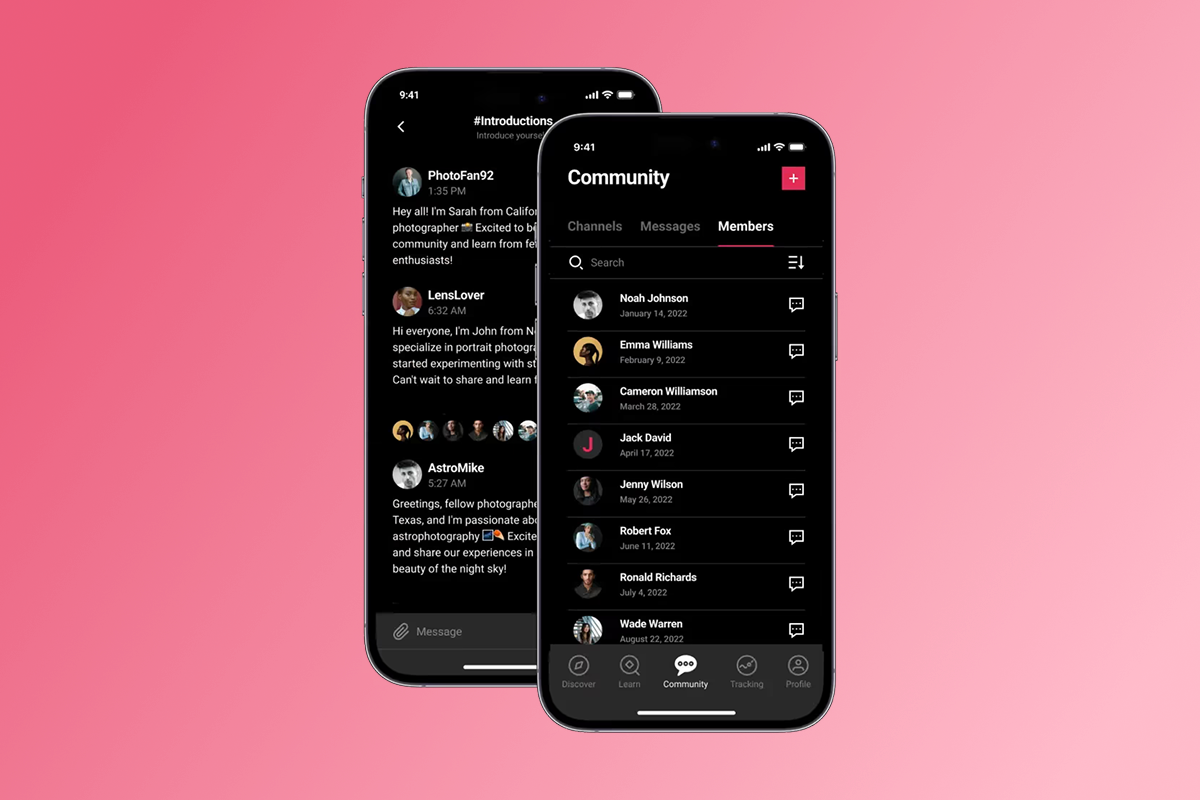
- In-app community: Isolation kills retention. A community tab inside your app - where students share progress, post questions, and hold each other accountable - turns a solo video course into a program people stay in and renew.
- Flexible monetization: You need subscriptions (monthly and annual), one-time purchases, and the ability to route payments through both web checkout and IAP. A single payment path costs you either margin or conversion.
- White-label branding: Your logo in the App Store, your colors in the app, your name in the push notification. Students open your app, not a generic platform container.
Top yoga app builders compared: Features, pricing, and fees
If you want to see the Passion.io builder and student experience before reading the full platform breakdowns, watch this overview or start a free trial.
1. Passion.io: Best for community-driven recurring revenue
Passion.io combines courses, in-app community, challenges, push notifications, and payments into a single branded native app on iOS, Android, and web. The platform targets instructors who want more than a video library - it builds the interaction layer that drives completion.
Key features for yoga instructors:
- In-app challenges and drip content: Run a 30-day yoga challenge with daily lessons unlocked on schedule, paired with push nudges and community check-ins. This combination drives the completion rates a passive video library can't match.
- PassionPayments (web checkout): Route subscriptions through web at a 3.9% platform fee plus Stripe, keeping significantly more margin than the 15-30% Apple/Google retain on IAP.
- Offline access: Students download lessons offline and practice anywhere - a specific requirement for yoga students who train outside reliable Wi-Fi.
- App Store listing support: The Expand plan includes technical submission support to Apple and Google. On Launch, you follow the pre-submission checklist and submit independently. Google Play approval can take additional time for health and fitness apps, so check the Health & Fitness compliance guide before submission.
Pricing (per the Passion.io pricing guide):
- Launch: $99/month annually ($119/month monthly)
- Expand: $599/month annually - includes App Store listing support and advanced analytics
- Passion Plus: Custom pricing ($10,000-$20,000+ depending on scope)
Pros: Native iOS/Android/web app under your brand, dual payment paths (web and IAP), strong community and challenge features, no-code builder for non-developers, training programs and PassionFighters community included.
Cons: Not a full email marketing suite (integrates via Zapier with ActiveCampaign and ConvertKit).
Wellness creators building from the ground up consistently highlight both the build experience and support quality:
"I have really enjoyed creating my passion app over the past year and half. I would not have been able to make my idea for an app come to life without the platform passion provides." - FitWithBrit on Trustpilot
"Passion.io have been so supportive in helping me develop my App, the training, customer support have been second to none!" - Karen on Trustpilot
Ideal for: Instructors who want recurring memberships, high completion rates, and a branded mobile community. The 14-day free trial makes it a low-risk starting point.
2. Uscreen: For video-heavy catalogs
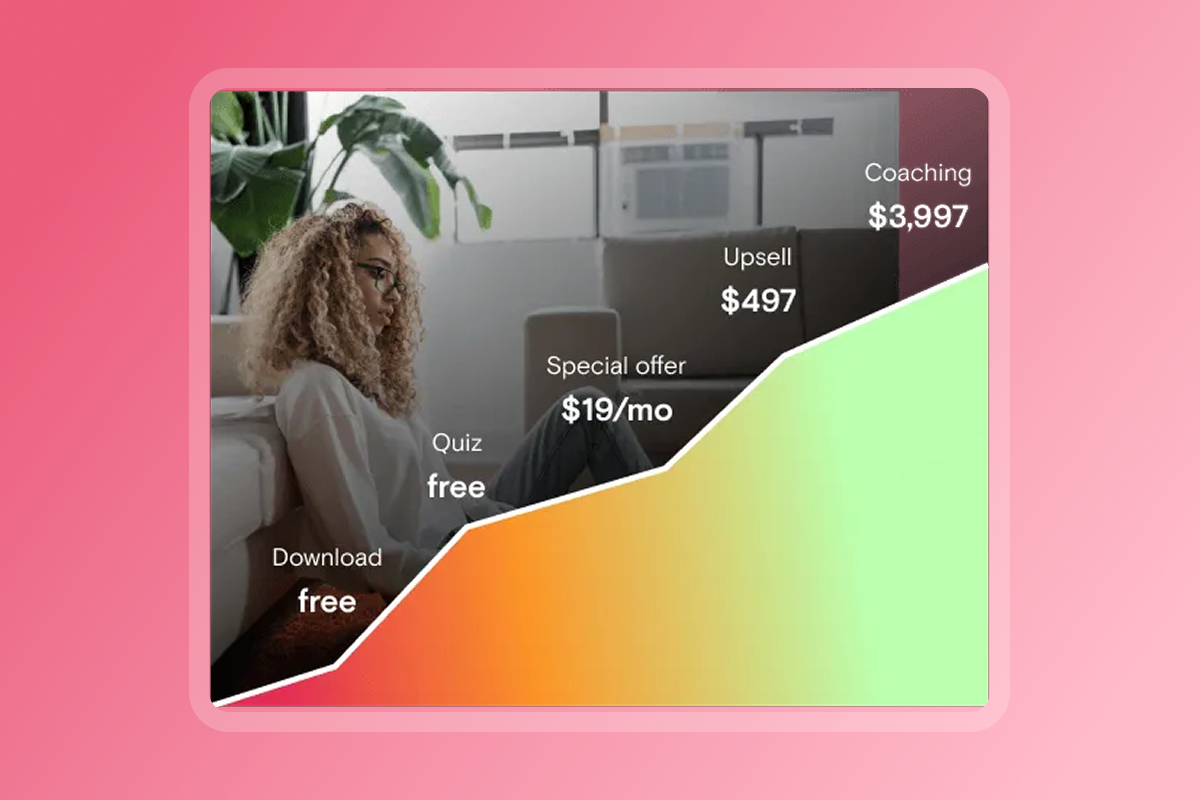
Uscreen targets video-first creators who want a Netflix-style experience across mobile, web, and TV screens (Roku, Apple TV, Amazon Fire). If your yoga library has hundreds of classes sorted by style, duration, and level, Uscreen's video management and OTT distribution are strong.
Key features:
- Native iOS and Android apps, plus OTT apps for TV platforms
- Live streaming with paid access gates
- Solid video player and catalog organization
- Focuses primarily on video delivery rather than interactive coaching features
Per the Passion.io vs. Uscreen comparison, Uscreen focuses on video delivery and catalog management rather than the interaction layer that drives completion in coaching programs.
Pricing:
- Growth: $149/month annually, plus $1.99 per active subscriber per month
- App Essentials: $449/month annually, plus $1.49 per active subscriber per month
Note the per-subscriber fee. At 500 active subscribers on App Essentials, that's an additional $745/month on top of the plan cost. Factor this into your real cost projection before committing.
Ideal for: Instructors with large video catalogs (200+ classes) targeting a broad on-demand audience where content browsing matters more than interactive community.
3. Kajabi: For marketing funnels
Kajabi serves creators who prioritize email automation, landing pages, and affiliate programs. If building funnels and nurturing email lists is central to your business model, Kajabi's marketing stack is genuinely strong.
The key caveat: the "app" on standard Kajabi plans is a generic container. Students download the Kajabi app and find your content inside it - your brand doesn't appear on their home screen. To get a truly branded app with your logo in the App Store, Kajabi's branded mobile app is included on the Pro plan or available as a $199/month add-on on Basic and Growth plans. Per Kajabi's branded app documentation, it typically takes 6-8 weeks to build and submit.
Pros: Strong email automation and affiliate program management, branded app included on Pro tier.
Cons: Branded app costs an additional $199/month on lower tiers, raising total platform cost significantly. The mobile experience is less focused on community and coaching than Passion.io.
Ideal for: Instructors who run high-volume email marketing funnels and are already using Kajabi's marketing tools. If you're evaluating Kajabi specifically for the app experience, budget the full Pro plan or the $199/month branded app add-on.
4. Teachable: For simple course hosting
Teachable offers an accessible starting point for instructors selling one-off courses online. The platform is easy to learn and the Starter plan ($29/month annually) undercuts Passion.io's Launch tier for basic course delivery. However, it doesn't offer a branded mobile app.
As confirmed in a current Teachable review (2025), Teachable does not offer a white-label branded app on any plan. Students access content through Teachable's own mobile app. Push notifications are available to students through that centralized app - but they come from Teachable's platform, not a channel branded to your business.
Pricing (Teachable 2025 plans):
- Starter: $29/month annually - 7.5% transaction fee
- Builder: $69/month annually - 0% transaction fee
- Growth: $139/month annually - advanced features, 0% fee
- Advanced: $309/month annually
Ideal for: Instructors at the start of their digital business who want to test course content before investing in a branded app. Plan to migrate to a dedicated app builder once branded mobile engagement becomes a priority.
The math of monetization: App Store fees vs. web checkout
Apple and Google retain 15-30% on every in-app purchase. Qualifying developers with under $1 million in annual proceeds pay 15% under Apple's Small Business Program. You can review the Small Business Program guide to apply. Google charges a 20% base commission on the Play Store. On a $50/month yoga membership sold via IAP, Apple retains $7.50-$15 and Google retains $10 before you collect anything.
Web checkout changes that math. Passion.io's PassionPayments charges 3.9% plus Stripe's processing rate - roughly $2.50-$3.50 on that same $50 subscription. That margin difference compounds as you scale.
The recommended approach: use IAP for one-tap mobile signups to reduce friction for new subscribers. Route annual plans, bundles, and high-ticket programs through web checkout to protect your margin. Passion.io supports both paths on the same platform. The program launch tips guide covers how to configure both payment paths before going live.
Choose a builder that gives you both options. IAP-only platforms cost you margin. Web-only platforms reduce mobile conversion.
Your 90-day launch plan: From content to first 50 subscribers
This plan moves an instructor from a fragmented tool stack to a branded app with paying subscribers.
Month 1 - Build (Days 1-30):
- Register developer accounts: Set up your Apple Developer Account ($99/year) and Google Play Developer Account ($25 one-time) early - this removes a common delay at submission time.
- Upload foundation content: Add 10 core yoga lessons. You don't need a full library to launch.
- Configure branding: Set your logo, colors, and app name in the no-code builder.
- Set pricing tiers: Configure monthly and annual subscriptions. Review the developer account pricing guide before publishing.
- Publish your web app: Onboard beta students while App Store submissions are in review.
Month 2 - Engage (Days 31-60):
- Launch a "30-Day Morning Yoga Challenge" using drip content and scheduled push notifications.
- Use the in-app community feed for daily check-ins and accountability.
- Gather testimonials from beta students who complete the challenge.
- Target metric: +20% DAU and 10% reduction in early churn compared to Month 1.
Month 3 - Scale (Days 61-90):
- Add a second subscription tier or content bundle.
- Set up a consistent weekly push notification calendar.
- Use testimonials to drive new subscriber acquisition through social channels.
- Target metric: +15% MRR growth and first wave of positive app store ratings.
Creators in adjacent niches who moved to owned platforms report meaningful growth in subscriber retention after adding push and community - as one wellness instructor building on Passion.io put it:
"I am excited for being given a cost-effective way to create an app so Shift Your Life® teachings can reach more people." - Tracy Latz on Trustpilot
Which platform fits your business model?
Here's how to choose:
- Choose Passion.io if your business runs on student results, retention, and recurring memberships. Native iOS/Android, push notifications, in-app challenges, community, and dual payment paths (web and IAP) are built for the coaching and instructor model. Plans start at $99/month annually.
- Choose Uscreen if you have a large video catalog and your primary product is on-demand streaming across mobile and TV. Factor in the per-subscriber fee ($1.49-$1.99/month) when projecting real costs at scale.
- Choose Kajabi if email marketing funnels are your primary acquisition channel. Budget an additional $199/month for a truly branded app if you're not on the Pro plan.
- Choose Teachable only if you're at the very start of your digital business and need the lowest-cost way to publish a first course. Plan to move platforms once branded mobile engagement becomes a priority.
The ownership question is the deciding factor. If your goal is to move off rented platforms, own your audience, and build subscription revenue that doesn't depend on an algorithm, only platforms with true native mobile apps get you there. That rules out Teachable for branded mobile engagement, and makes Kajabi's branded app a meaningful added cost on standard plans.
Ready to see a branded yoga app on a real device? Book a demo and build your first app before committing.
Frequently asked questions
Can I build a yoga app without coding?
Yes. Passion.io, Uscreen, and Kajabi all use no-code builders where you add content, configure branding, and set pricing without writing code. Passion.io's builder is designed for instructors, not developers, and you manage app updates independently after launch.
How long does it take to get approved by the App Store?
Plan a 1-2 week buffer for clarification requests or metadata revisions from Apple or Google. Google Play approval can take additional time for health and fitness apps that must meet the Health & Fitness compliance guide requirements. On Passion.io's Expand plan, the team supports the technical submission process. On the Launch plan, you follow the pre-submission guide independently.
Do I own my user data if I leave the platform?
On Passion.io, you retain ownership of your content and can export student data. Review the Data Processing Agreement before signing any annual contract, particularly if you have students in GDPR-regulated regions.
What does Apple actually charge on in-app purchases?
Apple charges 30% on standard plans. Qualifying developers with under $1 million in prior-year proceeds pay 15% under Apple's Small Business Program. If you exceed the $1 million threshold mid-year, the 30% rate applies for the remainder of that calendar year. Google Play uses the same 15%/30% structure, but will be moving to a 20% base comission in June, 2026.
Is Teachable available as a white-label yoga app?
No. As of 2025, Teachable does not offer a white-label branded app on any plan. Students access content through the generic Teachable mobile app, not an app listed under your brand in the App Store.
What's the minimum setup needed to launch a Passion.io yoga app?
You need an Apple Developer account ($99/year), a Google Play Developer account ($25 one-time), your logo and brand colors, and your first 10 videos or content files. The ASO keyword tools guide helps you pick the right app store keywords before submission.
Key terminology
Native app: An iOS or Android application built for a specific operating system, distributed through the App Store or Google Play, and capable of accessing device features including push notifications, offline storage, and the camera.
Progressive Web App (PWA): A website enhanced with app-like features that runs in a mobile browser. PWAs don't require an App Store download but often lack reliable access to push notifications and offline playback, limiting their effectiveness for coaching programs.
In-App Purchase (IAP): A payment processed inside the native app through Apple or Google's payment system. Apple and Google retain 15-30% of each transaction, depending on the developer's revenue level and program eligibility.
PassionPayments: Passion.io's web checkout gateway, which processes payments outside the App Store at a 3.9% platform fee plus Stripe's standard processing rate. Used for subscriptions and purchases completed on the web version of your app.
Push notification: A message sent directly to a user's device through the operating system, appearing as a lock-screen alert or banner. Push notifications bypass email entirely and achieve substantially higher engagement, making them the primary re-engagement tool in native app coaching programs.
White-label app: A branded mobile application listed in the App Store under your business name and logo, with no visible branding from the platform provider. Not all platforms offer true white-label apps on standard plans.
MRR (Monthly Recurring Revenue): The predictable, subscription-based revenue generated each month. Moving from one-off course sales to MRR is the core financial goal of shifting from a course platform to a subscription app model.
Churn: The percentage of paying subscribers who cancel each month. Reducing churn is directly affected by completion rates, community engagement, and consistent push notification cadence.

Build the business
behind what you know.
Turn your expertise into a branded app with courses, community, and the You AI Coach. Launch plan from $99/month.