.png)

Updated February 23, 2026
This guide shows you how to automate that first week inside a branded mobile app. You'll eliminate operational drag, reclaim time spent on manual nudges, and turn new members into active subscribers. You'll see why Discord and Facebook structurally prevent automated onboarding, how push notifications triple activation rates, and what white-glove migration delivers when you move to an app you own.
Why most paid communities fail to retain members past day 30
Your content is excellent. Your audience trusts you. But 94% of new users churn within the first 30 days because they never activate. Activation means completing the core actions that prove value in the first week. Without it, members drift away before they experience the transformation they paid for.
The root cause is not your teaching ability but your delivery stack. Manual onboarding on rented platforms creates four specific failure points:
- No automated sequencing: You cannot schedule Day 1, Day 3, Day 7 messages that fire automatically for each new member based on their join date.
- No push control: Discord pings overwhelm, Facebook notifications get lost in feeds, and email struggles with low engagement rates.
- No consolidation: Members juggle five logins across courses, community, payments, and video hosting.
- No data ownership: You cannot export your community in a portable format if the platform changes policies or suspends your account.
First 90 days define retention in defining the lifetime of that account. If customers encounter friction, feel undersupported, or fail to achieve early wins, they churn. The solution is not working harder but building a system that onboards automatically.
That system requires three components: a branded mobile app that consolidates courses and community in one place, automated drip sequences that deliver content and nudges on a schedule, and push notifications that reach members on their phones. Retention rates are nearly 3x higher when users receive one or more push notifications in their first 90 days, and 95% with zero push notifications churn.
"I purchased Passion.io to build an app that was easy for me and my clients to utilize. The group onboarding training was super helpful to getting started on the right foot." - LAT CPA Firm on Trustpilot
The 7-day activation framework: A day-by-day execution guide
The 7-day activation framework maps out the exact sequence of actions, content, and nudges that transform a new paying member into an activated, habit-forming user. Day 0 delivers immediate access and the "magic moment" that proves value. Days 1 through 3 focus on social integration and the first quick win. Days 4 through 7 lock in habit formation through push notifications and challenges. The framework works because it automates the manual work you used to do while delivering a better member experience.
You'll know the framework is working when new members log in at least three times in week one, complete one lesson, and post in your community. Track activation rate (percentage who hit all three), time-to-first-action, and 7-day engagement rate to optimize the sequence over time.
Day 0: Immediate access and the "magic moment"
The magic moment is the instant a new member sees proof they made the right decision. This happens within minutes of purchase, not hours or days. On Day 0, your automated system delivers instant app access, a personalized welcome message, and a clear first step.
When a member subscribes, they receive an email with download links for iOS and Android or a web app URL. Passion.io's welcome screen feature lets you showcase your brand with a background image, logo, and testimonial quotes to make a strong first impression on new members. Your welcome message acknowledges their purchase, celebrates their decision, and gives them one action to complete in the next 10 minutes.
That action is the quick win. For a fitness coach, it might be watching a 3-minute form tutorial and posting a selfie in the community. For a business coach, it could be downloading a one-page framework and introducing yourself in the "New Members" thread. The action must be easy enough to finish on a phone in under 10 minutes and valuable enough to feel like progress.
You can set up a Zapier welcome email to send immediately when someone subscribes. Inside your Passion.io app builder, you create the welcome screen content, upload your brand assets, and write the Day 0 message. You connect Zapier to trigger the welcome email on new subscription events. Once live, this system handles 10 new members or 1,000 without additional effort from you.
"Since signing up three days ago, I have had a VIP experience. From the fast response to an earlier question I had about billing to the wonderful welcome call I had with Amanda S. (one of the App Success Advisors) who answered all of my questions with kindness and enthusiasm, I feel well taken care of." - Deane Falcon on Trustpilot
Days 1–3: Social integration and the first quick win
Days 1 through 3 focus on two goals: getting the new member to connect socially with at least one other person in the community and completing their first meaningful action inside your content.
On Day 1, send a push notification that invites the member to introduce themselves in a designated "Welcome" thread. In-app community features let you pin this thread to the top of the feed so it's always visible. Your prompt should be specific: "Post one sentence about your biggest challenge right now and one win you're celebrating this week." Specific prompts generate better engagement because they remove the blank-page problem.
You or your team must respond to new member introductions within 24 hours. You can also automate community posts using Zapier to schedule daily engagement prompts that keep the feed active even when you're offline.
On Day 3, send a push notification celebrating their progress and inviting them to share a result or question in the community. The message might say, "You've completed your first lesson. What's one thing you're going to implement this week? Share it in the community and tag me." Research shows that apps using personalized push messages see a 400% lift in open rates compared to generic notifications, so tailor your Day 3 message to reference the specific lesson they completed.
Passion.io's Launch plan includes 1,000 push notifications per month, which covers your onboarding sequence and weekly engagement nudges for a community of several hundred members.
Days 4–7: Habit formation via push notifications and challenges
Days 4 through 7 shift from "getting started" to "building a habit." The goal is to establish a pattern where the member opens your app at least three times in the first week and associates it with progress, connection, and accountability.
On Day 4, send a push notification that introduces a 7-day or 30-day challenge running inside your community. Challenges work because they create urgency, peer accountability, and a clear finish line. Your push message might say, "Join the 7-Day Clarity Challenge starting today. Post your Day 1 action in the challenge thread to lock in your spot."
On Day 5, send a push notification that highlights a specific feature of your app they haven't used yet, such as offline access to lessons, the ability to upload files in community threads, or a hidden resource library. Discovering new features increases perceived value and reduces the likelihood they'll cancel before the end of the first month.
On Day 7, send a push notification celebrating their first week and inviting them to book a live call, attend a group session, or unlock the next module in your curriculum. This milestone moment acknowledges their progress and sets up the next phase of their experience.
automate these pushes in advance so every new member receives the sequence without manual intervention. The entire 7-day framework runs on autopilot once you build it, which is the key difference between this approach and manually welcoming people in a Discord server.
"I've only just started with Passion.io and I love the break down into units idea. The support is quite brilliant because of the online community and such a feeling of goodwill." - T Calver on Trustpilot
Why Discord and Facebook Groups kill retention (and how branded apps fix it)
Discord and Facebook Groups are free, easy to set up, and familiar to your audience. They also structurally prevent the kind of onboarding automation that drives retention.
Discord was built for gamers coordinating in real time, not for high-ticket coaching programs. When you run a paid community on Discord, members join a server with dozens of channels, hundreds of notifications, and no connection to your course content. The platform prioritizes recency over relevance, so valuable posts from last week disappear under new chatter. Members must learn your channel structure, mute notifications to avoid overwhelm, and remember to check Discord separately from where they watch your lessons or manage their subscription.
Discord's 10% monetization cut, which removes margin you could keep. More critically, you do not own the platform. Discord can change policies, suspend accounts, or shut down monetization features without notice.
Facebook Groups bury your posts under algorithm changes and ads. Members see your content mixed with ads, political rants, and viral videos. The signal-to-noise ratio makes it hard for them to treat your group as a premium, focused learning environment. Email reminders hit spam folders or get ignored.
Branded apps fix these problems by consolidating everything your members need in one place. courses, community, and payments unified under your brand name with your logo and colors. Members download "Your Brand" from the App Store, not "Discord" or "Facebook." This positions you as the platform owner, not a tenant renting space on someone else's platform.
Push notifications in a branded app work differently than Discord pings or Facebook alerts. You schedule them to arrive at optimal times based on member behavior. You personalize them based on which lessons they've completed or which challenges they've joined. You control the frequency to avoid overwhelming people. push notifications drive 26% more engagement compared to users who do not receive push messages.
Data ownership matters for long-term business viability. own your subscriber list and can export it at any time as a CSV file including names, emails, join dates, and subscription plans. If you decide to migrate to another platform or sell your business, you take your audience with you. This is not possible with Discord or Facebook Groups, where your community lives on rented land.
"I knew for my type of work an app would be the best way to serve my people. I was researching a little and kept coming back to Passion.io. They take the guess work out of everything and I love Dan's videos." - Lori on Trustpilot
How to automate onboarding to reduce operational drag
Operational drag is the time you spend manually onboarding new members, answering repetitive questions, and nudging people to engage. Automation solves this by handling the repetitive work while you focus on high-value tasks.
Setting up drip sequences and push automation
Drip sequences deliver content and messages on a schedule tied to each member's join date. Instead of everyone receiving the same email on Mondays, each person receives Day 1, Day 3, and Day 7 messages relative to when they subscribed. This ensures every new member experiences the same onboarding flow regardless of when they join.
Launch plan drip and automations, which lets you unlock lessons, send automated messages, and schedule push notifications based on join date or lesson completion triggers. The Scale plan adds advanced drip and automations with Zapier integrations, allowing you to connect your app to email tools, CRM systems, or other workflow software.
Use the push notification scheduler inside your app builder to set up your 7-day sequence. You create the notification, write the message, choose the target audience, and set the trigger. For Day 1, the trigger is "1 day after subscription start date." For Day 7, it's "7 days after subscription start date." You can also trigger pushes based on actions, such as "Send Day 2 push when Day 1 lesson is marked complete."
Passion.io's Help Center provides step-by-step guides for configuring drip content and push automation, and the PassionFighters in-app community gives you access to other creators who have built similar systems and can share templates.
For advanced automation, respond to comments with a chatbot, send automated welcome emails, or get notified on member comments. This reduces the time you spend monitoring the app while ensuring important conversations don't go unnoticed.
Using white-glove service to migrate content without the headache
If you're an established creator with hundreds of lessons, dozens of community posts, and thousands of members spread across Teachable, Facebook Groups, and email lists, the idea of migrating everything to a new platform feels overwhelming. White-glove service removes the barrier.
Passion.io's Plus plan pricing includes done-for-you app build, design, content migration, App Store submission, and a dedicated success manager. The team handles the technical work while you approve design mockups, provide brand assets, and review the build. The timeline is live app in 30 days, compared to six months and $100,000+ for custom development.
Your success manager exports your existing content from Teachable or your current platform, reformats it for mobile consumption, and uploads it to your new app. They build your community threads, set up your subscription plans in PassionPayments or integrate Apple/Google in-app purchases, and configure your branding with custom icons, splash screens, and colors.
Apple charges $99 per year for the Developer Program and Google charges a one-time $25 fee, but the real challenge is navigating their review processes. With Plus, the dedicated success manager handles the entire submission process, connects your developer accounts, addresses reviewer feedback, and gets your app live on both platforms.
You also gain access to growth coaching and advanced analytics. The success manager reviews your engagement metrics, suggests optimizations to your onboarding sequence, and shares strategies from other creators in your niche.
"Passion.io have been so supportive in helping me develop my App, the training, customer support (especially Hope) have been second to none! I highly recommend them if you are thinking of developing an App. They guide you through the process every step of the way." - Karen on Trustpilot
The business case: ROI of a branded app vs. tool sprawl
The financial case for consolidating your stack into one branded app comes down to three numbers: the cost of tool sprawl, the cost of churn, and the incremental revenue from higher retention.
Tool sprawl costs creators hundreds monthly. Typical stacks include email marketing (ConvertKit starts at $39 monthly), course platforms (Teachable Teachable's annual billing pricing), community tools, video hosting, and automation software. These costs add up quickly alongside integration complexity and support time. Passion.io's Scale plan at $239 per month when billed annually consolidates multiple tools into one platform.
The cost of churn dwarfs software costs. If you run a $99 per month membership and lose 10% of members each month, you're bleeding $990 in MRR per 100 members every 30 days. Research shows that average monthly subscription churn averages around 5%, but communities with poor onboarding see higher rates. Reducing churn from 10% to 5% through better onboarding saves you $5,940 per year per 100 members, or $59,400 annually at 1,000 members.
Higher retention drives higher lifetime value. A member who stays six months at $99 per month generates $594 in LTV. A member who stays 12 months generates $1,188. If your automated onboarding framework increases average lifetime from six months to nine months, you've increased LTV by 50%. first 90 days define lifetime, so investing in onboarding infrastructure pays dividends over every subscriber's entire lifecycle.
Custom development costs $100,000+ and takes six months. Professional custom delivery typically starts around $100,000 for mobile delivery, with most 3-month MVPs starting closer to $150,000. Ongoing maintenance adds another 15% to 25% of the original development cost annually, which means $15,000 to $25,000 per year just to keep the app running. Passion.io's Plus plan at $10,000 to $20,000 delivers a live app in 30 days with no ongoing dev maintenance costs beyond your subscription.
Transaction fees matter at scale. Apple and Google in-app fees range from 15% to 30%, though the rate drops to 15% for developers earning under $1 million annually. PassionPayments 3.9% platform fee applies to web sales, or you can use external checkout for a 0% platform fee. For a creator earning $10,000 per month through their app, routing subscriptions through web checkout instead of in-app purchases saves significant margin.
Security and data ownership: Protecting your premium community
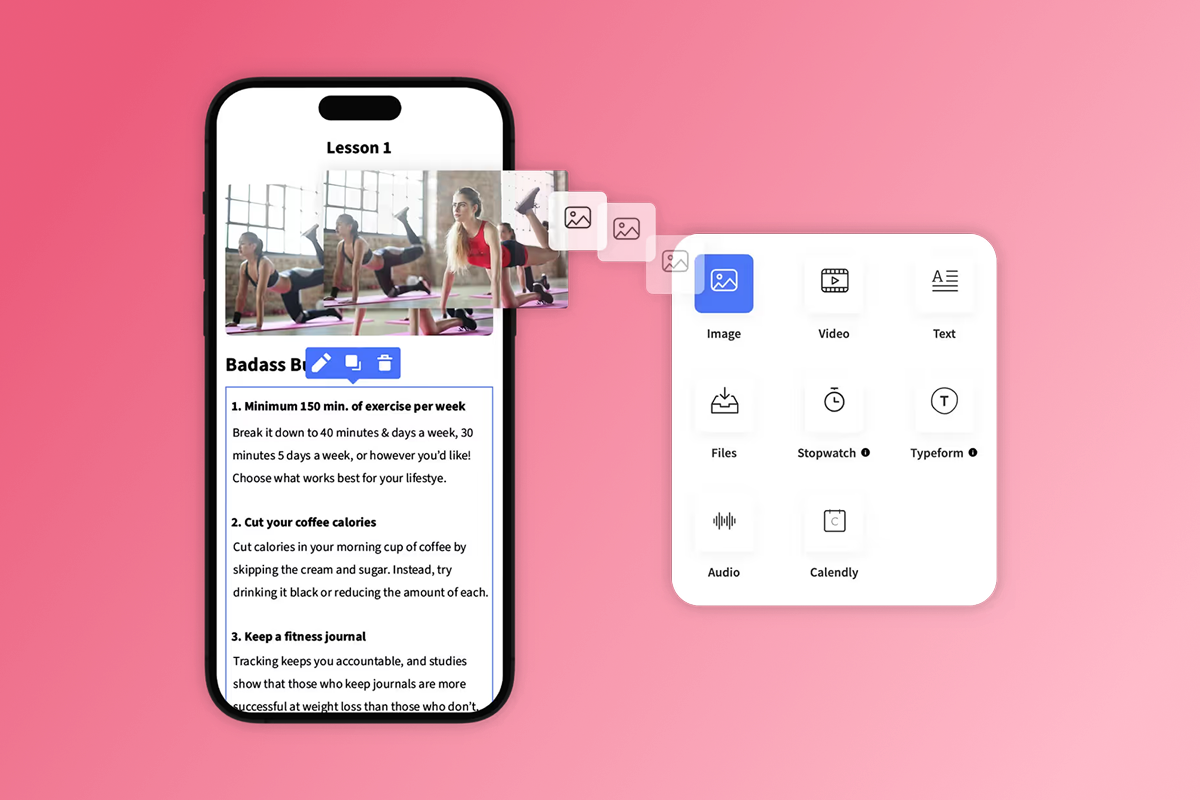
High-ticket creators worry about data security because a breach or exposure damages trust and drives members to cancel. When you own a branded app, you're responsible for protecting member data.
Passion.io employs technical measures including two-step verification and password security to safeguard the service. automatic SSL/TLS for data in transit, meaning data traveling between your members' devices and the servers cannot be intercepted. Payments happen through Apple, Google, or PassionPayments with Stripe, so sensitive payment data never touches Passion.io's servers. All URLs and APIs are SSL secured.
Data ownership is clear. You own your subscriber list and can export it at any time as a CSV file from the Users section, including names, emails, join dates, and subscription plans. This portability matters if you decide to migrate to another platform or sell your business. You're not locked into Passion.io's ecosystem.
Privacy compliance is your responsibility as the creator. Passion.io provides tools to help meet GDPR obligations including privacy policy links, user data export, and data deletion processes. You must provide your own privacy policy that discloses how you collect, use, and protect member data. You must respond to data subject requests, such as when a member in the EU asks to download their data or delete their account. Passion.io is GDPR-aligned, but compliance is a shared responsibility.
One important limitation: Passion.io is not HIPAA compliant and has no plans to become so. If you're a health coach handling protected health information, you must use separate, HIPAA-compliant tools for intake forms and client records.
As a creator, you should enable two-factor authentication on your Passion.io account, use strong unique passwords, rotate credentials regularly, and educate your team on phishing risks. We recommend reviewing your security settings quarterly and ensuring all team members with admin access follow the same protocols.
The competitive advantage of owning your app is that you control access. On Discord or Facebook, platform-level breaches or policy changes can expose your members or shut down your community. With your own app, you set the security policies, you monitor access logs, and you own the relationship with your members.
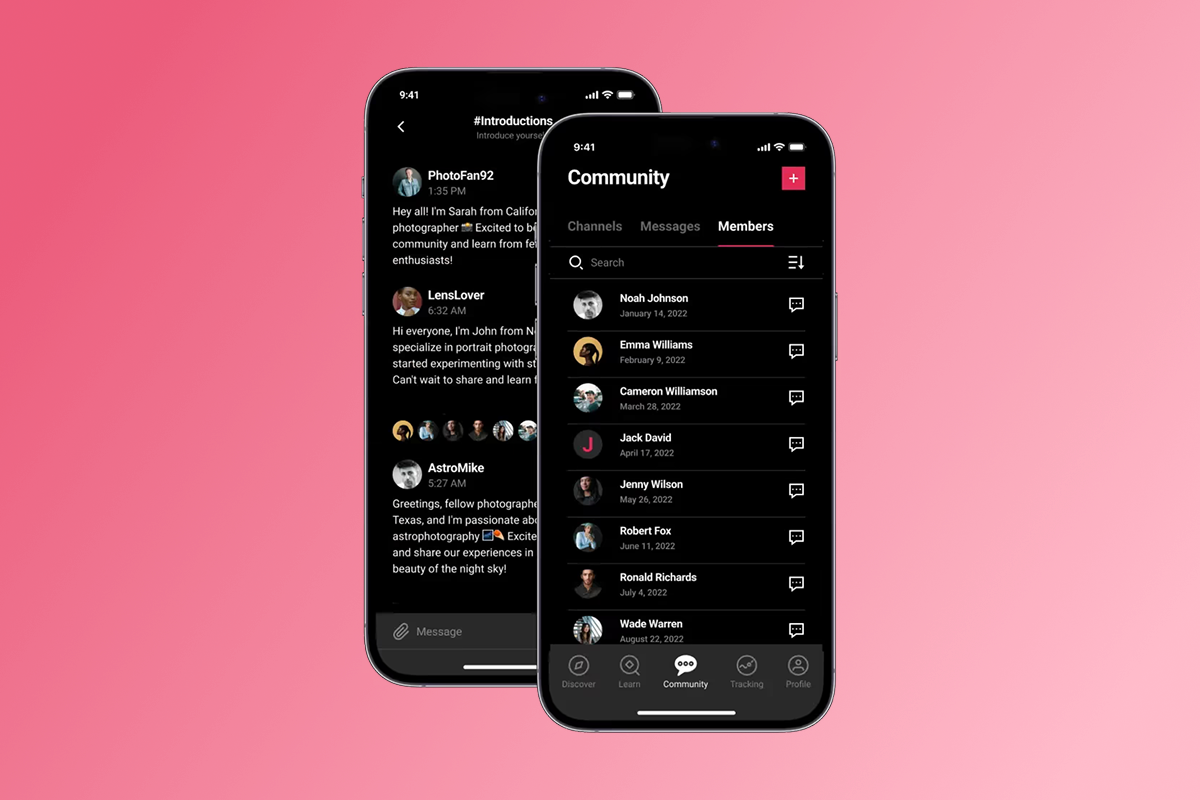
Comparison: Branded apps vs. Discord for paid communities
The table below compares Discord and Passion.io across the dimensions that matter for high-ticket creators running paid communities.
Conclusion
Manual onboarding on Discord or Facebook costs you time and guarantees high churn. The 7-day framework automates your first week through scheduled messages, quick wins, and push sequences that triple retention compared to email-only tactics. The framework only works inside a branded app that consolidates your courses, community, and payments in one place and gives you control over push notifications.
Passion.io's Plus plan eliminates the technical barrier by providing white-glove migration, content build, and App Store submission for $10,000 to $20,000. You go from scattered tools and manual onboarding to a live branded app in 30 days. The ROI shows up in reduced churn, higher LTV, and lower operational costs within 6 to 12 months.
If you're running mid-five to six-figure MRR and tool sprawl is killing your time and retention, book a demo to see the framework in action. Passion.io offers a 30-day money-back guarantee, so you can test the automation without risk. Download the 7-Day Onboarding Checklist before your call to map out your activation sequence and ask specific questions about migration timeline and pricing.
Frequently asked questions
How long does it take to migrate my community from Discord to Passion.io?
With the Plus plan, migration takes 30 days or less from kickoff to live app. DIY migration on Launch or Scale plans can take 4 to 8 weeks depending on your content volume.
Can I keep my Discord server running while I test Passion.io?
Yes. Many creators run both platforms in parallel for 30-60 days, gradually moving members through exclusive challenges and content available only in the app.
What happens to my subscriber data if I cancel Passion.io?
You own your subscriber list and can export it anytime as a CSV file with names, emails, join dates, and subscription plans. Your data leaves with you.
Do I need separate developer accounts for Apple and Google?
Yes. Apple charges $99 per year and Google charges $25 one-time. With the Plus plan, your dedicated success manager connects your developer accounts and handles the entire submission process for both platforms.
What's the difference between web checkout and in-app purchases?
PassionPayments web checkout fee plus Stripe processing. In-app purchases via Apple or Google charge 15% to 30%. Route high-ticket offers through web to keep more margin.
Can I automate push notifications based on lesson completion?
Yes. Scale plan advanced drip automations that let you trigger pushes when members complete specific lessons or join certain community threads.
Key terms glossary
Activation rate: Percentage of new members who complete core onboarding actions like introducing themselves, watching the first lesson, and engaging in community within the first seven days.
Drip sequences: Automated content delivery that unlocks lessons, sends messages, or triggers notifications based on a member's join date or progress through your curriculum.
Operational drag: Time spent manually onboarding members, answering repetitive questions, and nudging people to engage instead of creating content or coaching clients.
Tool sprawl: Using multiple disconnected platforms for community, courses, email, payments, and video that force members to juggle logins and create integration headaches.
White-glove service: Done-for-you migration where the platform team builds your app, uploads content, handles App Store submission, and provides a dedicated success manager instead of DIY setup.
MRR (Monthly Recurring Revenue): Predictable monthly income from subscription members, calculated as number of active subscribers multiplied by average subscription price.
LTV (Lifetime Value): Total revenue a member generates over their entire subscription lifecycle, calculated as average monthly subscription price multiplied by average retention period in months.
Churn rate: Percentage of members who cancel each month. A 5% churn rate means 5 out of 100 members leave monthly, requiring constant new member acquisition to maintain revenue.
Push notification: Mobile alert sent directly to a member's phone that appears on their lock screen and drives them back into your app with higher engagement than email-only strategies.
In-app purchases (IAP): Subscription or one-time purchases processed through Apple or Google's billing systems that charge 15% to 30% transaction fees but offer convenience for mobile users.