


Yoga App Builder vs. Generic Course Platforms: Why Branded Apps Win for Instructors
Updated March 17, 2026
Generic course platforms like Kajabi and Teachable are built for selling web-based information products, not for building daily yoga habits on mobile. A branded yoga app puts your logo on students' home screens, sends push notifications directly, and keeps community inside a practice environment you own. Passion.io lets you build and launch a branded iOS, Android, and web app in 4-8 weeks starting at $99/month (annual). PassionPayments charges a 3.9% platform fee (plus Stripe) for web checkout, compared to Apple/Google IAP fees of 15-30%. Route core subscriptions through web checkout to protect margin and use IAP as a convenience option.
The biggest threat to your yoga business is not a lack of content but relying on "rented land" algorithms and web-first platforms to reach students you already paid to acquire. Yoga instructors and wellness coaches building subscription businesses know this pain firsthand: high churn, inconsistent email open rates, and courses that sit unfinished in a mobile browser tab.
This guide gives you a direct, feature-by-feature and cost-by-cost comparison so you can decide whether a dedicated yoga app builder is the right next step for your business.
Feature comparison: App builders vs. course platforms
Kajabi and Teachable are strong web-first course and email marketing platforms, but neither was designed as a purpose-built mobile practice environment. The table below compares the features that matter most for yoga instructor retention and recurring revenue.
| Feature | Passion.io | Kajabi | Teachable |
|---|---|---|---|
| Branded iOS/Android app (your brand in App Stores) | Yes (all plans) | Pro plan included; Basic/Growth $199/mo add-on | General student app only (no creator-branded app) |
| Push notifications | Expand plan (unlimited) | Yes (with Branded App) | Yes (iOS and Android apps) |
| Offline content access | Expand plan | Yes (mobile apps) | Yes (iOS and Android apps) |
| In-app community | Launch (basic), Scale (advanced) | Yes (community groups) | Yes (all paid plans) |
| Web checkout fee | 3.9% platform + Stripe | 0-5% depending on plan | 0-7.5% depending on plan |
| App store submission support | Expand and Plus plans | N/A | N/A |
The core distinction is branding and ownership. Kajabi's student app displays your content inside Kajabi's environment, and a fully branded app carrying your name in the App Store requires their Pro plan ($499/month) or a $199/month add-on. Teachable offers a general student app for course access, but there is no creator-branded app available at any tier. With Passion.io, a branded app listed under your name in both the Apple App Store and Google Play is the core product, not a premium add-on.
For the full Passion.io plan breakdown, see the Passion.io pricing guide. For Kajabi's transaction fee structure, this Kajabi pricing breakdown confirms the 5% Kickstarter, 2% Basic, and 1% Growth tier fees. Teachable's pricing shows a 7.5% fee on the $39/month Starter plan, dropping to 0% from Builder ($69/month) upward.
Mobile-first engagement and push notifications
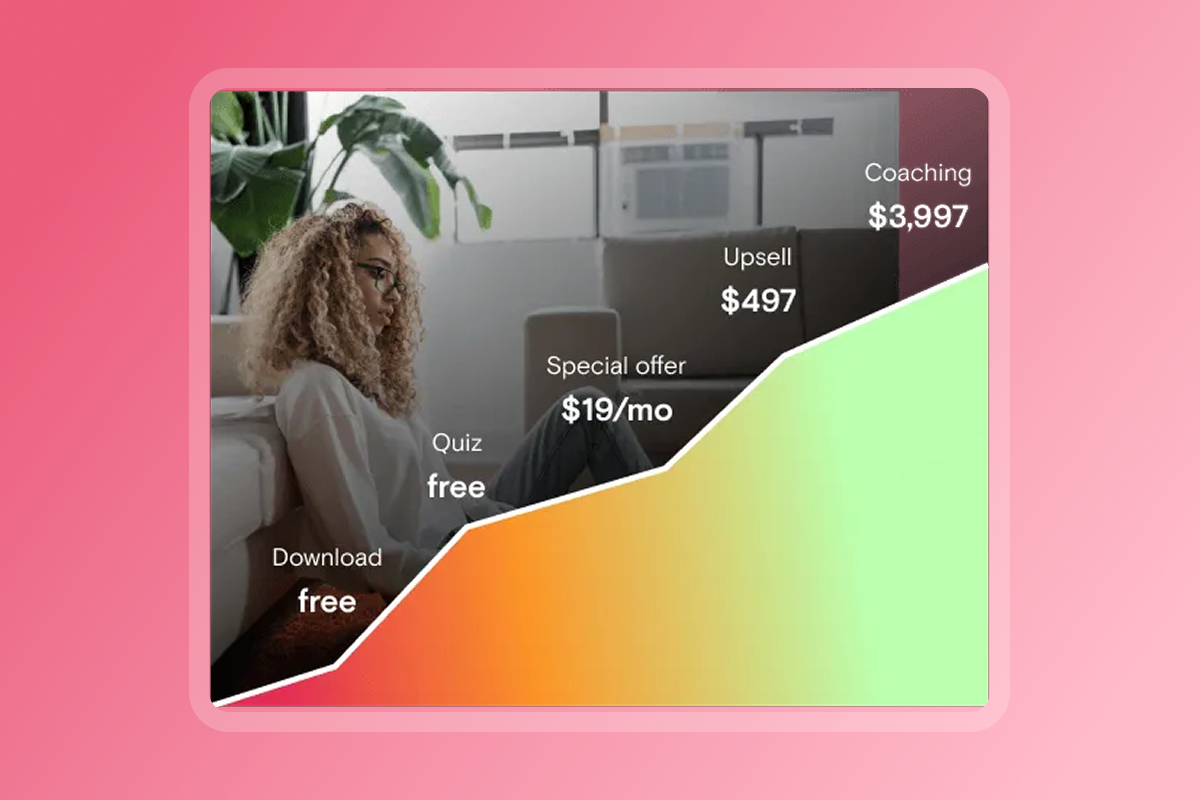
Email open rates average 20-25% across most industries. Push notification data from VennApps puts push open rates at up to 50% of notifications read, and MobuLoud's push notification research shows that 60% of app users say push notifications make them use an app more frequently. For a yoga instructor whose business depends on students showing up to their mat regularly, that gap drives real retention outcomes.
Creators who add push notifications and weekly in-app challenges see completion rates lift by 15-30% within 90 days. Key push engagement mechanics for yoga apps:
- Completion lift: Weekly in-app challenges paired with push nudges are the fastest way to move DAU and reduce early churn.
- Cadence target: Creators typically send two push nudges per week during standard programs, increasing to daily during intensive 30-day challenges.
- Segmentation: Progress-based triggers fire when a student completes a milestone, which feels personal rather than broadcast.
Our push notification strategy guide for 2026 walks through the specific frequency and segmentation tactics that work for wellness and fitness apps.
In-app community and offline access
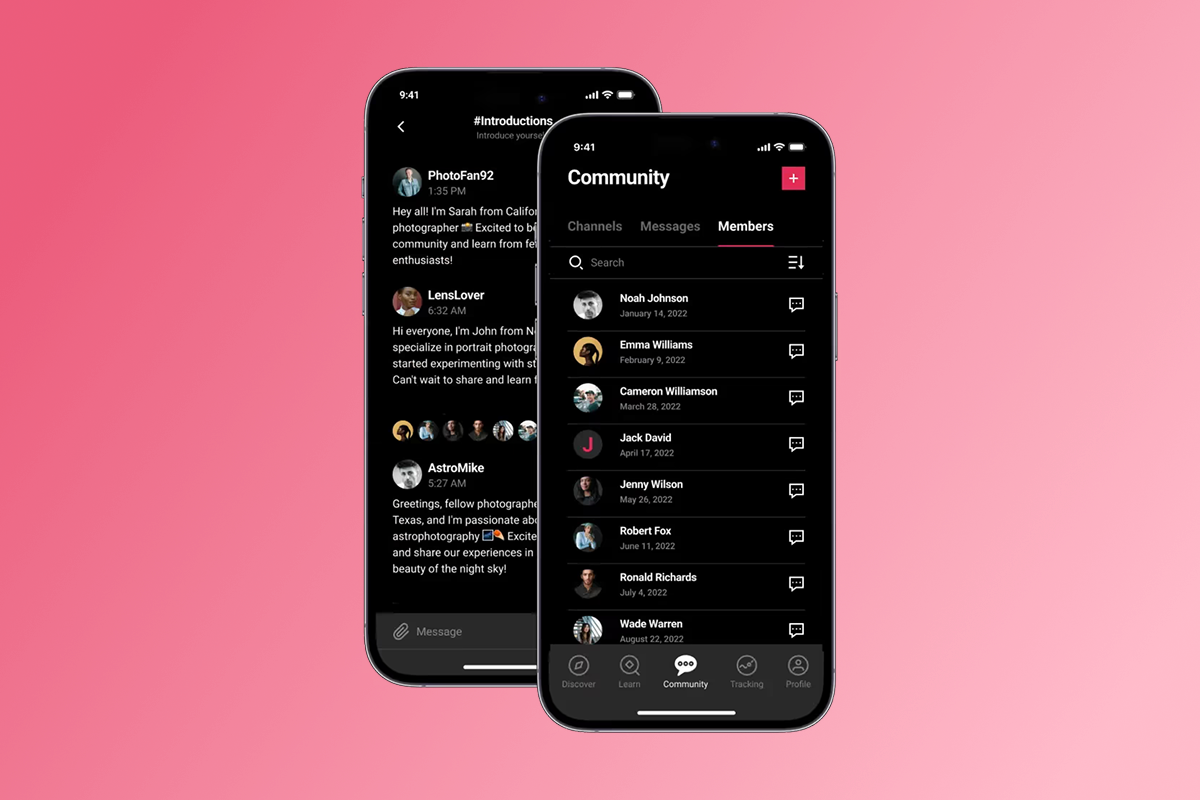
Community inside the app: When you build community inside your app instead of a Facebook group, you see lower churn and higher referral rates because the community exists within the practice environment itself. A student finishing a 45-minute yin sequence can post a reflection without leaving your app, and that continuity drives daily engagement in a way a Facebook group tab cannot match.
Offline downloads: With Passion.io's offline access on the Expand plan, students download a full flow sequence before boarding a flight and practice without a data connection. This directly addresses one of the most common yoga instructor objections: students who travel, teach outdoors, or practice in studios with unreliable Wi-Fi.
TV streaming: Students can also stream course videos to their TV via AirPlay or Google Cast, adding a living room practice option that no browser-based course delivers natively.
Goal-setting and distraction-free learning
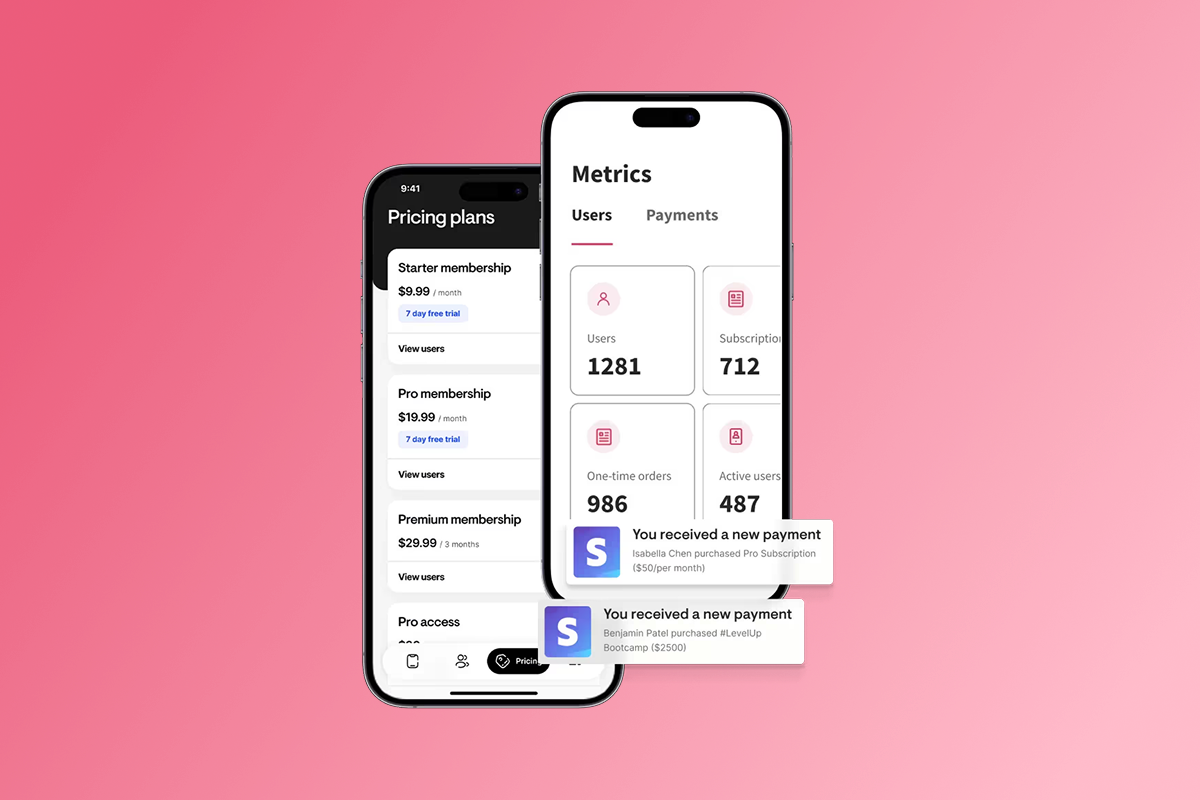
A dedicated app creates a contained practice space where the only things visible are your content, your community, and your student's progress. Passion.io supports interactive lesson widgets including quizzes, reflection prompts, and progress tracking so students can set weekly goals and check in daily.
This matters for you specifically because yoga practice is inherently habit-based. A student who tracks their 30-day challenge progress inside your app and sees a streak building is far less likely to cancel than one who finishes a lesson in a browser tab and forgets to return. Our 7-day activation framework covers how to structure those first sessions so new students build the habit before they ever consider churning.
Cost comparison: Passion.io vs. Kajabi and Teachable
Passion.io's plans run from $99/month (Launch, annual) to $239/month (Scale, annual) to $599/month (Expand, annual), with Plus available for larger operations at $10k-$20k depending on scope. Kajabi's Basic plan starts at $149/month and its Pro plan at $499/month. Teachable's Builder plan, which removes transaction fees, starts at $69/month.
The total cost of ownership depends on more than the monthly fee, so factor in transaction fees on every sale and the developer account costs for iOS and Android publishing.
Understanding web checkout vs. In-App Purchase (IAP) fees
Think of IAP as a toll road: convenient for students buying on mobile, but it costs more per transaction. Apple retains 30% on IAP at standard rate, dropping to 15% if your app qualifies for the Small Business Program (under $1M in annual proceeds). Google applies a 15% IAP commission rate on the first $1M in annual revenue, rising to 30% after that threshold.
Web checkout via PassionPayments charges a 3.9% platform fee plus standard Stripe processing, as detailed in the Passion.io pricing guide. The practical rule: route your core subscription bundles through web checkout to protect margin, and offer IAP as a convenience option for students who prefer buying directly through the App Store. Our in-app purchases fee and setup guide breaks down exactly how to configure both paths.
| Fee comparison on a $29/month subscription | Payment path | Fee (estimated) | You keep (approx.) |
|---|---|---|---|
| Web checkout | PassionPayments + Stripe | ~3.9% + ~2.9% + $0.30 | ~$25.50 |
| Apple IAP (Small Business Program) | 15% | 15% | ~$24.65 |
| Apple IAP (standard rate) | 30% | 30% | ~$20.30 |
| Google IAP (under $1M ARR) | 15% | 15% | ~$24.65 |
App store developer fees and submission support
The fees to publish your app are fixed and straightforward:
- Apple Developer Program: $99 per year (official enrollment details)
- Google Play Console: $25 one-time registration fee
Set up both developer accounts in Week 1 of your launch because activation can take several days, and early account creation saves time during submission.
App review timelines are realistic but not instant. Apple's review data shows 90% of submissions reviewed in under 24 hours under normal conditions, though first-time submissions may take longer. Google Play review timelines run from several days to a week. Budget a 1-2 week buffer for reviews and potential clarification requests. Expand and Plus plans on Passion.io include dedicated app store submission support, which significantly reduces rejection risk for first-time submitters. The app store submission cost guide covers the most common rejection triggers and how to avoid them. Yoga and wellness apps also need to meet Google's policy requirements, which our Google Health and Fitness declaration guide covers step by step.
The 90-day success plan: From web courses to a branded mobile app
If you have an existing program and audience, you can have a web app live within 2 weeks and App Store submissions underway by Week 3-4. The complete app launch checklist covers all 127 steps from platform setup to your first 1,000 downloads.
Month 1: App setup and store submission
- Weeks 1-2: Open your Apple Developer account ($99/yr) and Google Play Console account ($25 one-time). Upload your core content, set monthly and annual subscription pricing tiers via web checkout, and publish your web app. Share the web app link with your existing email list to start onboarding before the iOS/Android apps go live.
- Weeks 3-4: Submit to the App Store and Google Play. Use the 8 program launch tips from Passion's help center to structure your announcement sequence across email and social channels.
Fitness instructors like Savannah Bohlin have used this model to grow to 250 subscribers at $22/month, generating $66,000 in annual recurring revenue, as documented in Passion.io creator case studies.
Month 2: Launching a 30-day in-app challenge
If you want to build DAU (Daily Active Users) and reduce Month 2 churn fast, launch a 30-day in-app challenge. Structure it as daily yoga sequences released via drip scheduling, with a push notification sent at your students' preferred practice time. Research from MobiLoud shows that 43% of app users find push notifications less intrusive than email or SMS, so a well-timed morning nudge before a yoga session is welcomed rather than ignored.
Consider targeting +20% DAU compared to launch week and a 10% reduction in monthly churn for Month 2.
Month 3: Scaling recurring revenue and subscriptions
By Month 3, shift from launch-spike revenue to predictable MRR. Add a second subscription tier (for example, a "Deep Practice" membership with live monthly Q&A or a premium meditation library) and introduce annual pricing at a 20% discount to improve LTV and reduce churn risk. Our paid community content strategy guide covers how to build a sustainable monthly content calendar without burnout, and our community scaling guide shows how to grow paid communities without adding operational overhead.
Sample metrics for Month 3: ~15% MRR versus Month 1 baseline and positive App Store ratings from your first active cohort.
"I have really enjoyed creating my passion app over the past year and half. I would not have been able to make my idea for an app come to life without the platform passion provides. The passion support team has also been extremely helpful." - FitWithBrit
Is Passion.io the right Kajabi alternative for your yoga business?
A branded mobile app puts your studio on your students' home screen. Push notifications bring them back before their practice habit breaks. Offline access removes the Wi-Fi excuse. An in-app community replaces the Facebook group you do not own. And transparent fee paths (3.9% web checkout versus 15-30% IAP) let you control your margin as you scale.
Passion.io builds and maintains the app infrastructure so you focus on content and coaching. The yoga instructor app builder guide covers the full feature decision framework if you want to go deeper before committing.
"I am excited for being give a cost-effective way to create an app so Shift Your Life® teachings can reach more people to have the personal (body, mind, emotion, spirit) or entrepreneurial business transformation they desire." - Tracy Latz on Trustpilot
You can also watch the Passion.io platform overview to see the no-code builder in action before signing up.
Try Passion.io with a 14-day free trial or a 30-day money-back guarantee. Download the 30-day app launch checklist to plan your migration step by step, or check the 9 app launch mistakes guide to avoid the most common first-time pitfalls.
Frequently asked questions
How long does App Store approval take for a yoga app?
Apple reviews 90% of submissions in under 24 hours under normal conditions, per Apple's review documentation, but first-time submissions or apps with new business models can take longer. Budget a 1-2 week buffer and open your developer accounts in Week 1 to avoid delays.
Can I migrate my existing Kajabi students to a Passion.io app?
Yes. Contact Passion.io support to discuss your specific migration needs. Migration timelines vary based on your content library size and student list.
Which plan do I need to publish my yoga app to the App Store?
App Store listings are available on the Expand plan ($599/month annual). Launch and Scale plans give you a web app and the full builder experience, which lets you build and test your app before committing to the full mobile publishing tier. Expand and Plus plans also include dedicated submission support.
What are the exact fees on a $97/month yoga subscription sold through the app?
Via web checkout (PassionPayments + Stripe), you pay approximately 3.9% plus 2.9% plus $0.30 per transaction. Via Apple IAP at the 15% Small Business Program rate, Apple retains $14.55. Via standard Apple IAP at 30%, Apple retains $29.10.
Key terminology
In-App Purchase (IAP): A payment made directly inside an iOS or Android app through Apple or Google's payment system. Apple and Google retain 15-30% of the transaction depending on your annual revenue tier and program enrollment.
PassionPayments: Passion.io's web checkout payment gateway, which charges a 3.9% platform fee in addition to standard Stripe processing fees. Used for subscriptions and one-time purchases made through your web app or browser checkout page.
Push notifications: Short messages sent directly from your app to a student's device home screen, used to trigger daily practice, announce new content, or re-engage students who have not logged in recently. Available on Passion.io's Expand plan with no limit on notification volume.
DAU/MAU (Daily Active Users / Monthly Active Users): The ratio of students who open your app daily versus monthly. A healthy DAU/MAU for a fitness or yoga subscription app is 20-30%, per fitness app benchmarking data. Push notifications and in-app challenges are commonly used to improve this ratio.